How a Ruby Laser Works: Simple Explanation
If you have ever seen a bright red laser pulse used to create a hologram or drill through diamond, there is a good chance it came from a ruby laser—the first working laser ever built. Invented in 1960 by Theodore Maiman, the ruby laser uses a synthetic ruby crystal to generate intense, coherent red light at 694.3 nanometers. Unlike modern lasers that run continuously, the ruby laser typically emits powerful pulses, making it ideal for applications where high peak power matters more than efficiency.
This guide breaks down exactly how a ruby laser works, from its core components and energy transitions to its real-world uses in holography, medicine, and materials processing. You will learn why it was revolutionary, how it produces such intense pulses, and why it still holds value today despite being largely replaced by more efficient alternatives.
Core Components of a Ruby Laser

Synthetic Ruby Rod as the Gain Medium
The heart of the laser is a synthetic ruby rod made of aluminum oxide doped with approximately 0.05% chromium ions. These chromium ions are responsible for light emission, while the sapphire-like host crystal provides structural stability. The rod is usually cylindrical, ranging from 1 centimeter to over 20 centimeters in length, and its ends are polished to extreme flatness and parallelism to minimize optical losses.
Key characteristics of the ruby rod include:
• Ends polished to within one-quarter wavelength of the lasing wavelength
• Parallel alignment within a few seconds of arc
• Early models used directly silvered ends forming an internal cavity
• Modern versions often use external mirrors with antireflection coatings or Brewster-angle cuts
Optical Pumping with Flashlamps or Diodes
Ruby cannot be electrically pumped due to its insulating nature, so it relies entirely on optical pumping. A xenon flashtube wrapped around or placed beside the rod delivers a brief, intense burst of white light rich in blue and green wavelengths that match the broad absorption bands of chromium ions.
Pump source options include:
• Xenon flashtubes, which emit strong blue light around 400 nanometers and green light around 550 nanometers
• Krypton lamps offering better green-light output
• Mercury arc lamps used in early end-pumping experiments
• Blue laser diodes around 450 nanometers, enabling continuous-wave operation in modern systems
Optical Resonator with Mirrors
The ruby rod sits between two mirrors forming an optical resonator. One mirror is a high reflector with greater than 99.9% reflectivity, while the other is an output coupler with 90 to 95% reflectivity, allowing 5 to 10% of light to escape as the laser beam. Photons traveling along the rod axis bounce back and forth, stimulating more emissions with each pass.
Three-Level Energy System Explained

Ground and Pump Bands in Chromium Ions
The lasing action occurs within chromium ions embedded in the crystal lattice. These ions have specific energy levels that determine how the laser operates.
The energy level structure includes:
• Ground state where all chromium ions start before excitation
• Pump bands at approximately 400 nanometers and 550 nanometers, allowing efficient capture of flashtube light
• Metastable state with a long lifetime of approximately 3 milliseconds, reached via rapid non-radiative decay after excitation
Because the lower laser level is the ground state, this is a three-level system, which is a major reason for the ruby laser low efficiency.
Why Three-Level Lasers Are Inefficient
In most lasers like Nd:YAG, the lower laser level empties quickly into a ground state, making population inversion easier. But in ruby, the laser transition ends at the ground state itself, meaning photons emitted can be reabsorbed unless most ions are already excited.
This self-absorption and the need for intense pumping result in efficiency below 1%, far lower than four-level lasers. However, the long metastable state lifetime allows significant energy storage, enabling high peak power when released in pulses.
How Population Inversion Is Achieved
Excitation via Flashlamp Pulse
When the xenon flashtube fires, its broad-spectrum light excites chromium ions from the ground state to the pump bands. This process takes nanoseconds. The ions then rapidly lose energy through lattice vibrations, dropping non-radiatively to the metastable state in about 10 to the power of negative 9 seconds.
Because this state lasts approximately 3 milliseconds, much longer than the pump bands, ions accumulate there, creating a bottleneck that enables population inversion relative to the ground state.
Threshold for Lasing Action
Lasing only begins once enough ions occupy the metastable state to exceed those remaining in the ground state. This threshold requires intense, short-duration pumping, typically delivered by a millisecond-scale flashlamp pulse. Below this threshold, spontaneous emission dominates and no coherent beam forms. Once inversion is reached, even a single photon can trigger an avalanche of stimulated emission.
Stimulated Emission and Light Amplification
From Spontaneous to Stimulated Emission
Initially, some chromium ions decay from the metastable state to the ground state via spontaneous emission, releasing 694.3 nanometer photons in random directions. Those moving along the rod axis encounter other excited ions and trigger stimulated emission.
Each interaction produces a second photon identical in phase, direction, polarization, and wavelength. This process cascades as photons reflect between the cavity mirrors, passing through the gain medium repeatedly and amplifying the signal exponentially.
Role of the Optical Cavity
The resonator ensures only axially aligned photons are amplified. Off-axis light escapes quickly, minimizing waste. With each round trip, the beam gains intensity until it surpasses the output coupler reflectivity. At that point, a powerful pulse of coherent, monochromatic red light escapes the cavity. The entire buildup happens in microseconds, limited by the flashlamp pulse duration and gain dynamics.
Output Characteristics of Ruby Lasers
Wavelength and Coherence
Ruby lasers emit at 694.3 nanometers, a deep red visible to the human eye. The linewidth is narrow at approximately 0.53 nanometers, giving high spectral purity. Combined with a long coherence length exceeding 30 centimeters, this makes ruby ideal for holography where interference over large path differences is essential.
Pulse Structure and Power
Most ruby lasers operate in free-running pulsed mode, producing a train of irregular spikes due to relaxation oscillations. Pulse energies can exceed 1 joule in large systems. With Q-switching, pulses shrink to 5 to 50 nanoseconds, achieving gigawatt-level peak power.
Output characteristics include:
• Deep red wavelength at 694.3 nanometers
• Narrow linewidth of approximately 0.53 nanometers
• Coherence length exceeding 30 centimeters
• Free-running pulse duration of 0.1 to 1 millisecond
• Q-switched pulse duration of 5 to 50 nanoseconds
Efficiency and Thermal Challenges
Wall-plug efficiency is less than 1%, limited by quantum defect and the three-level system. Much of the input energy becomes heat, causing thermal lensing and stress birefringence in the rod. Active cooling is essential, especially for repeated pulsing.
Operational Modes: Pulsed, Q-Switched, and CW
Free-Running Pulsed Mode
In standard operation, the flashlamp fires a approximately 1 millisecond pulse. Lasing starts after threshold is reached, but the output consists of irregular spikes due to relaxation oscillations. Despite poor temporal stability, this mode delivers joule-level energies suitable for applications like holography and material marking.
Q-Switched High-Power Pulses
Using a Q-switch, the cavity losses are temporarily increased to prevent lasing. Energy builds up in the metastable state without release. When the switch opens suddenly, all stored energy erupts in a single giant pulse with duration of 5 to 50 nanoseconds and peak power up to gigawatts.
This technique enables applications in laser-induced breakdown spectroscopy, micromachining, and nonlinear frequency conversion.
Continuous-Wave Operation Feasibility
True CW operation was long thought impossible due to heat and the three-level system. However, in 1962, Willard Boyle achieved pulsed-train output using mercury arc lamp end-pumping. In 2019, researchers demonstrated true CW ruby lasing using blue laser diodes with active cooling and optimized cavity design.
Design Challenges and Engineering Solutions
Managing Heat and Thermal Lensing
Intense pumping generates significant heat in the ruby rod. Radial temperature gradients change the refractive index, creating a thermal lens that defocuses the beam and destabilizes the cavity.
Solutions include:
• Liquid cooling jackets
• Low-expansion mounts
• Curved mirrors to compensate for focusing effects
• Short duty cycles to allow cooling between pulses
Overcoming Self-Absorption Losses
Since ruby absorbs its own 694.3 nanometer light, any unexcited region acts as a lossy filter. Shaded areas near mounts or electrodes can kill lasing. To minimize this, use uniform flashlamp geometry, employ Brewster-angle ends, and ensure full rod illumination during pumping.
Achieving Polarized Output
Many ruby lasers use Brewster-angle end faces. This allows p-polarized light to pass without reflection loss while s-polarized light is reflected away. The result is a linearly polarized output beam without needing antireflection coatings.
Key Applications of Ruby Lasers
Holography and Interferometry
Ruby remains a top choice for pulsed holography, especially for large-scale holograms up to 1 square meter, living subjects due to motion-freezing pulse, and vibrating machinery analysis. Its long coherence length and high peak power allow single-pulse exposure, eliminating the need for vibration isolation tables.
Diamond Drilling and Micromachining
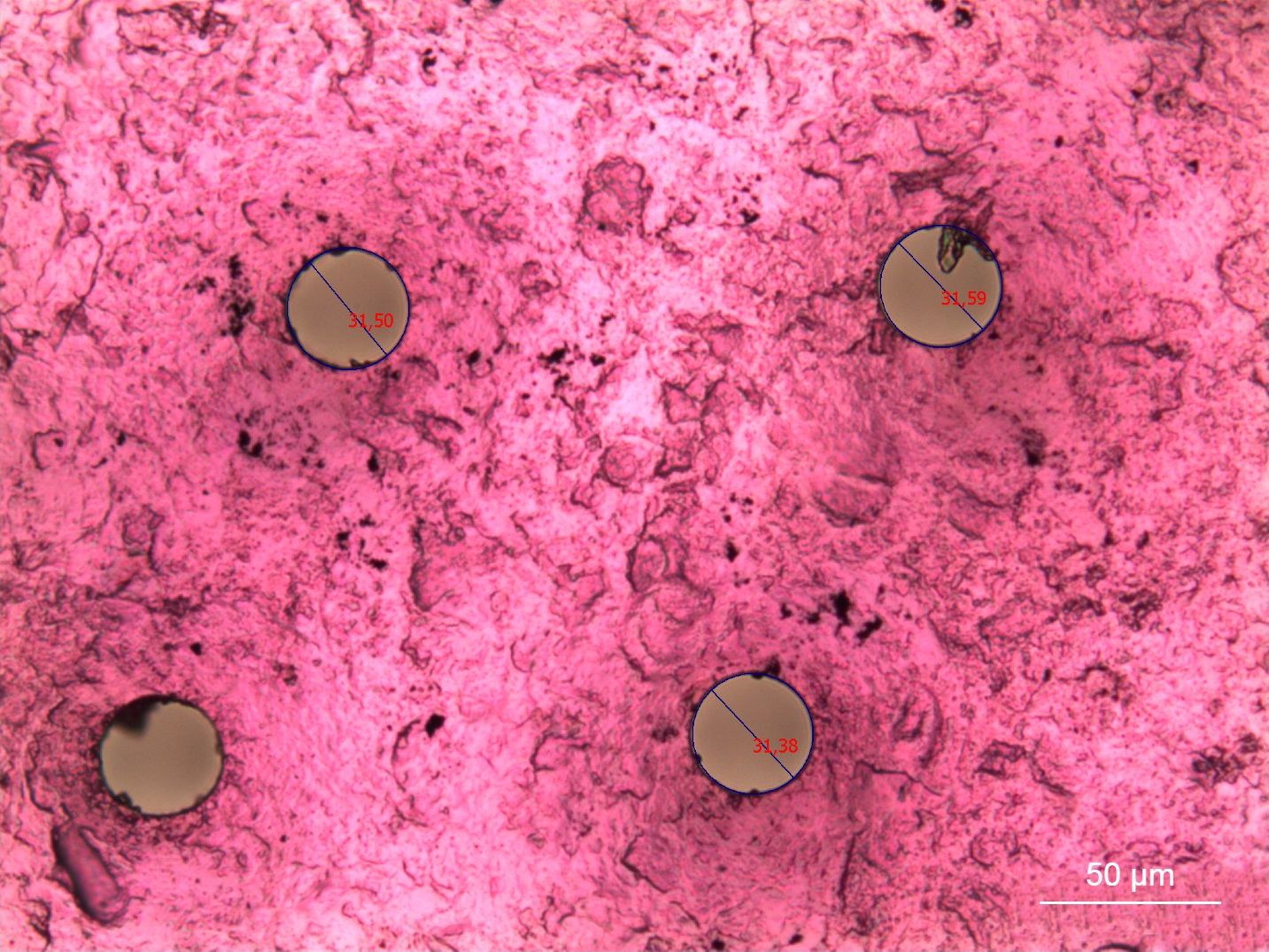
The 694.3 nanometer wavelength matches the GR1 absorption band of diamond, making ruby uniquely effective for drilling holes in diamond cutting tools, scribing diamond wafers, and precision ablation with minimal thermal damage.
Tattoo and Pigment Removal
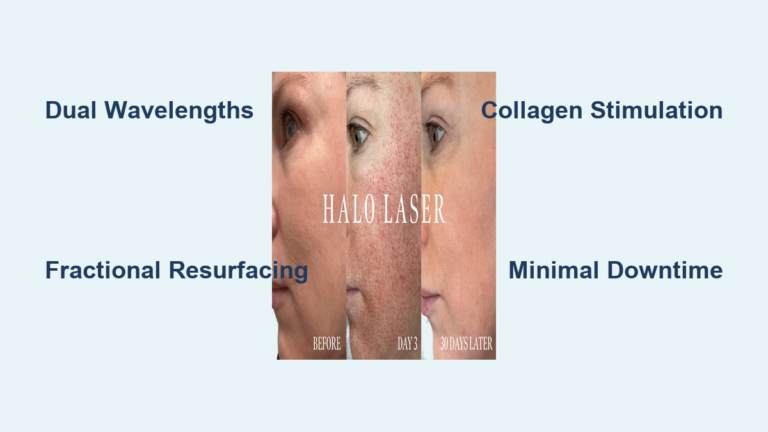
One of the earliest medical applications, ruby lasers target blue-black and dark inks via selective photothermolysis. The pigment absorbs red light, heats, and fragments into particles cleared by the immune system. Still used for lentigines, café-au-lait spots, and dark hair removal.
Scientific Research Tools
Ruby lasers enabled foundational discoveries in nonlinear optics, including first demonstrations of second-harmonic generation and stimulated Raman scattering. Their high peak power made them ideal for probing extreme light-matter conditions.
Military and Sensing Systems
By 1964, ruby lasers with rotating prism Q-switches were standard in military rangefinders. The visible beam aided targeting, and high pulse energy ensured long-range detection. Eventually replaced by Nd:YAG lasers due to higher efficiency and eye-safer wavelengths.
Educational and Demonstration Use
Thanks to its visible red output, simple design, and historical importance, ruby lasers are widely used in university physics labs, science museums, and laser demonstrations. They provide a tangible way to teach stimulated emission, population inversion, and optical resonance.
Advantages and Limitations Compared to Modern Lasers
Why Ruby Lasers Are Still Used
Despite low efficiency, ruby lasers offer unique benefits including visible output for easy alignment, high peak power in Q-switched mode, long coherence length for holography, effectiveness for diamond machining, mechanical robustness, and historical significance for teaching.
Key Limitations
The major limitations include low efficiency below 1% due to three-level physics, high pump threshold required, thermal issues limiting repetition rate, self-absorption reducing net gain, beam quality degradation at high power, fixed wavelength at 694.3 nanometers, and being superseded by Nd:YAG, alexandrite, and fiber lasers in most fields.
Comparison with Nd:YAG, Alexandrite, and Ti:Sapphire
| Feature | Ruby Laser | Nd:YAG Laser | Alexandrite Laser | Ti:Sapphire Laser |
|---|---|---|---|---|
| Wavelength | 694.3 nm | 1064 nm | 700-820 nm | 650-1100 nm |
| Tunable | No | No | Yes | Yes |
| Energy System | Three-level | Four-level | Three-level | Quasi-four-level |
| Efficiency | Less than 1% | 1-3% | Moderate | Moderate to high |
| Operation | Mostly pulsed | CW or pulsed | Pulsed | CW, pulsed, mode-locked |
| Pump Source | Flashlamp, blue diodes | 808 nm diodes | Flashlamp, diodes | Green lasers |
| Visibility | Red visible | IR invisible | Near-IR | Red to NIR |
The four-level design of Nd:YAG makes it far more efficient and easier to operate, explaining why it replaced ruby in most industrial and medical roles.
Summary: How a Ruby Laser Works Step by Step
The complete operational sequence includes:
- Pump light absorption where xenon flashtube emits blue and green light absorbed by chromium ions in the ruby rod
- Excitation to pump bands where ions jump to higher energy states
- Non-radiative decay where ions drop rapidly to the metastable state, releasing heat
- Population inversion where more ions occupy the metastable state than the ground state
- Spontaneous emission where some ions emit 694.3 nanometer photons randomly
- Stimulated emission where axial photons trigger chain reaction of identical photons
- Optical feedback where mirrors reflect light back, amplifying it with each pass
- Beam output where coherent red pulse exits through output coupler
Frequently Asked Questions About Ruby Lasers
What makes ruby lasers different from other lasers?
Ruby lasers differ from most modern lasers because they operate on a three-level energy system rather than a four-level system. This means the lower laser level is the ground state, making population inversion harder to achieve and limiting efficiency to less than 1%. However, this design enables very high peak power output and produces visible red light at 694.3 nanometers.
Why was the ruby laser historically significant?
The ruby laser was the first working laser ever demonstrated. Theodore Maiman at Hughes Research Laboratories achieved the first laser action on May 16, 1960, using a synthetic ruby crystal optically pumped by a xenon flashlamp. This breakthrough launched the modern era of laser science and technology.
Can ruby lasers operate continuously?
True continuous-wave operation was historically difficult due to the three-level system and excessive heat generation. However, modern developments using blue laser diodes as pump sources have made continuous-wave ruby lasers feasible, as demonstrated in 2019. Most ruby lasers still operate in pulsed mode.
What are the main applications of ruby lasers today?
Ruby lasers remain important for holography due to their long coherence length, diamond drilling and micromachining because the 694.3 nanometer wavelength matches diamond absorption, tattoo and pigment removal as one of the earliest medical applications, and educational demonstrations because the visible red beam simplifies teaching laser physics principles.
Why have ruby lasers been largely replaced by other lasers?
Ruby lasers have been replaced because they have very low efficiency below 1%, require high pump thresholds to achieve population inversion, suffer from significant thermal management challenges, and cannot be tuned to different wavelengths. Modern alternatives like Nd:YAG lasers operate on more efficient four-level systems and offer better performance for most applications.
How does Q-switching improve ruby laser performance?
Q-switching allows the ruby laser to store energy in the metastable state and then release it all at once in an extremely short pulse. This technique produces pulses lasting only 5 to 50 nanoseconds with peak power reaching gigawatt levels, making the laser useful for ablation, micromachining, and nonlinear optics experiments.
Key Takeaways for Understanding Ruby Lasers
The ruby laser represents a foundational technology that demonstrated the principle of stimulated emission decades before modern laser designs emerged. Its three-level energy system, while inefficient by today’s standards, enables unique capabilities including extremely high peak power output, visible red wavelength for easy alignment, and long coherence length ideal for holographic applications. Understanding how chromium ions in a ruby crystal achieve population inversion and produce coherent light provides essential knowledge for anyone studying laser physics. While Nd:YAG and other lasers have replaced ruby in most industrial and medical roles, the ruby laser remains indispensable for holography, diamond processing, and education, proving that the first laser technology still has valuable niche applications more than six decades after its invention.