How Laser Sensors Work: Simple Guide
Laser sensors are the precision workhorses of modern automation, robotics, and scientific measurement. If you have ever seen a bright red or green dot scanning across a surface in a factory, guiding a robot arm, or checking part dimensions, you have witnessed a laser sensor in action. But how do laser sensors work? At their core, they use a focused beam of coherent light to detect objects, measure distance, or monitor physical changes without ever touching the target. This non-contact capability makes them ideal for high-speed, high-accuracy applications where reliability is critical.
Unlike traditional photoelectric sensors that use diffused LED light, laser sensors emit a narrow, intense beam with minimal spread, allowing them to pinpoint tiny features even on dark, glossy, or fast-moving surfaces. Whether measuring the thickness of a steel plate down to a micrometer or detecting a missing pin on a conveyor belt, laser sensors convert light reflections into precise electrical signals. In this guide, we will break down the science behind these advanced devices, explore the key working principles, examine real-world applications, and help you understand how to choose and use them effectively.
Laser Triangulation for Precision Measurement

Laser triangulation is the go-to method for high-precision position, displacement, and thickness measurements over short to medium distances. It is widely used when accuracy in the micrometer range is required.
How Triangulation Detects Distance Changes
In this setup, a laser diode projects a focused beam onto a target surface. The reflected light passes through a lens and lands on a position-sensitive detector, CMOS linear imager, or CCD array. As the target moves closer or farther away, the angle of the reflected beam changes, shifting the laser spot is position on the detector. This creates a geometric triangle between the laser source, the target, and the optical receiver. Using factory-calibrated trigonometry, the sensor calculates the exact distance based on the spot is location. Even microscopic changes, like a 1 μm shift, are detectable.
High-Resolution Industrial Applications
This principle powers some of the most accurate industrial sensors available. For example, measuring bolt seating depth in automotive assembly, detecting incorrect part placement by monitoring height deviations, and monitoring plastic film thickness during extrusion. Advanced models like the KEYENCE IX Series combine image recognition with triangulation to measure height at 16 points simultaneously, compensating for part tilt and reducing false triggers on glossy surfaces. Laser triangulation works best within millimeters to 3.5 meters, making it ideal for controlled environments like production lines.
Time-of-Flight Distance Sensing Explained
For long-range detection, especially outdoors or in dynamic settings, time-of-flight is the preferred method. It measures how long a laser pulse takes to travel to a target and back.
Measuring Pulse Round-Trip Time
The sensor emits rapid laser pulses, up to 1 million per second, and precisely times how long each takes to return. Since light travels at approximately 3 × 10⁸ m/s, the distance is calculated using the round-trip time. Even nanosecond delays translate into measurable distances, allowing time-of-flight sensors to reach up to 3,000 meters on reflective surfaces. The LDM301 series can measure 300 meters on natural surfaces and 3 kilometers on retro-reflective ones, making it ideal for ship mooring or silo level monitoring.
Long-Range Use Cases
Time-of-flight technology powers autonomous vehicles, where Google is self-driving cars use rotating LIDAR for 360° environmental mapping. It also enables AGV and robotics obstacle detection and navigation in warehouses, as well as crane positioning for ensuring safe load placement in container terminals. While less precise than triangulation, time-of-flight excels in range and speed, making it perfect for large-scale, real-time monitoring.
Interferometric Measurement for Nanometer Accuracy
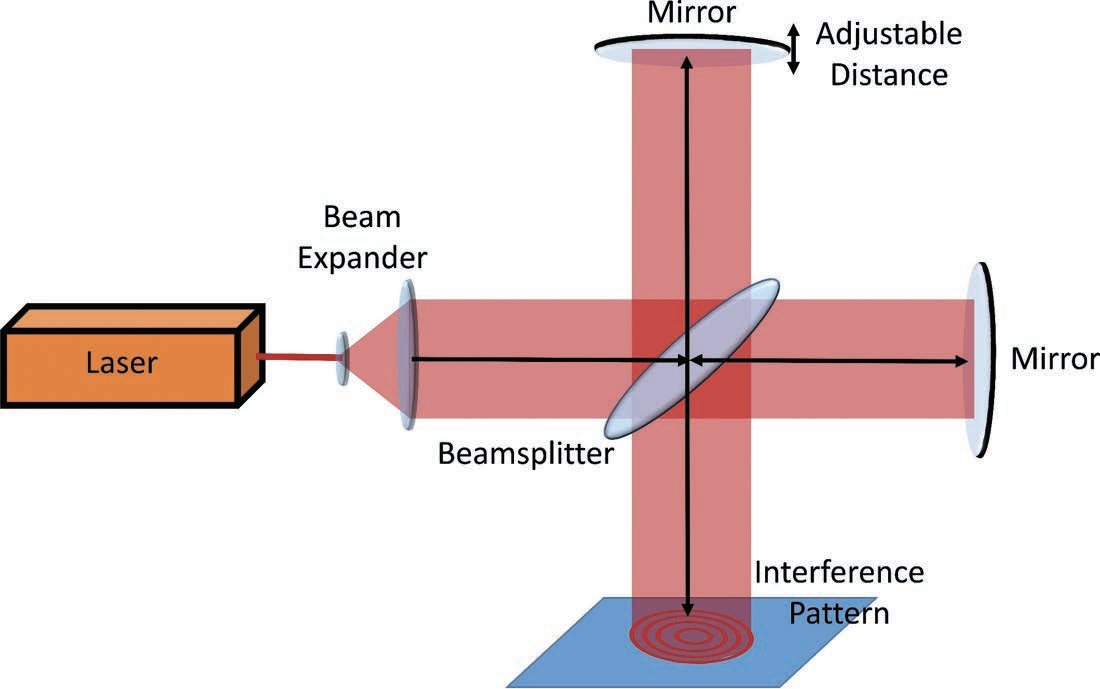
When nanometer-level accuracy is required, laser interferometry is the gold standard used in metrology labs, semiconductor manufacturing, and precision calibration.
Wave Interference Detection原理
A laser beam is split into two paths. One reflects off a fixed reference mirror, and the other bounces off the moving target. When the beams recombine, they create an interference pattern of light and dark fringes. Each fringe shift corresponds to a displacement of half the laser wavelength, about 316 nm for a standard 632.8 nm He-Ne laser. By counting these fringes, the system tracks incremental movements with nanometer resolution. These sensors are highly sensitive to vibration, temperature, and air turbulence, making them best suited for stable lab environments.
High-Tech Industry Applications
Interferometric measurement is used for calibrating CNC machines, measuring thermal expansion in microelectronics, and aligning optical components in aerospace systems. Unlike other methods, interferometers do not measure absolute distance directly. They track changes from a starting point, making them ideal for incremental motion control rather than one-time distance measurements.
Photoelectric Detection Methods
For simple object detection, counting, or safety systems, optical beam interruption methods are commonly used. These rely on whether the laser beam is blocked or reflected.
Through-Beam and Retro-Reflective Modes
Three main configurations exist for photoelectric laser detection. Through-beam sensors use separate transmitter and receiver units where beam interruption equals detection, making them best for long-range, high-reliability applications. Retro-reflective sensors combine transmitter and receiver in one unit with a reflector, where the target breaks the bounce path. Diffuse reflective sensors detect their own reflection off the target for simpler setup but shorter range. In through-beam setups, a target physically blocks the signal beam between transmitter and receiver.
Industrial Detection Examples
These sensors excel at counting bicycle chains on high-speed conveyors using a laser small spot. They detect transparent films by angling the sensor to increase shadow contrast and create safety zones at toll stations using beam grids to detect vehicle presence. Photoelectric sensors offer fast switching frequencies up to 300 kHz, ideal for high-volume production lines.
Phase-Shift Distance Calculation
A refined version of time-of-flight, phase-shift measurement modulates the laser beam and compares the phase difference between emitted and received signals.
Modulated Signal Analysis
The laser is pulsed at a known frequency, such as tens of MHz. When the reflected beam returns, its phase is delayed. The distance is calculated using the phase shift and modulation frequency. This method achieves millimeter accuracy over hundreds of meters. Compared to raw pulse timing, phase-shift systems are less affected by ambient light, more immune to signal noise, and capable of stable readings in bright or variable lighting environments.
Structural Monitoring Applications
Phase-shift sensors are ideal for structural monitoring of bridges or dams where long-term precision is critical. They provide reliable distance measurements over extended periods, making them suitable for infrastructure inspection and safety monitoring systems.
Gas Detection with Laser Absorption Spectroscopy
Not all laser sensors detect objects. Some analyze gas composition using tunable diode laser absorption spectroscopy, known as TDLAS.
Wavelength-Specific Absorption Analysis
Different gases absorb specific wavelengths of light based on their molecular structure. A tunable laser scans across these wavelengths, and the amount of absorption reveals gas concentration, temperature, pressure, and flow velocity. Carbon dioxide, methane, water vapor, and oxygen each have unique absorption fingerprints that can be identified precisely.
Real-Time Monitoring Applications
This technology is used for emissions testing in power plants, combustion analysis in engines using shock tubes, and medical diagnostics measuring respiratory gases during anesthesia. The Hanson Research Group uses TDLAS for high-speed combustion studies with microsecond resolution, demonstrating the technique is capability for dynamic gas analysis.
Key Components Inside Laser Sensors

Behind every laser sensor are core components that make precision possible.
Laser Diodes and Optical Elements
Semiconductor laser diodes are compact, efficient, and low-cost, making them the most common choice in industrial sensors. Fiber lasers offer superior beam quality for high-precision displacement sensors. Lenses and mirrors shape and direct the beam for optimal focus and alignment. These optical elements work together to create the concentrated light beam that enables accurate detection.
Detectors and Signal Processing
CMOS linear imagers are the most common detectors in triangulation sensors, providing fast and accurate position detection. CCD sensors offer higher sensitivity and are used in metrology-grade devices. Photodiodes provide simple on/off detection in through-beam sensors. Internal processors track spot position, filter noise, apply automatic gain control to handle varying surface reflectivity, and output analog or digital signals. Smart sensors use algorithms to compensate for dust, vibration, and ambient light.
Choosing the Right Laser Sensor Type
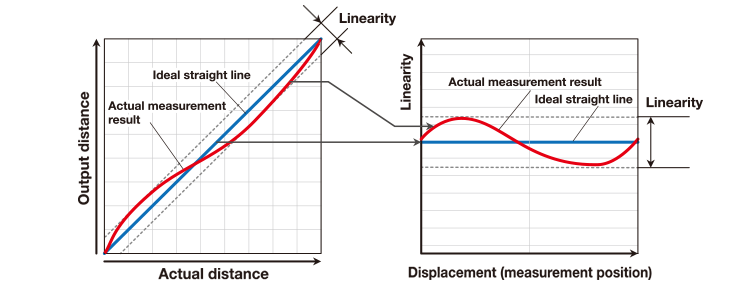
Understanding the difference between laser displacement and distance sensors is crucial for proper selection.
When to Use Displacement Sensors
Displacement sensors use triangulation to detect minute changes in height or position. They achieve resolution down to 1 μm with typical ranges of 50 to 210 mm. These sensors are ideal for thickness measurement of metal sheets, profile inspection of extruded parts, and monitoring material height on conveyors. Choose displacement sensors when precision is your top priority.
When to Use Distance Sensors
Distance sensors use time-of-flight or phase-shift methods and can measure from millimeters to kilometers. Their accuracy ranges from millimeters to centimeters, making them suitable for level monitoring in silos, AGV navigation, and inventory tracking in large warehouses. Choose distance sensors when range matters more than extreme precision.
Common Challenges and Solutions
Even advanced sensors face issues. Here is how to solve the most frequent problems.
Avoiding False Triggers from Ambient Light
Sunlight or fluorescent lights can interfere with sensor operation. Install shields around the sensor, adjust the receiver angle to avoid direct exposure, increase distance between ambient light and sensor, or use DC-powered lighting instead of pulsed sources. These measures significantly reduce false triggers in bright environments.
Detecting Transparent Objects
Transparent objects create low contrast due to high transmission and specular reflection. Angle the sensor obliquely to increase shadow area, use larger spot size models to average out minor fluctuations, or employ sensors with Universal Change Detection function. These solutions improve reliability when measuring transparent materials.
Handling Glossy or Mirrored Surfaces
Specular reflection causes the beam to miss the receiver when surfaces tilt. Aim at non-reflective edges or textured zones, switch to through-beam or retro-reflective sensors less sensitive to surface conditions, or use diffused fiber-optic sensors that spread the beam to reduce angle sensitivity. These approaches ensure reliable detection on reflective materials.
Laser Sensor Safety Standards
Laser sensors are generally safe, but precautions are necessary.
Laser Safety Classes
Class 1 and Class 2 lasers are eye-safe under normal use and common in industrial sensors. Class 3B and Class 4 lasers can cause eye or skin damage and require enclosures and interlocks. Always follow IEC 60825 standards for safe installation and labeling. Never look directly into the beam, and use warning labels in accessible areas.
Frequently Asked Questions About Laser Sensors
How does a laser sensor measure distance?
Laser sensors measure distance using several methods. Triangulation calculates distance based on the angle of reflected light hitting a detector. Time-of-flight sensors measure how long light takes to travel to the target and back. Phase-shift sensors compare the phase difference between emitted and received modulated light signals.
What is the difference between laser sensors and photoelectric sensors?
Laser sensors use a focused, coherent light beam with minimal spread, enabling longer ranges and smaller spot sizes. Photoelectric sensors typically use diffused LED light and are better suited for simple on/off detection over shorter distances. Lasers excel at precision measurement and detecting small features.
Can laser sensors work in sunlight?
Yes, many laser sensors are designed to reject ambient light. High-intensity beams penetrate bright conditions, and optical filters combined with advanced algorithms filter out sunlight and artificial lighting. However, proper shielding and angle adjustment further improve reliability in bright environments.
What surfaces can laser sensors detect?
Laser sensors can detect most surfaces including dark, shiny, matte, and textured materials. Advanced sensors include automatic exposure control to adjust for varying reflectivity. Special techniques may be needed for highly transparent or mirror-like surfaces.
How accurate are laser displacement sensors?
Laser displacement sensors using triangulation can achieve resolution down to 1 μm with repeatability of ±1 μm. This makes them suitable for precision applications like thickness measurement, profile inspection, and dimensional verification in manufacturing.
What is the maximum range of a laser sensor?
Laser sensors range from millimeters to kilometers depending on the technology. Time-of-flight sensors can reach up to 3,000 meters on reflective surfaces. Triangulation sensors typically work best from millimeters to 3.5 meters. Phase-shift sensors offer millimeter accuracy over hundreds of meters.
Key Takeaways for Understanding Laser Sensors
Laser sensors combine coherent light, precision optics, and smart electronics to deliver unmatched accuracy in automation. The six primary working principles are laser triangulation for micron-level precision, time-of-flight for long-range measurement up to 3,000 meters, interferometry for nanometer-level accuracy, photoelectric beam interruption for object detection, phase-shift for stable long-range measurement, and absorption spectroscopy for gas analysis. Whether you are measuring microns or kilometers, detecting objects or analyzing gas, the right laser sensor can transform your process. By understanding these principles, you can select, install, and optimize these tools for maximum performance in any application.