How to Care for Your Face After Laser Treatment
You’ve just had a facial laser treatment, and now the real work begins. The procedure itself may have taken less than an hour, but the results you achieve in the coming weeks and months depend almost entirely on how you care for your skin in the days after. Post-laser facial care isn’t optional; it’s essential for preventing infection, avoiding pigmentation problems, and maximizing your results. Without the right routine, even the most advanced laser treatment can lead to scarring, uneven tone, or subpar outcomes.
Your skin is essentially an open wound after laser treatment, especially with ablative procedures. New skin is fragile, highly sensitive to UV light, and prone to inflammation. This guide walks you through exactly what to do from the first 48 hours through long-term maintenance, covering cleansing, moisturizing, sun protection, product selection, and common mistakes to avoid.
Immediate Aftercare: The First 48 Hours Are Critical
The first two days set the tone for your entire recovery. Your skin barrier is compromised, and your risk of complications is highest during this window. Following the right protocol now prevents infection, reduces swelling, and gives you the best foundation for healing.
Apply Occlusive Ointment Frequently
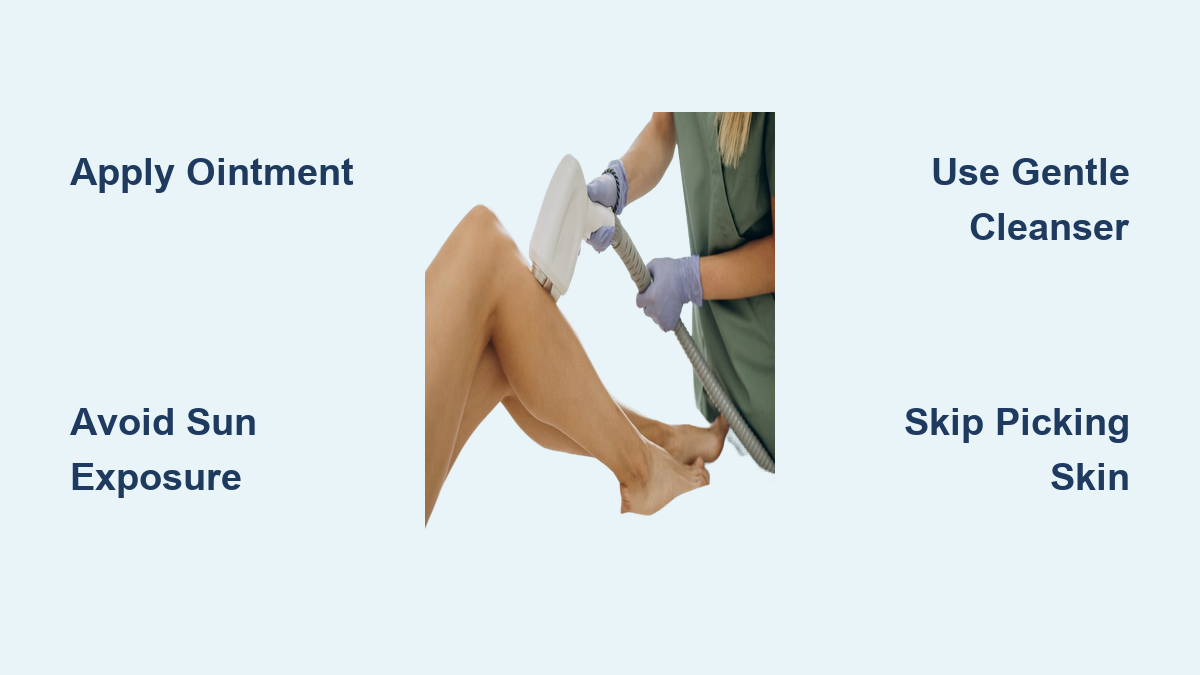
Use petroleum jelly, Aquaphor, or your provider’s recommended barrier balm every few hours. This creates a protective seal that locks in moisture, prevents cracking, and supports the formation of new skin. Apply thick layers generously, and continue until no raw or oozing areas remain, which typically takes 5 to 7 days.
Cleanse Gently Without Rubbing
Wait 12 to 24 hours before washing your face unless your provider gives different instructions. When you do cleanse, use cool to lukewarm water only. Never use hot water. You can soak a soft cloth or cotton pad in one of these solutions and gently pat or pour over your skin.
Diluted white vinegar works well (one tablespoon per cup of water). Saline solution is another gentle option. You can also use a fragrance-free cleanser like Cetaphil or Vanicream. Whatever you choose, never scrub, rub, or use washcloths or sponges. After cleansing, blot dry with a clean towel.
Use Cold Compresses to Reduce Swelling
Apply a cold pack wrapped in a soft cloth for 15 to 20 minutes every few hours during the first 48 hours. This constricts blood vessels and minimizes redness, heat, and puffiness. Consistent use early on delivers the best results.
Skip Heat and Water Submersion
Avoid hot showers, saunas, steam rooms, and hot yoga. Heat increases blood flow and worsens inflammation. Also, do not submerge your face in water. No baths, pools, or hot tubs until fully healed. Splashing is fine, but soaking is not.
Hold Off on Makeup
Avoid all makeup for at least 48 hours. If you must wear something after that window, use only mineral-based, non-comedogenic products that your provider has approved. Liquid or cream foundations can clog pores and introduce bacteria to healing skin.
Follow Any Bandaging Instructions
If your provider applied non-adherent dressings, change them multiple times daily if there’s oozing. Keep the area clean and covered as directed. Always follow your clinician’s specific wound care plan.
Why Sun Protection Is Non-Negotiable After Laser
New skin is at least 10 times more photosensitive than normal skin. UV exposure during the healing phase can cause permanent pigmentation changes, including dark spots, light spots, or scarring. Even brief sun exposure can ruin your results.
Start Sun Protection Immediately
Even indoors, UV rays can penetrate windows and trigger hyperpigmentation in newly forming skin. For the first week, avoid direct sun exposure entirely. When you must go outside, wear a wide-brimmed hat with at least a 3-inch brim. Apply mineral sunscreen with SPF 30 to 50 containing zinc oxide or titanium dioxide every morning. Reapply every 2 hours if you’re outdoors.
Continue Daily Protection Indefinitely
Sunscreen remains non-negotiable throughout your entire recovery and beyond. UV damage during the healing phase can permanently affect your results. Make broad-spectrum SPF 30 to 50 part of your daily routine, forever.
Days 3-7: Early Healing Phase Care
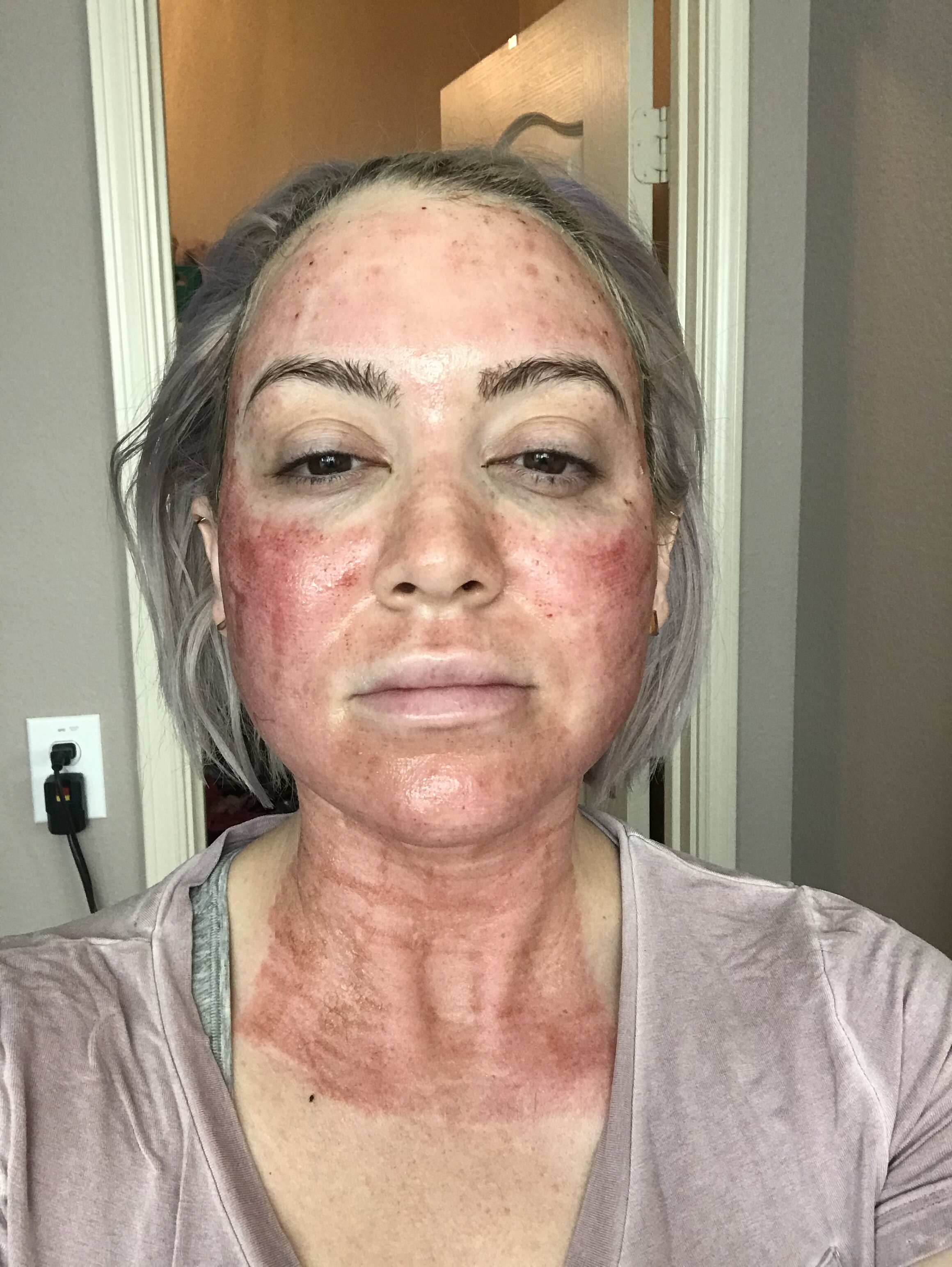
By day three, initial swelling starts to fade, but your skin will feel tight, dry, and begin to peel. This is normal. How you manage this phase determines whether healing stays on track or develops complications.
Switch to Fragrance-Free Moisturizers
As oozing stops and skin begins to close, transition from occlusive ointments to gentle, hydrating moisturizers. Look for products containing ceramides to rebuild the skin barrier, hyaluronic acid to draw in moisture, niacinamide to calm redness, and panthenol (B5) to soothe irritation.
Apply moisturizer 2 to 3 times daily or whenever your skin feels tight. Good options include CeraVe Moisturizing Cream, Vanicream Moisturizing Cream, La Roche-Posay Cicaplast Baume B5, and First Aid Beauty Ultra Repair Cream.
Keep Cleansing Routine Mild
Wash your face twice daily with a fragrance-free, sulfate-free cleanser. Avoid anything containing alcohol, exfoliants (AHAs, BHAs), retinoids, or strong acids like glycolic, salicylic, or lactic acid. Pat dry with a clean towel and let your skin air-dry slightly before applying moisturizer.
Never Pick or Peel Flaking Skin
Peeling is part of the healing process. Picking increases your risk of scarring, infection, post-inflammatory hyperpigmentation (dark spots), and hypopigmentation (light spots). Instead, soothe itchiness with extra moisturizer or a cool compress.
Avoid Exercise and Sweating
Sweat contains salt and bacteria that can irritate healing skin and trigger folliculitis or infection. Avoid intense workouts, heavy lifting, or anything that causes facial flushing for 5 to 7 days. Light walking is acceptable.
What to Avoid Putting on Your Face After Treatment
Even small missteps can derail healing. Steer clear of these common pitfalls to protect your results.
Skip Harsh Products Too Soon
Retinoids, acids, and exfoliants delay healing and cause serious irritation. Wait 4 to 6 weeks before reintroducing these ingredients, and do so slowly with your provider’s approval.
Don’t Pick at Peeling Skin
Tempting? Yes. Safe? No. Picking leads to permanent scarring and discoloration. Let skin shed naturally.
Avoid Heat Sources
Hot showers, saunas, steam rooms, and hot yoga all increase inflammation and worsen redness. Keep your face cool during the healing phase.
Skip Other Skin Treatments
Do not schedule chemical peels, microdermabrasion, facials, waxing, threading, or dermaplaning until your provider clears you. Wait at least 4 to 6 weeks. Over-treating healing skin can cause permanent damage.
Weeks 4-12: Long-Term Healing and Maintenance
Visible healing is mostly complete by week 4, but collagen remodeling continues for up to a year. Your actions now preserve results and prevent setbacks.
Resume Full Skincare Routine Slowly
After 4 to 6 weeks, you can gradually reintroduce retinoids like tretinoin. Start with 2 to 3 nights per week. You can also begin using low-concentration AHAs like glycolic acid. Always monitor your skin for redness or stinging. If irritation occurs, scale back.
Support Skin Health with Active Ingredients
To extend your results, use products that boost collagen and repair skin. Peptides stimulate collagen production. Growth factors enhance healing. Antioxidants fight free radicals. Niacinamide strengthens the barrier.
Medical-grade options worth considering include Alastin Regenerating Skin Nectar, SkinMedica TNS Essential Serum, Obagi Professional-C Serum, and ISDIN Ceutics Retinol Serum.
Commit to Daily Sun Protection Forever
This is the number one rule for maintaining your results. Use broad-spectrum SPF 30 to 50 daily. Prefer mineral or hybrid formulas, which are less irritating. Reapply every 2 hours when outdoors. Wear hats, sunglasses, and UV-protective clothing. Tanning, whether natural or from a bed, can trigger pigmentation issues and reverse your progress.
Essential Products for Post-Laser Recovery
Having the right products at each stage makes recovery much easier.
Days 1-3: Wound Healing
For ointment, use Vaseline, Aquaphor, or Cicastela Moisture Recovery Cream. For cleanser, stick with Cetaphil or Vanicream. For sunscreen, choose EltaMD UV Clear SPF 46 or Colorescience SPF 50.
Days 4-10: Early Recovery
For moisturizer, use CeraVe Cream, Vanicream, or Cicaplast. For barrier repair, try First Aid Beauty Ultra Repair Cream. Reapply sunscreen every 2 hours when outdoors.
Week 2 Onward: Healing Complete
For serums, consider Alastin Nectar or SkinMedica TNS. For hydration, try The Ordinary Hyaluronic Acid or Neutrogena Hydro Boost. For sunscreen daily, use Supergoop! Unseen or EltaMD UV Sport.
Special Considerations by Skin Type
Darker Skin Tones (Fitzpatrick III-VI)
You face a higher risk of post-inflammatory hyperpigmentation (PIH). Prevent it by using gentle, non-irritating products. Your provider may recommend pre-treating with hydroquinone, kojic acid, or arbutin. Avoid sun exposure at all costs.
Fair Skin Tones (Fitzpatrick I-II)
You’re more prone to prolonged redness that can last weeks or even up to 12 months in blondes or redheads. Be patient and use niacinamide to calm flushing.
When to Call Your Provider
Seek medical help immediately if you experience fever of 101°F (38.3°C) or higher, increasing pain or swelling after day 3, green or yellow pus, new blisters (especially around the mouth), patchy dark or light spots, or signs of scarring.
Common complications include herpes reactivation (preventable with antivirals), bacterial infection (needs antibiotics), PIH or hypopigmentation (treat after healing), and scarring (rare but serious).
Frequently Asked Questions About Post-Laser Facial Care
How long does it take for face to heal after laser treatment?
Healing time depends on your laser type. Non-ablative treatments take 3 to 5 days. Fractional ablative treatments take 7 to 14 days. Full recovery and final results appear within 1 to 6 months.
Can I wash my face after laser treatment?
Yes, but wait 12 to 24 hours. Use lukewarm water and a gentle, non-foaming, fragrance-free cleanser. Splash or pour the solution over your face rather than rubbing. Pat dry gently.
When can I wear makeup after laser treatment?
Wait at least 48 hours. After that, only mineral-based, non-comedogenic makeup is acceptable if your provider approves. Most people can resume light makeup by day 7 to 10, and full makeup by day 14 if skin is healed.
Why is sunscreen so important after laser treatment?
New skin is extremely photosensitive. UV exposure causes permanent pigmentation changes, scarring, reduced treatment efficacy, and premature aging. Sun protection is your single most important defense.
Can I exercise after laser treatment?
Avoid strenuous activity for 5 to 7 days. Sweat irritates healing skin and introduces infection risk. Light walking is fine. Resume full workouts after 2 weeks if no open areas remain.
What should I do if my skin is peeling badly?
Peeling is normal. Do not pick. Apply moisturizer frequently to soothe and support natural shedding. Use a cool compress if itching becomes intense.
Key Takeaways for Protecting Your Post-Laser Results
Your laser treatment is only half the journey. Aftercare determines the outcome. The way you treat your skin in the days and months after the procedure shapes your results more than you think.
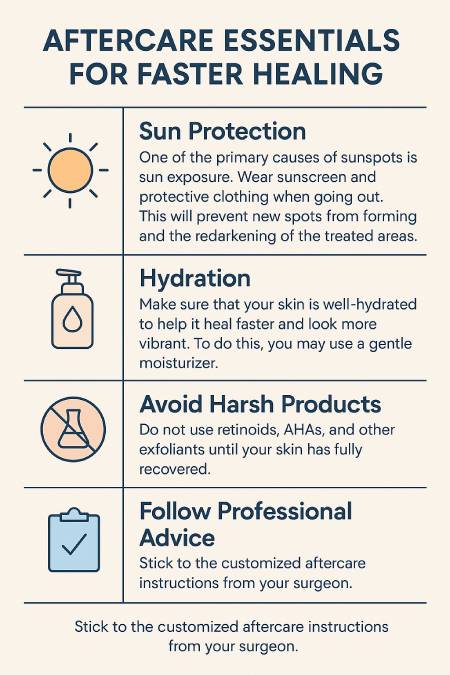
Sun protection is paramount. Use SPF 30 to 50 mineral sunscreen daily, reapply every 2 hours outdoors, and wear wide-brimmed hats. Keep skin hydrated and protected during the early phase using occlusive ointments, then transition to barrier-repair moisturizers. Avoid heat, sweat, and friction. No saunas, intense workouts, or rubbing your face. Use only non-irritating products during healing, and never pick at peeling skin. Follow your provider’s specific instructions exactly, since protocols vary by treatment type and skin profile.
By following this disciplined routine, you’ll maximize your investment and enjoy smoother, clearer, younger-looking skin for years to come.