How Laser Glasses Work: Simple Explanation
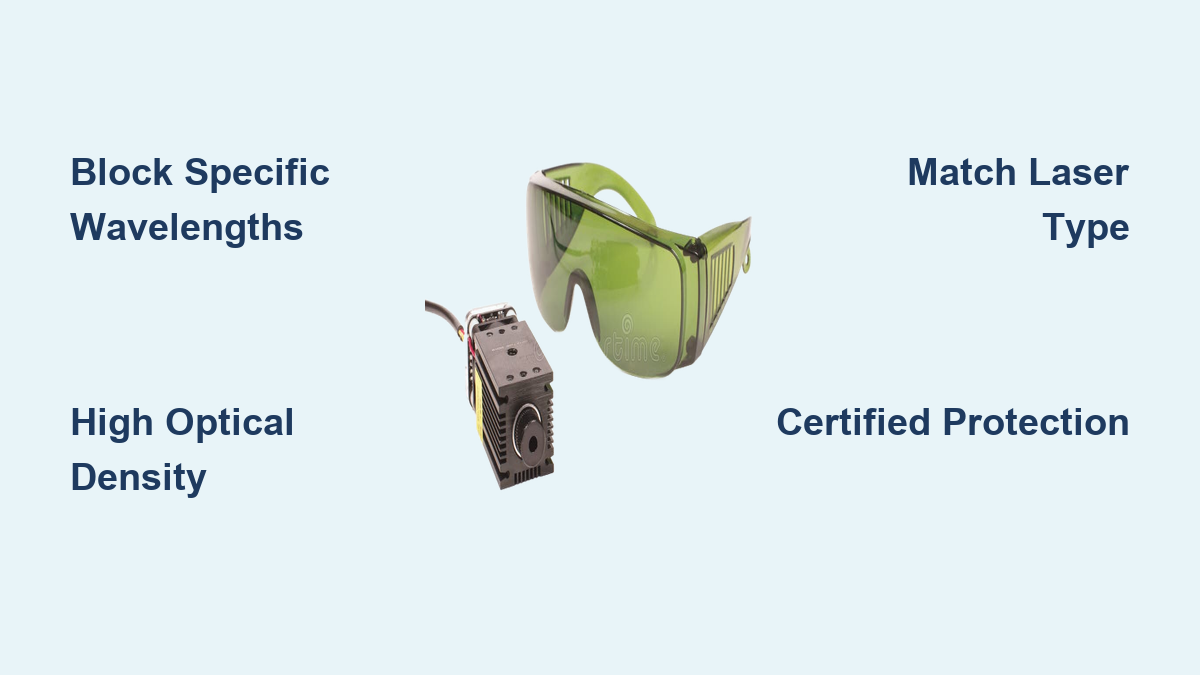
If you’ve ever walked through a medical clinic, research lab, or industrial workshop where lasers are in use, you’ve probably noticed people wearing brightly tinted glasses. These aren’t fashion accessories. They’re laser safety glasses, a critical defense against invisible yet dangerous laser radiation. But how do laser glasses work? At their core, they’re precision-engineered optical filters designed to block specific wavelengths of laser light while allowing enough visible light through so users can still see their surroundings.
Laser light is coherent, intense, and often invisible (especially in the infrared or ultraviolet range), making accidental exposure a serious risk. Even a brief glance into a reflected laser beam can cause permanent retinal damage. Laser glasses protect your eyes by selectively filtering out hazardous laser wavelengths and attenuating beam intensity to safe levels defined by international standards like ANSI Z136.1 and IEC 60825. The key lies in wavelength-specific filtering and optical density. Without these, the human eye would be defenseless against high-powered lasers used daily in medicine, manufacturing, and research.
Block Specific Laser Wavelengths
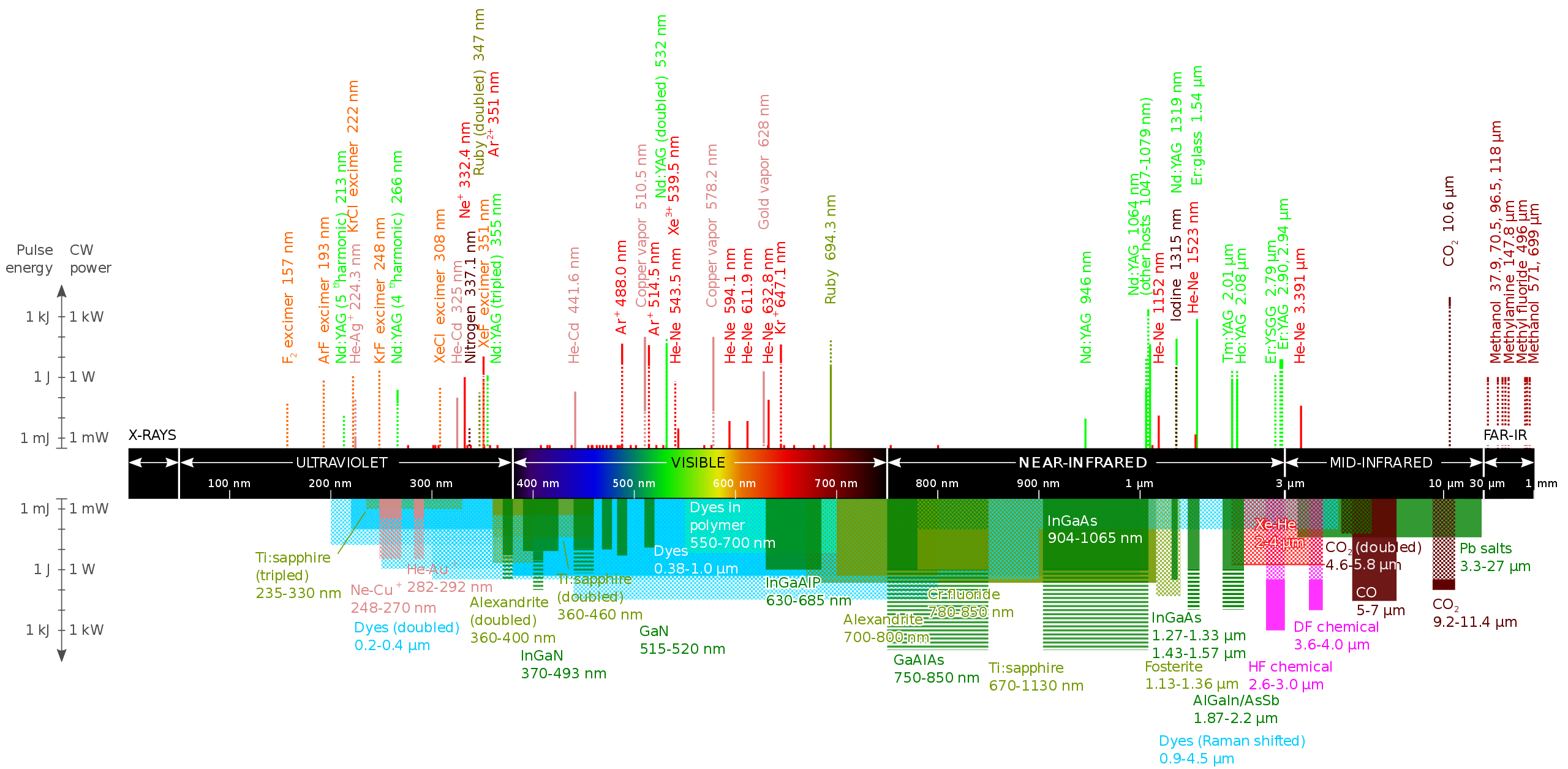
Laser safety glasses don’t block all light. They target specific wavelengths emitted by the laser in use, measured in nanometers. Unlike sunglasses that reduce overall brightness or UV blockers that stop a broad range, laser glasses must be precisely matched to the laser’s output.
Match Glasses to Laser Type
Every laser emits light at a defined wavelength:
• UV lasers (< 400 nm): Used in sterilization and microfabrication
• Visible lasers (400–700 nm): Green at 532 nm, red at 635–670 nm
• Near-infrared (NIR) (700–1,400 nm): 808 nm, 980 nm, 1064 nm common in fiber and Nd:YAG lasers
• Mid/far-IR (>1,400 nm): 10,600 nm CO₂ lasers
A lens designed for a 532 nm green laser won’t protect against a 1064 nm infrared beam, even if both come from the same Nd:YAG system. Users must identify all operational wavelengths, including harmonics.
Use Absorptive or Reflective Filtering
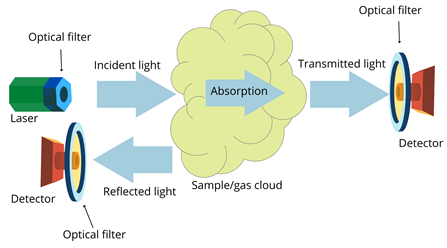
Two main technologies block laser light.
Absorptive lenses use dyes that convert laser light to heat. Most laser glasses use dyed polymers or filter glass that absorb targeted wavelengths. The absorbed energy turns into heat, which dissipates safely.
• Polycarbonate with organic dyes: Lightweight and impact-resistant, ideal for low- to mid-power lasers. Orange or red tints block 532 nm green lasers. Brown or amber lenses absorb 450 nm blue diodes.
• Glass filters with metal oxides: More durable under high-power exposure, used in industrial and medical settings. Neodymium-doped glass blocks 532 nm and 1064 nm. Cerium compounds filter UV radiation.
These lenses offer omnidirectional protection, meaning they work no matter the angle of incoming light.
Reflective coatings use dielectric layers that bounce light away. Some glasses use multilayer dielectric coatings, thin films that act like mirrors for specific wavelengths.
• They reflect up to 99.9% of laser light at the design wavelength
• They allow higher visible light transmission, improving clarity
• They are angle-sensitive and less effective off-axis or with scattered beams
Because of this limitation, reflective coatings are often combined with absorptive materials for full protection.
Use Optical Density to Attenuate Light
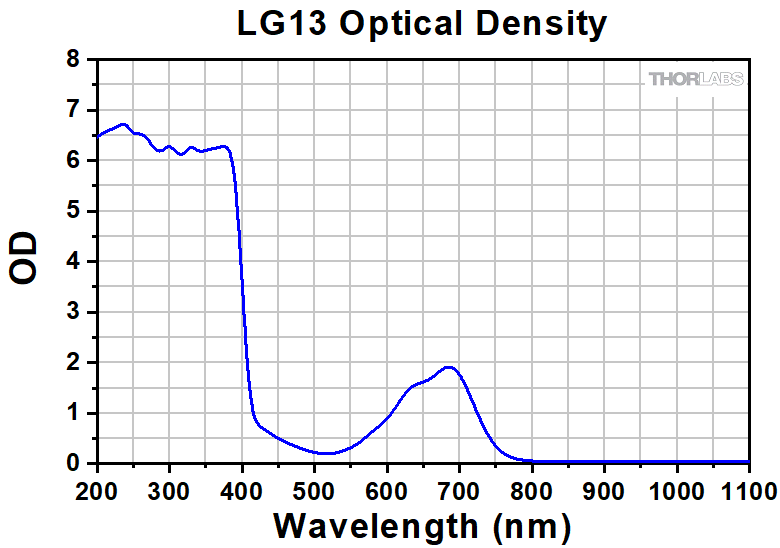
Optical density is the gold standard for measuring how well laser glasses reduce beam intensity. It’s a logarithmic scale where each increase of 1 in OD means the lens blocks 10 times more light.
Understand OD Ratings
| OD | Attenuation | Example |
|---|---|---|
| OD 3 | 1,000× | 1 W → 1 mW |
| OD 4 | 10,000× | 1 W → 0.1 mW |
| OD 5 | 100,000× | 1 W → 0.01 mW |
| OD 6 | 1,000,000× | 1 W → 0.001 mW |
| OD 7 | 10,000,000× | 1 W → 0.0001 mW |
A 10 W fiber laser at 1064 nm with an MPE of 10⁻⁶ W/cm² requires OD 7 to be safe. Lower-power lasers, like a 50 mW red diode, may only need OD 3–4.
Calculate Required OD
Use the formula: OD = log₁₀ (Input Intensity / MPE). Manufacturers list OD values directly on the frame or lens. Always verify the wavelength, OD at that wavelength, and compliance standard. Glasses without clear labeling, especially green-tinted ones bundled with consumer lasers, often have OD less than 3 and are unsafe.
Maximize Visibility with VLT
While blocking dangerous light, laser glasses must let users see their work. This balance is measured by visible light transmission, the percentage of ambient light that passes through.
Balance Protection and Clarity
• High-OD lenses often have low VLT, making environments appear dim. A 532 nm-blocking lens might transmit only 10–20% of visible light.
• Advanced designs use notch filtering to block only the laser line, preserving color and contrast.
• Brown or amber lenses for blue lasers typically offer better VLT than red ones.
Low VLT increases eye strain and reduces safety. Users may remove glasses to see better. Choose lenses that provide adequate OD without sacrificing usability.
Avoid Multi-Wavelength Trade-Offs
Glasses designed for multiple lasers often have complex filtering layers, which reduce VLT further and increase cost. Only use multi-wavelength protection when necessary, and confirm OD ratings for each laser line.
Choose the Right Lens Material

The material of the lens affects durability, clarity, and resistance to laser damage.
Compare Filter Types
| Type | Best For | Pros | Cons |
|---|---|---|---|
| Dyed polycarbonate | Low-power lasers, education | Lightweight, affordable, impact-resistant | Dyes can degrade with UV/heat |
| Filter glass | High-power industrial/medical | Stable under intense beams, clear optics | Heavier, more expensive |
| Laminated (glass + polymer) | High-risk environments | Shatterproof, fail-safe coatings | Bulkier design |
Polycarbonate is common in labs, while glass dominates in cutting, welding, and surgery.
Pick the Correct Frame Style
The frame ensures full coverage and comfort during extended use.
Select Based on Risk Level
• Wraparound frames: Block side reflections, ideal for general lab work
• Goggle-style: Sealed fit prevents peripheral exposure, best for high-power or dusty environments
• Fit-over designs: Worn over prescription glasses, essential for users with vision correction
• Adjustable frames: Customize fit for long procedures or shift work
A poorly fitting frame creates gaps where laser light can enter, defeating the purpose of the lenses.
Prevent Biological Eye Damage
Different wavelengths harm different parts of the eye.
Know the Hazard Zones
| Wavelength | Eye Structure Affected | Injury Risk |
|---|---|---|
| UV (< 400 nm) | Cornea, lens | Photokeratitis, cataracts |
| Visible/NIR (400–1,400 nm) | Retina | Retinal burns, permanent vision loss |
| IR (> 1,400 nm) | Cornea | Thermal burns, pain, scarring |
The 400–1,400 nm range is the retinal hazard region. The eye’s lens focuses this light onto a tiny spot on the retina, amplifying intensity up to 100,000×. Even a 5 mW laser can cause permanent damage if viewed directly.
Stop Direct and Reflected Beams
Laser glasses protect against three exposure types.
Block Direct Beam Exposure
• Full laser beam entering the eye causes instant injury with Class 4 lasers
• Requires highest OD protection
• Not foolproof. Engineering controls like enclosures and interlocks are essential
Defend Against Specular Reflections
• Mirror-like reflections off metal, glass, or tools
• Retain beam coherence and intensity
• As dangerous as direct exposure
• Treated with same OD requirements
Reduce Diffuse Reflection Risk
• Scattered light from rough surfaces like paper or walls
• Lower risk but still hazardous with high-power or prolonged exposure
• Standard laser glasses usually sufficient
Follow Safety Standards and Labels
Only certified glasses provide reliable protection.
Recognize Key Standards
• ANSI Z136.1 (USA): Defines MPE and safe use practices
• IEC 60825 (International): Laser classification and safety
• EN 207 (Europe): Eyewear performance classes (D = continuous, R = pulsed)
Check Label Information
Every compliant pair must display protected wavelength(s), OD at each wavelength, compliance standard, and manufacturer and model. Glasses without this data, especially cheap green goggles, are not safe for real laser work.
Avoid Low-Quality Goggles
Not all laser glasses are equal.
Why Cheap Green Goggles Fail
• No certification: Often lack OD or wavelength labels
• Low OD: Typically less than 3, allowing dangerous transmission
• Wavelength mismatch: May not block the actual laser line
• Poor durability: Thin plastic, prone to scratches
Testing shows that at 2% laser power, cheap green glasses still let users see the beam clearly, proving inadequate blocking. In contrast, OD 6 brown lenses reduce the beam to a faint dot or eliminate it.
Apply in Real-World Settings
Different industries demand different protection levels.
Medical Use
• Ophthalmic surgery, dermatology, dentistry
• Clinicians and patients may need protection
• Lenses must allow precise vision under bright lights
• Often use fit-over or goggle-style frames
Industrial Manufacturing
• Laser cutting, welding, engraving
• High-power Class 4 systems (10–100 W)
• Require OD 6+, glass lenses, goggle enclosures
Research Labs
• Multiple lasers (UV, visible, IR)
• Need multi-wavelength or interchangeable eyewear
• Strict labeling and storage prevent misuse
Entertainment
• Technicians align and service laser projectors
• Crew needs protection during setup
• Audience is safe due to beam height and scanning
Select the Right Pair
Choosing effective laser glasses involves three steps.
Step 1: Identify Laser Parameters
• Wavelength(s): Include harmonics (e.g., 1064 nm and 532 nm)
• Power/Energy: CW (watts) or pulsed (joules)
• Exposure duration: Continuous or short pulses
Step 2: Calculate Required OD
Use: OD = log₁₀ (Incident Irradiance / MPE). Or consult manufacturer charts for common lasers.
Step 3: Ensure Comfort and Fit
• Full coverage (sides, top, bottom)
• Ventilation to reduce fogging
• Compatible with other PPE
• Comfortable for long wear
Uncomfortable glasses get removed, increasing risk.
Maintain and Replace Properly
Even the best glasses degrade over time.
Inspect Before Use
• Look for scratches, cracks, discoloration
• Check coating integrity on reflective lenses
• Test for warped frames or loose seals
Clean and Store Correctly
• Use mild soap and water or manufacturer-approved cleaner
• Avoid alcohol or solvents that degrade dyes
• Store in protective case, away from sunlight and heat
Replace When Needed
• Every 3–5 years, or sooner with heavy use
• Immediately if lenses are damaged or OD is compromised
• Some dyes degrade even with normal storage
There’s no universal expiration date, but old glasses are unreliable.
Use Safe Enclosure Materials
When building laser enclosures, viewing windows must also block radiation.
Best Acrylic for Diode Lasers (445–450 nm)
| Material | Performance |
|---|---|
| Yellow acrylic | ~50% blockage, beam still visible |
| Orange acrylic | 60–70% reduction, marginal |
| Red acrylic | Near-total blockage, recommended |
| Dark brown acrylic | Poor performance, avoid |
Red acrylic offers the best protection for blue diode lasers.
Trust Reputable Suppliers
Only buy from certified manufacturers.
Top Brands
• Edmund Optics: CE-certified, high-VLT options, detailed specs
• Kentek: Full safety systems, interlocks, beam traps
• DiOptika: Medical and industrial focus, ANSI/IEC/EN compliant
These brands provide technical data sheets, OD curves, and compliance documentation essential for professional use.
Key Takeaways for Understanding Laser Glasses
Laser glasses work by combining wavelength-specific filtering and high optical density to reduce laser intensity to safe levels. They use dyed polymers, filter glass, or dielectric coatings to block dangerous light while preserving usable vision. They’re only effective when correctly matched to the laser wavelength and power, properly labeled, and well-maintained.
Never rely on cheap, uncertified goggles. They offer a false sense of security. Instead, choose certified eyewear from trusted suppliers like Edmund Optics, Kentek, or DiOptika. Verify OD ratings and use glasses as part of a broader safety strategy that includes engineering controls and safe work practices.
With the right protection, laser technology can be used safely across medicine, industry, and science.
Frequently Asked Questions About Laser Glasses
How do laser safety glasses actually work?
Laser safety glasses use absorptive dyes or reflective coatings to block specific laser wavelengths, reducing beam intensity to safe levels defined by standards like ANSI Z136.1.
Can I use regular safety glasses for laser protection?
No. Regular safety glasses do not block laser wavelengths and offer no meaningful protection against coherent light.
Do laser glasses expire?
While they lack a fixed shelf life, lenses can degrade due to scratches, UV exposure, or chemical damage. Replace when compromised.
Are there laser glasses for multiple lasers?
Yes, multi-wavelength glasses exist but require careful selection to ensure adequate OD across all relevant wavelengths.
Why is optical density important?
OD determines how much the laser beam is weakened. Higher OD means greater protection, especially for high-power lasers.
Are cheap green goggles safe?
Typically not. Most lack certification, have low OD, and transmit dangerous levels of laser light. Do not rely on them for protection.