
How Laser Ablation Works: Quick Guide
Imagine removing rust from a steel beam without touching it or reshaping a human cornea with zero blade contact. This is not science fiction. It is laser ablation, a high-precision, non-contact process that vaporizes material using focused laser light. Whether you are stripping paint from aircraft, creating nanomaterials, or performing brain surgery, laser ablation delivers unmatched accuracy by targeting matter at micron or even nanoscale levels.
In this guide, you will learn exactly how laser ablation works, from the physics of photon absorption to real-world applications in medicine, manufacturing, and nanotechnology. You will discover the key laser parameters that control precision, why pulse duration matters more than power, and how environment changes outcomes.
Two Core Ablation Mechanisms
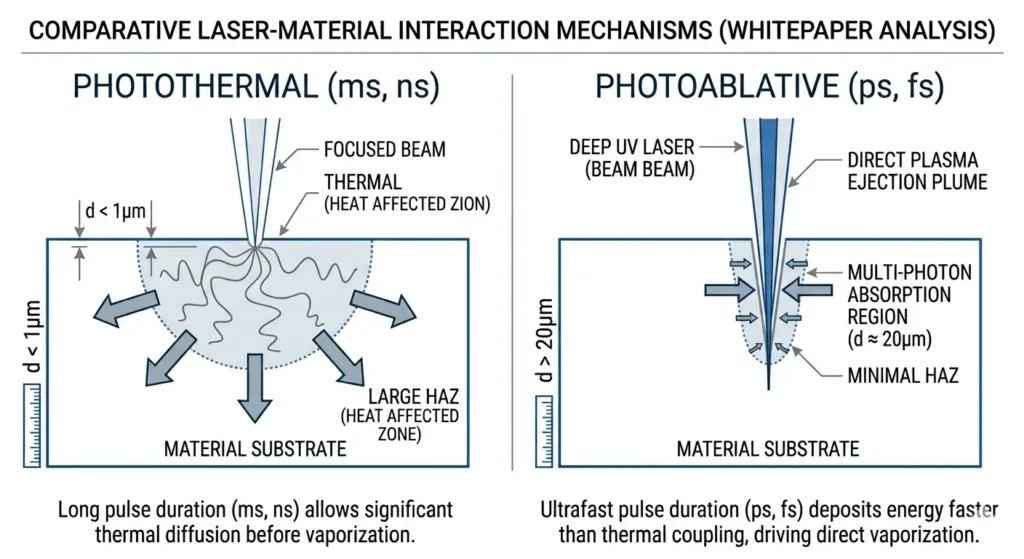
Laser ablation operates through two distinct physical pathways. The dominant mechanism depends on laser settings and material properties, not just power.
Photothermal Ablation Explained
Photothermal ablation removes material through rapid heating. The laser delivers energy that electrons absorb within femtoseconds, spiking their temperature. This heat transfers to the atomic lattice via electron-phonon coupling, causing melting, vaporization, or explosive phase transitions.
This process is typical with nanosecond lasers and continuous-wave systems like fiber or CO₂ lasers. While effective for industrial cleaning or engraving, it produces a larger heat-affected zone due to thermal conduction into surrounding material.
Common applications include rust removal, paint stripping, and large-area surface texturing. Despite some thermal spread, photothermal ablation offers high removal rates, making it ideal for heavy-duty industrial use.
Photoablation: The Cold Process
Photoablation, also called cold ablation, removes material without bulk heating. Instead of melting, UV photons or ultrafast pulses break molecular bonds directly. In UV photoablation, each photon carries enough energy to dissociate chemical bonds in polymers or biological tissue.
With femtosecond lasers, multiphoton absorption enables ablation even in transparent materials. Because energy deposition occurs faster than heat can diffuse, surrounding areas remain cool. This results in heat-affected zones under 10 to 50 micrometers, enabling sub-micron precision.
Used in LASIK eye surgery and micro-machining semiconductors, photoablation leaves clean cuts with little debris or recast layer, though at slower speeds than photothermal methods.
Step-by-Step: What Happens During Ablation

When a laser pulse hits a solid surface, a sequence of ultrafast events unfolds. Each step is critical to successful material removal.
Energy Absorption by Electrons
The process begins when surface electrons absorb laser photons. In metals, free electrons respond instantly. In dielectrics, absorption requires multiphoton processes. Electron temperature spikes within femtoseconds, long before the lattice heats up.
This initial absorption depends heavily on laser wavelength and material reflectivity. For example, 1064 nm fiber lasers are strongly absorbed by metals, while 355 nm UV light interacts efficiently with organics and semiconductors.
Lattice Heating and Phase Explosion
After photon absorption, hot electrons transfer energy to the lattice via electron-phonon coupling, typically within 1 to 10 picoseconds. As lattice temperature surges past melting or boiling points, the material undergoes phase explosion, a violent transition from solid to vapor.
This explosive vaporization generates recoil pressure, ejecting molten droplets and vapor. If fluence exceeds the ablation threshold, material removal occurs. Below this level, only heating happens with no ablation.
Plasma Plume Formation
At high intensities, ejected material ionizes, forming a laser-induced plasma plume. Composed of ions, electrons, atoms, and clusters, this plume expands rapidly into the surrounding environment.
Plasma can shield the surface by absorbing incoming laser energy, a phenomenon known as plasma shielding, which reduces ablation efficiency if not managed.
Confinement in Liquid Environments
In laser ablation in liquid, the surrounding medium confines the plasma plume. This increases local pressure and temperature, promoting nucleation of nanoparticles.
The liquid also quenches vaporized species almost instantly, preventing agglomeration and controlling particle size. This makes liquid-phase ablation ideal for synthesizing metal or oxide nanoparticles like tin dioxide or copper oxide.
Nanoparticle Condensation and Growth
As vapor cools, atoms condense into nanoparticles. Their final size and shape depend on pulse repetition rate, laser fluence, solvent type, and presence of surfactants.
For instance, increasing pulse frequency during copper oxide synthesis raises nucleation density, yielding finer nanoparticles.
Key Laser Parameters That Control Ablation
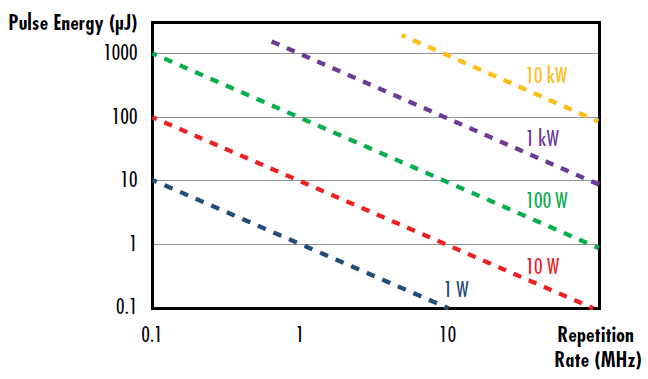
Success in laser ablation hinges on optimizing several interdependent parameters. Get them right, and you achieve clean, precise removal. Get them wrong, and you risk damage or inefficiency.
Wavelength: Match to Material
Laser wavelength determines how well energy is absorbed. Choose incorrectly, and most light reflects, wasting energy.
Fiber lasers at 1064 nm work best for metals due to strong absorption. CO₂ lasers at 10.6 micrometers suit organics, plastics, wood, and glass. UV lasers at 355 nm enable bond-breaking in heat-sensitive materials like polymers or biological tissue.
Mismatched wavelengths reduce efficiency and increase required fluence.
Pulse Duration: The Critical Factor
Pulse duration is arguably the most critical factor in minimizing thermal damage.
Nanosecond pulses are common in industrial systems. They allow some heat diffusion, producing moderate heat-affected zones. Picosecond and femtosecond pulses deliver energy faster than thermal conduction time, enabling cold ablation with negligible heat-affected zones.
Ultrafast lasers are essential for precision applications like medical surgery or semiconductor patterning.
Fluence: Exceed the Threshold
Fluence, measured in joules per square centimeter, must exceed the material ablation threshold to remove matter. Too low produces no ablation. Too high risks cracking, splashing, or plasma shielding.
Optimal fluence ensures efficient removal with minimal collateral damage. For example, rust has a lower threshold than steel, enabling selective cleaning without harming the base metal.
Repetition Rate and Average Power
Pulse repetition rate controls processing speed. A 100-watt laser firing 100,000 pulses per second delivers 1 millijoule per pulse. Higher rates increase throughput but require careful tuning to avoid dropping below ablation threshold between pulses.
Average power determines overall speed. Industrial cleaning systems often use 500-watt pulsed fiber lasers for fast, large-area treatment.
Beam Quality and Spot Size
Beam quality, measured by the M² factor, affects focusability. Lower M² values closer to 1 allow tighter focusing, increasing peak intensity.
Smaller spot sizes concentrate energy, boosting fluence. However, diffraction limits minimum spot size, typically around 10 to 30 micrometers for standard optics.
Scanning and Pulse Overlap
Galvanometric scanners move the beam across surfaces at high speed. Scanning velocity affects dwell time, or how long the laser stays on one spot.
Pulse spacing determines overlap. Closer spacing increases energy deposition, useful for deep engraving or complete layer removal.
Multiple passes improve depth control and prevent overheating, especially when removing thick coatings like mill scale or paint.
Industrial Applications of Laser Ablation
From factory floors to aerospace hangars, laser ablation powers high-precision, eco-friendly manufacturing processes.
Laser Cleaning: Remove Without Contact
Laser cleaning strips contaminants like rust, oil, paint, oxides, and mill scale without abrasives or chemicals. It exploits differences in ablation thresholds since contaminants absorb energy more readily than substrates.
A 500-watt fiber laser can clean 10 square meters per hour of rusted steel. This method is used in aircraft paint stripping, mold decontamination, art restoration, and automotive part cleaning.
No consumables, no waste, just vaporized debris captured by fume extractors.
Marking and Engraving Permanent Codes
Laser marking creates durable identifiers like QR codes, serial numbers, and logos. Etching removes shallow layers under 100 micrometers. Deep engraving uses multiple passes for lasting marks.
Unlike laser annealing, which colors stainless steel without removal, ablation-based marking physically alters surface topography, ideal for traceability in aerospace and medical devices.
Surface Texturing for Functional Performance
Laser texturing modifies micro-topography to enhance adhesion, friction, or wettability. It improves paint bonding on automotive panels, reduces wear in engine components, and optimizes cell growth on medical implants.
Digital control enables complex patterns on 3D surfaces, including molds and composite parts.
Micro-Machining at Sub-25 nm Scale
Femtosecond lasers enable sub-25 nanometer resolution, crucial for battery electrode structuring, semiconductor dicing, and medical stent cutting.
With digital precision, micro-machining supports automated production lines and high-repeatability manufacturing.
Medical Uses: Surgery Without Scalpels
Laser ablation offers minimally invasive alternatives to traditional surgery, especially in delicate tissues.
Brain Surgery for Epilepsy and OCD
Laser interstitial thermal therapy treats epilepsy and treatment-resistant OCD. Under MRI guidance, a pencil-thin probe delivers laser energy to destroy abnormal brain tissue.
Procedure time runs 4 to 5 hours with about 1 hour of actual ablation. Hospital stay is 1 to 2 nights with recovery around 2 weeks.
Over 60 to 70 percent of OCD patients see at least 35 percent symptom reduction. Risks are low but include memory or vision changes.
Varicose Vein Closure in Minutes
Outpatient laser ablation closes varicose veins using a catheter-thin fiber. As the laser heats the vein wall, it collapses and seals shut.
Patients need only local anesthesia and can return to activity the next day. Compression stockings are worn for 2 weeks.
No stitches, no scarring, just rerouted blood flow.
Eye Surgery: LASIK and PRK
Excimer lasers reshape the cornea via UV photoablation. Each pulse removes 0.25 micrometers of tissue without heating surrounding areas.
Over one million procedures yearly prove its safety and precision. No blades, no thermal damage, just vision correction.
Tissue and Tumor Ablation
Lasers like Er:YAG, Ho:YAG, and thulium fiber lasers target water-rich tissues, enabling kidney stone fragmentation, prostate enlargement treatment, and dental cavity preparation.
CO₂ lasers offer simultaneous ablation and coagulation, reducing bleeding in ENT and oral surgeries.
Nanomaterial and Thin Film Production
Laser ablation is not just for removal. It is a powerful tool for creation.
Carbon Nanomaterials: Fullerenes and CNTs
Pulsed lasers vaporize graphite to produce fullerenes, carbon nanotubes, and carbon quantum dots.
Fullerenes were discovered using this method, earning the Nobel Prize. Carbon nanotubes grow from doped graphite at around 1200 degrees Celsius in argon.
Carbon quantum dots start non-luminescent but gain fluorescence after surface passivation with PEG or similar agents. Emission color can be tuned via solvent or laser settings.
Metal and Oxide Nanoparticles
Liquid-phase ablation produces high-purity nanoparticles. Tin dioxide sizes range from 25 nanometers in NaCl to 40 nanometers in methanol. Copper oxide size is controlled by pulse rate. Nickel nanoparticles synthesize in ethanol.
These particles show promise in sensors, catalysis, and biomedicine without toxic reagents.
Pulsed Laser Deposition
Pulsed laser deposition creates thin films by focusing UV laser on a solid target, generating a plasma plume, and depositing material onto a substrate in vacuum.
This method is used for phosphor coatings in LEDs, superconducting films, and nanocrystalline oxides. Rotating targets ensure uniform ablation over time.
Equipment and System Design
Modern laser ablation systems combine precision optics with automation for reliability and safety.
Laser Types by Application
Fiber lasers at 1064 nanometers suit metal cleaning and marking. CO₂ lasers at 10.6 micrometers work on polymers, wood, and glass. UV DPSS lasers at 355 nanometers enable microfluidics and bio-ablation. Femtosecond lasers enable cold ablation and nanomachining. Excimer lasers serve corneal surgery and lithography.
Automation and Scanning Systems
Galvanometric scanners steer beams at high speed using rotating mirrors. Polygon scanners enable ultra-fast processing for large areas. Three-dimensional scanning heads adjust focus dynamically for curved surfaces.
Systems are enclosed in Class-1 laser safety cabinets with interlocks and fume extraction.
Supporting Components
Beam expanders and focusing lenses direct the laser. Motion stages position samples. In-situ monitoring via spectroscopy or imaging tracks process quality. Environmental chambers enable gas or liquid ablation.
Integration with robotics allows fully automated production lines.
Advantages Over Traditional Methods
Laser ablation outperforms mechanical and chemical techniques in key areas.
High Precision, Zero Contact
With resolutions down to about 25 nanometers, lasers achieve detail impossible with drills or blades. No tool wear, no mechanical stress.
Minimal Thermal Damage
Especially with ultrafast pulses, heat spread is negligible, preserving surrounding material integrity.
Eco-Friendly and Safe
No solvents, no abrasives, no hazardous waste. Only vaporized particulates, captured by filters.
Selective Layer Removal
Different materials ablate at different thresholds. This allows paint removal from aluminum without damaging the metal underneath.
Automation-Ready
Digital control enables seamless integration into CNC systems, robotic arms, and Industry 4.0 workflows.
Limitations and Challenges
Despite its strengths, laser ablation faces real-world constraints.
High Equipment Cost
Ultrafast and UV lasers cost significantly more than nanosecond fiber systems, limiting access for small operations.
Slow Throughput
Photoablation and nanoparticle synthesis are inherently slow. High precision trades off with speed.
Nanoparticle Size Control
Particles often have broad size distributions. Stabilizers or flow systems help but add complexity.
Energy Inefficiency
Much laser energy is lost to reflection, scattering, or plasma absorption. Efficiency rarely exceeds 20 to 30 percent.
Post-Processing Needs
Carbon quantum dots require surface passivation. Films may need annealing. Not all results are ready-to-use.
Safety and Compliance
Fume extraction, protective enclosures, and trained operators are required. Class 4 lasers demand strict safety protocols.
Frequently Asked Questions About Laser Ablation
What is the basic principle of laser ablation?
Laser ablation works by concentrating intense laser energy onto a tiny surface area, rapidly heating it beyond vaporization or sublimation points. When the laser energy exceeds a material-specific threshold, the surface explodes into vapor, plasma, or ejected particles, often with minimal heat spread to surrounding zones.
What is the difference between photothermal ablation and photoablation?
Photothermal ablation removes material through rapid heating, typically using nanosecond lasers or continuous-wave systems. It produces a larger heat-affected zone but offers high material removal rates. Photoablation, or cold ablation, uses UV photons or ultrafast pulses to break molecular bonds directly without bulk heating, resulting in minimal thermal damage.
What laser parameters are most important for precision ablation?
Pulse duration is the most critical parameter for minimizing thermal damage. Ultrafast pulses in the picosecond or femtosecond range deliver energy faster than heat can diffuse, enabling cold ablation. Wavelength must match the material absorption properties. Fluence must exceed the ablation threshold but stay low enough to avoid collateral damage.
Can laser ablation be used to create nanoparticles?
Yes, laser ablation in liquid environments synthesizes nanoparticles by confining the plasma plume, increasing local pressure and temperature, and promoting nucleation. The surrounding liquid quenches vaporized species, preventing agglomeration and controlling particle size. This method produces metal and oxide nanoparticles without toxic reagents.
What are the main industrial applications of laser ablation?
Industrial applications include laser cleaning for rust and paint removal, marking and engraving permanent codes, surface texturing for functional performance, and micro-machining at sub-25 nanometer scale. It is also used in pulsed laser deposition for thin film growth.
Is laser ablation safe?
Laser ablation requires proper safety measures including fume extraction, protective enclosures, and trained operators. Class 4 lasers demand strict safety protocols. When performed correctly with appropriate equipment, laser ablation is a controlled and safe process for industrial and medical applications.
Key Takeaways for Understanding Laser Ablation
Laser ablation is a versatile technology that leverages focused laser energy to remove or modify materials with exceptional precision. It operates through photothermal or photoablation mechanisms, enabling applications ranging from industrial cleaning and micro-machining to medical surgery, nanomaterial synthesis, and thin film deposition.
The process is governed by key parameters, wavelength, pulse duration, fluence, repetition rate, and ambient environment, which must be optimized for each material and application. Its advantages include non-contact operation, minimal thermal damage, high precision, environmental sustainability, and automation compatibility.
Despite challenges like high equipment cost, limited throughput, and nanoparticle size control, ongoing advancements in ultrafast lasers and hybrid systems continue to expand capabilities. Future developments in wearable energy harvesters, quantum dot biosensors, and advanced biomedical devices reinforce laser ablation is role as a cornerstone of modern precision engineering and scientific innovation.