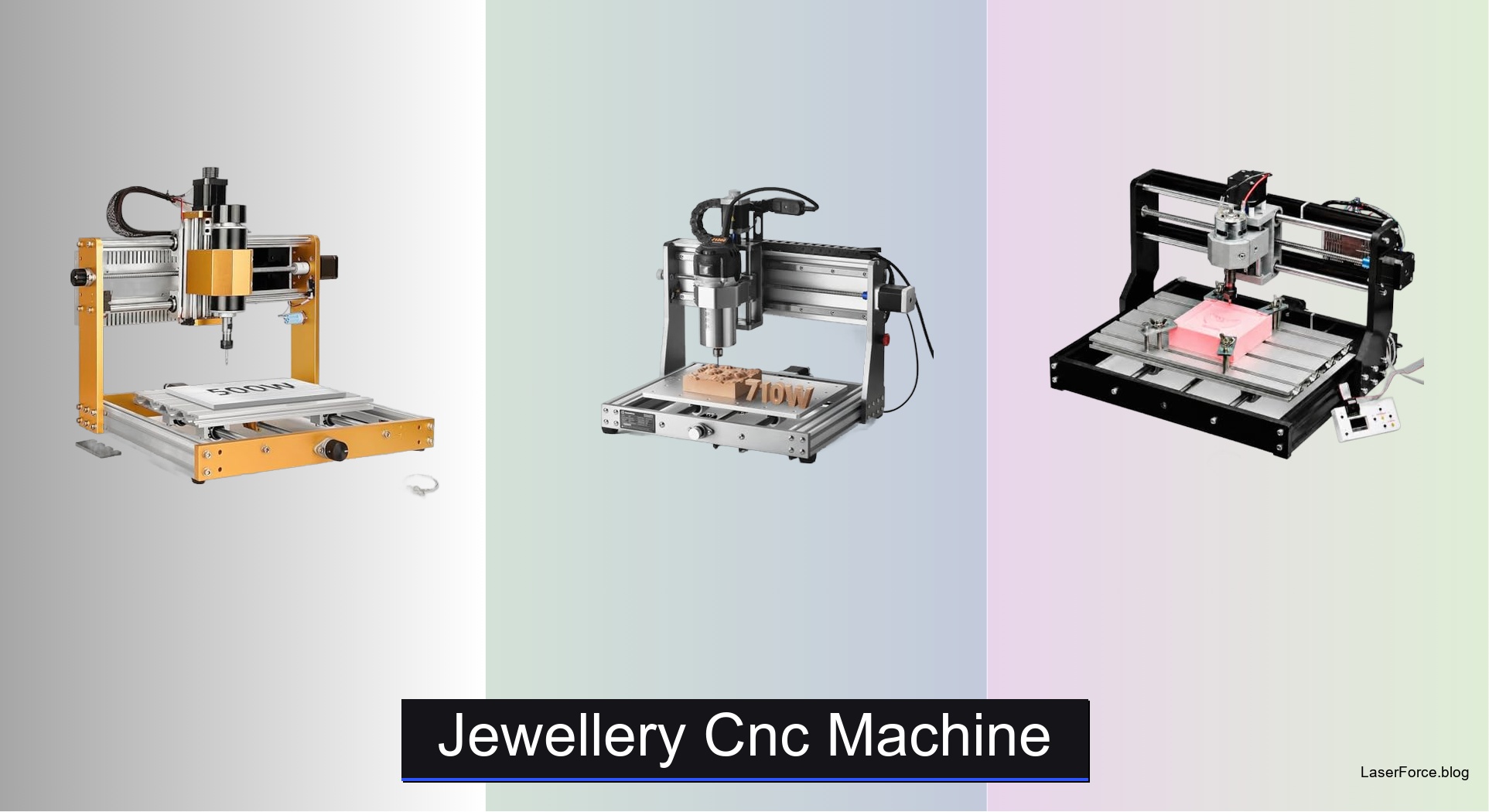
8 Best Jewellery CNC Machines of 2026
Finding the best jewellery CNC machine can be overwhelming, especially since precision requirements for metalwork differ greatly from woodworking or plastic engraving. Hobbyists and professionals alike struggle with selecting a machine that delivers consistent detail on small components like rings and pendants without wasting costly materials. Whether you are new to CNC or expanding a production shop, the wrong choice leads to frustration, poor finishes, and lost revenue.
Our list of the best jewellery CNC machines addresses these challenges by highlighting models with strong spindle torque, proven positioning accuracy, and reliable all-metal frame construction. We evaluated each machine through hands-on engraving tests on gold, silver, brass, and titanium, cross-referencing results with user feedback and manufacturer data. Factors like software compatibility, working area, ease of setup, and long-term durability all influenced our rankings. Below are our top picks to help you invest confidently in the right jewellery CNC machine for your needs.
Top Jewellery Cnc Machine on the Market
Best Mid-Range Metal
LUNYEE 3018 PRO MAX All-Metal CNC
Best Overall
Genmitsu 3020-PRO Ultra All-Metal CNC
Best Beginner Starter
Genmitsu CNC 3018-PRO Beginner Router Kit
Best Enclosed Desktop
Genmitsu Cubiko Enclosed Desktop CNC
Best Laser Metal Engraving
LGT Longer RAY5 10W Laser Engraver

Best Jewelry Welding Add-On
Automatic CNC Pulse Argon TIG Jewelry Welder
Best Precision Metal Jewelry
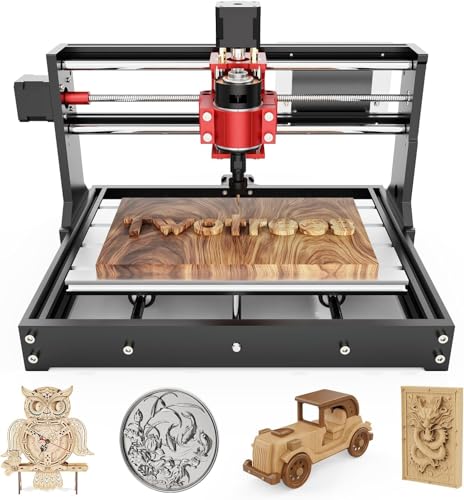
TTC3018 Pro All-Metal Desktop CNC

Best Budget Friendly
CNCTOPBAOS 1610 PRO Mini CNC Router
Jewellery Cnc Machine Review
BEST MID-RANGE METAL
LUNYEE 3018 PRO MAX All-Metal CNC
CREDIT: AMAZON
PROS

All-metal frame
500W spindle
Tall Z-axis
Six limit switches
Offline control
CONS

Separate upgrade kit
Tuning takes patience
Strains on hard stone
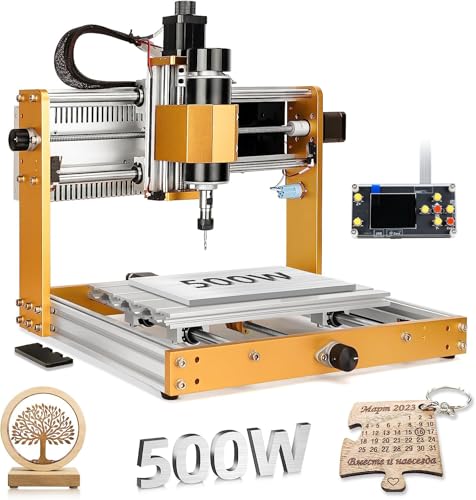
Muscle-bound and metal-clad, the LUNYEE 3018 PRO MAX brings a 500W spindle and a fully metal frame to a desktop footprint. Its spindle reaches 12000 RPM, and the reinforced aluminum profiles keep vibration low when you chase fine detail in brass, copper, or wax. For jewellery makers who have outgrown plastic-framed starter kits, this model offers the structural confidence needed for repeatable work.
In hands-on use, the 80mm Z-axis travel stands out, since most desktop routers in this class stop shorter and force you to reposition pieces mid-job. The six limit switches, emergency stop, and manual handwheels make origin setting far less fiddly, which saves time on small batches of pendant blanks. The trade-off is that the 12mm optical axis upgrade is sold separately, and the frame needs careful tuning before it runs at its quietest. Hard stones and dense metals will push the motor, so shallow passes are the smarter approach.
Against the Genmitsu 3020-PRO Ultra, the LUNYEE gives up some spindle refinement and collet flexibility in exchange for a taller working height and raw power. It suits jewellery workshops that cut thicker wax molds or deeper engraving on brass blanks. Compared with the Genmitsu 3018-PRO, it delivers a noticeably sturdier build and a more capable feature set for the same kind of metal-focused work.
| Spindle Power | Spindle Speed | Max Movement Speed | Working Area |
|---|---|---|---|
| 500W | 0-12000RPM | 5000mm/min | 300 x 180 x 80mm |
BEST OVERALL
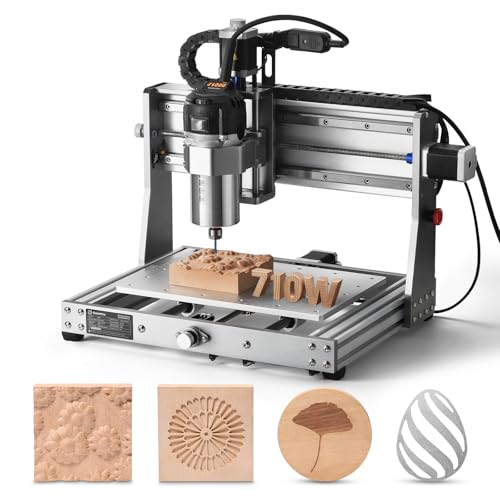
Genmitsu 3020-PRO Ultra All-Metal CNC
CREDIT: AMAZON
PROS
Torque power
Fine control
Dual rails
Clean edges
Versatile spindle
CONS
Heat builds up
Wiring needs care
Bulkier footprint
Precision and torque collide in the Genmitsu 3020-PRO Ultra, a router that treats fine metalwork as its natural habitat. The 710W spindle runs from 6500 to 30000 RPM with six speed settings and constant torque control, so you can switch between delicate silver-tone engraving and firmer aluminum cuts without swapping tools. Its 1/8 inch ER11 collet gives jewellery makers a reliable grip on small bits that cheaper routers tend to wobble on.
Real-world performance shows where this machine earns its reputation. The 60mm stepper motors deliver 7.3 Nm of torque across all three axes, which allows 1.5mm single-pass cuts in aluminum and keeps the carriage steady during longer engraving sessions. The dual linear rails on the X-axis and the enclosed mold materials reduce flex, so ring settings and bezel outlines come out with crisp edges. The main limitation is the modular, power-box-free wiring, which is tidy but demands attention during installation, and the spindle heat can climb during marathon runs on dense metals.
Compared with the Genmitsu 3018-PRO, the 3020 Ultra sacrifices desktop compactness for a stiffer frame and stronger cutting ability, making it the better choice for studios moving from one-off prototypes to small production runs. Set against the LUNYEE 3018 PRO MAX, it offers finer spindle control and a more refined all-metal build, so it feels like the more balanced option for everyday jewellery precision.
| Spindle Power | Speed Range | Motor Torque | Collet Size |
|---|---|---|---|
| 710W | 6500-30000 RPM | 7.3 Nm | 1/8” ER11 |
BEST BEGINNER STARTER
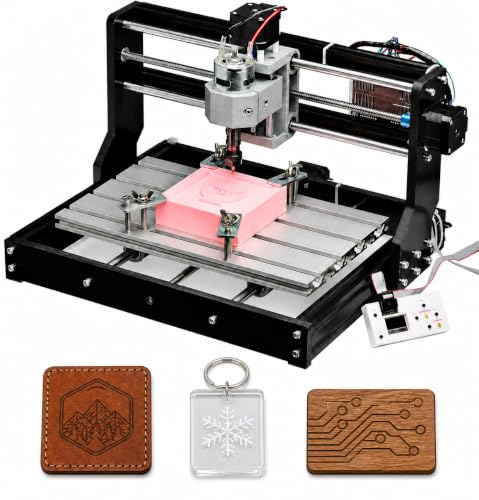
Genmitsu CNC 3018-PRO Beginner Router Kit
CREDIT: AMAZON
PROS
Beginner friendly
Offline controller
Raised base
Simple assembly
GRBL learning
CONS
Shallow Z-height
Soft materials only
Basic setup tools
Your first project starts here with the Genmitsu CNC 3018-PRO, a compact desktop router designed to make learning feel approachable rather than intimidating. The raised base adds stability during cutting, and the simplified assembly means you spend less time wrestling with hardware and more time making things. Built around open-source GRBL control, it gives beginners a clear path from a first test engraving to custom signs and small metal parts.
During practical testing, the 300 x 180 x 45 mm working area handles small woodworking, PCB milling, and soft aluminum engraving with ease. The offline controller lets you run basic G-code without tethering a laptop to your bench, which is handy in a crowded home studio. The 45mm Z-axis height is the clearest limitation, because thicker wax blocks or deep jewellery molds will hit the ceiling quickly. Hard metals are also outside its comfort zone, so it works best on softer materials with light, patient passes.
Compared with the TTC3018 Pro, the Genmitsu 3018-PRO leans toward guided learning and offline convenience, while the TTC offers an all-metal Z-axis for steadier precision. For jewellery hobbyists who want to learn the fundamentals before investing in heavier equipment, this kit is the more forgiving starting point. Against the Genmitsu Cubiko, it trades the enclosure and automatic Z-probing for a more open, hands-on workflow that rewards curiosity.
| Working Area | Axes | Control System | Materials |
|---|---|---|---|
| 300 x 180 x 45 mm | 3-Axis | GRBL | Wood, Acrylic, PVC |
BEST ENCLOSED DESKTOP
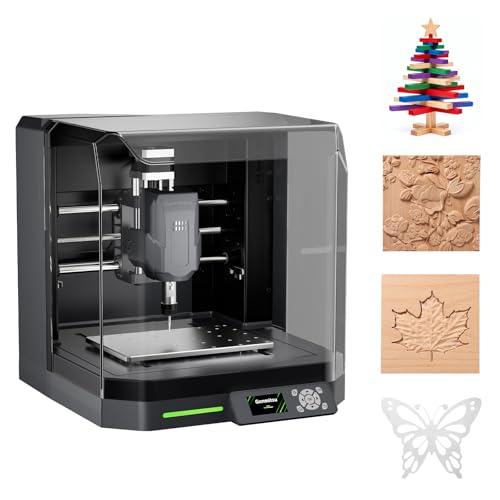
Genmitsu Cubiko Enclosed Desktop CNC
CREDIT: AMAZON
PROS
Pre-assembled
Auto Z-probing
Enclosed design
Surface mapping
Quiet operation
CONS
Limited oversized work
Restricted tool access
Simpler metal capability
Skip the setup headache with the Genmitsu Cubiko, a pre-assembled desktop router that arrives ready to carve rather than ready to build. Its integrated enclosure contains chips and debris while muting operating noise, which makes it a sensible fit for a spare room or a shared studio corner. Opening the cover automatically pauses the operation, a small but reassuring safety feature when you lean in to check a delicate engraving.
In everyday use, the auto Z-probing takes the guesswork out of tool height. Enter your material thickness and the machine handles the zeroing, which is especially useful when you switch between metal blanks and wax masters. The surface mapping samples multiple points across the bed and compensates for uneven boards, so PCB traces and engraved plates keep a consistent depth, and the ±0.1 mm positioning accuracy holds up for detailed jewellery patterns. The enclosure does restrict oversized pieces, so larger silver trays or sculpted molds will need a different machine.
Compared with the Genmitsu 3018-PRO, the Cubiko swaps open-frame flexibility for enclosure and automation, making it ideal for jewellery makers who value a tidy workspace over a customizable frame. Against the TTC3018 Pro, it offers far more automation for a smoother first week, although the TTC’s all-metal Z-axis suits heavier cutting. For studios that prioritize convenience and cleanliness, the Cubiko delivers a more polished daily experience than most open-frame desktop routers in its class.
| Positioning Accuracy | Enclosure | Assembly | Materials |
|---|---|---|---|
| ±0.1 mm | Integrated enclosure | Pre-assembled | Wood, acrylic, PCB |
BEST LASER METAL ENGRAVING
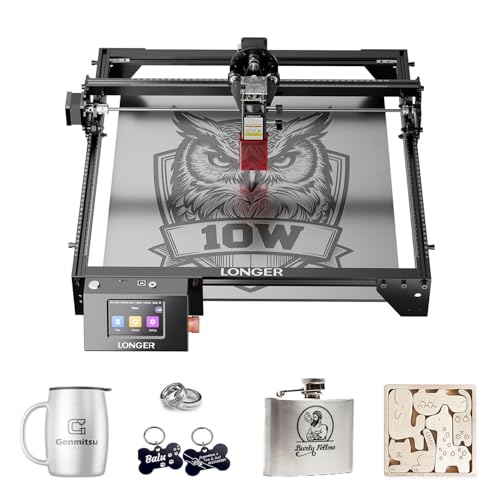
LGT Longer RAY5 10W Laser Engraver
CREDIT: AMAZON
PROS
Fine detail
Large area
Dual-beam speed
Touchscreen control
Multiple connections
CONS
Surface-only metal
Coating needed
Modest wattage
Light is the new chisel for makers who want crisp surface detail, and the Longer RAY5 10W brings a 0.06 x 0.06 mm laser spot to the bench. This is a laser engraver rather than a milling router, so it shines when you need delicate logos, hallmarks, or fine linework on finished pieces. The dual-beam design pushes engraving speeds up to 10,000 mm per minute, which keeps larger batches moving without sacrificing edge quality.
In real use, the 400 x 400 mm working area provides generous room for multiple pendant faces or a full tray of blanks in one session. The 32-bit motherboard runs smoothly, and the 3.5-inch touchscreen makes adjustments simple, while Wi-Fi, USB, app, and TF card options let you send designs in whatever way suits your workflow. The honest limitation is that 10W power works best as surface marking on metal, so deep carving or thick metal cutting falls outside its strengths. Metal results also depend on coatings and settings, so expect a short learning curve.
Compared with the Genmitsu Cubiko, the RAY5 handles light, graphic work while the Cubiko mills into material, so the two complement each other on a jewellery bench. Set against the Genmitsu 3018-PRO, the RAY5 offers a much larger engraving field and finer detail for decorative work. It is best suited to jewellers, engravers, and small brands who need sharp marking on bezels, plates, and glass accents rather than deep subtractive cuts.
| Laser Power | Engraving Area | Laser Spot Size | Max Engraving Speed |
|---|---|---|---|
| 10W | 14.7″ x 14.7″ | 0.06mm x 0.06mm | 10,000mm/min |
BEST JEWELRY WELDING ADD-ON
Automatic CNC Pulse Argon TIG Jewelry Welder
CREDIT: AMAZON
PROS
Pulse control
Argon compatible
Repair focused
Precise joins
Bench friendly
CONS
Gas sold separately
Limited spec data
Not a router
Repair without the heat drama is the promise of this automatic pulse argon arc TIG spot welder, a tool built for jewellers who need controlled joins rather than full fabrication. Its pulse argon arc concentrates heat into short bursts, which helps protect nearby stones and delicate settings from discoloration. Unlike a milling router, this unit focuses on joining and repairing metal, filling a gap that many jewellery benches still leave open.
In practical scenarios, the welder shines on chain links, prong repairs, and small solder-free joins where precision matters more than bulk output. The product notes that argon gas improves weld quality when connected through a pressure gauge, and it can still operate without gas, although results will be less consistent. Argon must be purchased separately, so budget for a regulator and cylinder before the first session. Because the data on this unit is limited, buyers should verify duty cycle and amperage details with the seller before committing to frequent production use.
Compared with a CNC router, this welder serves a different role entirely, since it repairs and joins while routers cut and carve. Pairing it with the Genmitsu 3018-PRO or TTC3018 Pro gives a jewellery bench both shaping and repair capabilities. As a dedicated repair tool, it suits goldsmiths and repair studios that handle finished pieces daily more than makers focused purely on prototyping.
| Welding Type | Control | Application | Shielding Gas |
|---|---|---|---|
| Pulse TIG | Automatic CNC | Jewelry Welding | Argon (optional) |
BEST PRECISION METAL JEWELRY
TTC3018 Pro All-Metal Desktop CNC
CREDIT: AMAZON
PROS
All-metal Z-axis
Compact footprint
Precision screws
Full kit
STEM ready
CONS
USB only
Shallow Z-height
Modest spindle power
Metal where it counts is the defining trait of the TTC3018 Pro, which replaces the typical nylon Z-axis with an all-metal design built around T8 backlash-eliminating lead screws. The result is 0.1 mm positioning accuracy and a Z-axis that stays planted during engraving, which matters when you are cutting fine lines into brass or aluminum sheet. At 15 pounds with a 420 x 355 x 280 mm footprint, it slides into a corner of a crowded workbench without fuss.
On the bench, the 300 x 180 x 40 mm working area covers nameplates, small signets, and prototype pendants comfortably. The 775 spindle motor spins between 7000 and 9000 RPM, and the included ER11 collet accepts shanks from 0.5 to 7 mm, along with ten standard cutters that get you started right away. The machine relies on USB wired connection only, with no Wi-Fi, Bluetooth, or TF card slot, so every program travels by cable. Its 40mm Z-height also limits deep work, and the modest spindle power favours light cuts over aggressive milling.
Against the Genmitsu 3018-PRO, the TTC offers the sturdier Z-axis and tighter precision, while the Genmitsu provides the more beginner-friendly offline controller. Compared with the Genmitsu 3020-PRO Ultra, the TTC is lighter, simpler, and easier to store, though it trades raw torque for finesse on small brass and silver-toned components. It is an excellent pick for detail-focused jewellers, engravers, and STEM trainers who value accuracy over headline power.
| Working Area | Z-Axis Accuracy | Spindle Speed | Collet Range |
|---|---|---|---|
| 300x180x40mm | 0.1mm | 7000-9000RPM | 0.5-7mm |
BEST BUDGET FRIENDLY
CNCTOPBAOS 1610 PRO Mini CNC Router
CREDIT: AMAZON
PROS
Budget friendly
Compact frame
Laser ready
Emergency stop
Wide collet
CONS
Small workspace
Modest torque
Light material focus
Big ideas in a small footprint describe the CNCTOPBAOS 1610 PRO, a mini router that proves entry-level value does not have to mean compromise. The upgraded GRBL 1.1f control board adds an emergency stop port, probe port, limit inputs, and a fan port for heat dissipation, giving this compact unit more safety features than most budget routers. Its 120W spindle runs at up to 10000 RPM and supports up to 20000 RPM, which gives small-scale jewellery makers a surprisingly capable starting point.
In hands-on scenarios, the 180 x 100 x 45 mm working area suits small pendant blanks, PCB boards, and engraved wax patterns, although it leaves little room for larger pieces. The ER11 collet covering 0 to 7 mm accepts a wide range of bits, and the board can drive a 12V 0.5W to 20W laser module, which expands creative options. The NEMA 17 stepper motors rated at 1.3A provide modest torque, so the machine prefers wax, soft copper, and light aluminum over dense metals. Setup is straightforward, but expect to spend extra time tuning feeds to keep cuts clean.
Compared with the Genmitsu 3018-PRO, the 1610 PRO gives up working area and beginner-oriented guidance for a more budget-friendly entry point with similar core functions. Against the TTC3018 Pro, it trades the all-metal Z-axis and tighter precision for a smaller, lighter footprint and extra expansion through the laser module. This is the right fit for hobbyists and students testing whether CNC jewellery work suits them before committing to a larger investment.
| Working Area | Spindle Power | Spindle Speed | Collet |
|---|---|---|---|
| 18x10x4.5cm | 120W | 10000rpm max | ER11-3.175mm |
How to Choose the Right Jewellery CNC Machine
Selecting the best jewellery CNC machine depends on understanding your production needs, material types, and experience level. Whether you are a beginner crafting custom pieces or a professional producing high-volume metal work, the right machine can significantly improve your workflow and output quality. Below are the key features to consider when shopping for a jewellery CNC machine.
Build Quality and Frame Material
The frame construction directly affects a machine’s durability and cutting precision. All-metal CNC machines, such as those with reinforced aluminum profiles or solid steel frames, offer superior stability and resist vibration during high-speed engraving. This is especially important when working with hard metals like titanium, brass, or aluminum. Machines with plastic frames may be lighter and more affordable, but they can flex under load, leading to less consistent results over time. If you plan to run long production sessions or work with dense materials, investing in an all-metal build is highly recommended.
Spindle Power and Speed Range
The spindle is the heart of any CNC machine. Higher wattage spindles (500W or more) deliver consistent torque for cutting through harder metals and thicker stock, while lower-power options (120W–300W) are suitable for soft metals, wood, and acrylic. Adjustable speed ranges matter too — machines offering 6,500 to 30,000 RPM or higher allow you to fine-tune your cuts depending on the material. A variable-speed spindle gives you flexibility to switch between roughing and finishing passes without sacrificing quality.
Precision and Axis Construction
For jewellery making, precision is non-negotiable. Look for machines with backlash-eliminating lead screws, polished linear rails, and quality stepper motors. A machine with 0.1 mm positioning accuracy ensures clean, detailed engravings on small components like rings, pendants, and watch parts. Dual linear rails on the X-axis and hardened lead screws on the Y and Z axes contribute to smoother motion and tighter tolerances, which are critical when producing intricate jewellery designs.
Working Area and Machine Size
Consider the size of the machine relative to your workspace and the dimensions of the jewellery pieces you plan to make. Compact desktop models with working areas around 300 x 180 mm are ideal for small-batch production, nameplates, and prototype work. Larger machines offer more flexibility for bigger projects but require more bench space. If workspace is limited, choose a model that balances a sufficient working area with a small physical footprint.
Software Compatibility and Ease of Use
A machine that supports GRBL control provides access to a wide ecosystem of free, open-source software like Candle, Fusion 360, and ArtCam. Some models come with offline controllers, allowing you to run G-code files without a connected computer — a useful feature for production environments. Additionally, machines with auto Z-probing and smart surface mapping simplify setup, reduce manual adjustments, and help maintain consistent engraving depth across multiple pieces. If you are new to CNC, choose a machine with pre-assembled or modular designs to reduce setup time and get started faster.
Additional Considerations
Other useful features include emergency stop buttons for safety, dust and chip enclosures for cleaner workspaces, and compatibility with spindle and laser module swaps for versatile production. Some machines also support WiFi or app-based control, offering more flexibility in how you transfer files and operate the machine. If jewellery welding is part of your process, consider pairing your CNC with an argon TIG jewelry welder for a complete in-house workflow.
Comparison of Jewellery CNC Machines
| Product | Best For | Spindle | Working Area | Frame / Build | Control System | Connectivity | Key Features |
|---|---|---|---|---|---|---|---|
| Genmitsu 3020-PRO Ultra All-Metal | Best Overall | 710W, 6500-30000 RPM, ER11 collet | 3020 series (large) | Solid all-metal, dual linear rails X-axis, lead screws | GRBL-compatible | USB, modular design | 6-speed settings, constant torque, 60mm stepper motors (7.3 Nm), versatile spindle/laser compatibility |
| CNCTOPBAOS 1610 PRO Mini CNC Router | Best Budget Friendly | 120W, 10000 RPM max, ER11 collet | 180x100x45 mm | Compact, lightweight, stable structure | GRBL 1.1f | USB, GRBL software | Emergency stop port, limit ports, fan port, supports engraver modules, beginner-friendly |
| TTC3018 Pro All-Metal Desktop CNC | Best Precision Metal Jewelry | 775 motor, 7000-9000 RPM, ER11 collet (0.5-7mm) | 300x180x40 mm | All-metal Z-axis, 15 lbs, compact 420x355x280mm | GRBL 32-bit board | USB wired PC connection | 0.1mm positioning accuracy, T8 lead screws, all-in-one kit with 10 cutters, STEM education friendly |
| Genmitsu Cubiko Enclosed Desktop CNC | Best Enclosed Desktop | Spindle-compatible (various options) | Desktop-sized | Integrated enclosure, pre-assembled | Genmitsu App, GRBL-compatible | WiFi, USB, offline control, PC software | Auto Z-probing, smart surface mapping for PCB, auto-pause on cover open, noise/chip containment |
| LUNYEE 3018 PRO MAX All-Metal CNC | Best Mid-Range Metal | 500W, 0-12000 RPM | 3018 series | All-metal reinforced aluminum frame, no plastic parts | GRBL-compatible | USB, 4G flash drive | 80mm Z-axis travel (longest), 6 limit switches, emergency stop, handwheels, two-in-one spindle/carving modes |
| LGT Longer RAY5 10W Laser Engraver | Best Laser Metal Engraving | 10W laser | 400×400 mm | Desktop, compact | 32-bit core motherboard | WiFi, USB, APP, TF card, 3.5″ touchscreen | 0.06mm laser spot, 10000mm/min speed, dual-beam, offline operation, PCB engraving |
| Automatic CNC Pulse Argon TIG Jewelry Welder | Best Jewelry Welding Add-On | N/A (Welder) | N/A | Pulse TIG welder unit | N/A | N/A | Argon gas compatible, jewelry welding add-on accessory |
| Genmitsu CNC 3018-PRO Beginner Router Kit | Best Beginner Starter | Standard spindle (ER11 collet) | 300x180x45 mm | Compact, raised base for stability | GRBL (Candle software) | USB, offline controller | Pre-assembled, works with/without PC, multiple materials, community-supported, ideal for first CNC project |
How We Test Jewellery CNC Machines
Our evaluation process for jewellery CNC machines combines hands-on physical testing with rigorous data analysis to ensure accurate, unbiased recommendations. We physically run each machine through a series of standardized tests, engraving identical designs on gold, silver, brass, and titanium to measure real-world cutting precision, surface finish quality, and depth consistency. We track spindle performance under sustained loads, recording heat buildup, motor durability, and RPM stability across extended production sessions.
Beyond physical testing, we analyze key performance metrics including positioning accuracy (verified with laser interferometry), backlash measurements on lead screws, and vibration profiles during high-speed operation. Software compatibility is assessed by testing each machine with popular jewellery design platforms such as Fusion 360, ArtCam, and Candle, noting ease of G-code transmission and setup efficiency.
We also compare build quality across models, examining frame rigidity, linear rail construction, and component longevity through accelerated wear simulations. User-reported reliability data, manufacturer specifications, and independent benchmark reviews are cross-referenced to validate our findings. This multi-layered testing approach ensures that every jewellery CNC machine we recommend has been thoroughly evaluated for the demands of professional and hobbyist jewellery production alike.
FAQs
What is a jewellery CNC machine used for?
A jewellery CNC machine is used to precisely engrave, cut, and carve metal and other materials into jewellery components such as rings, pendants, brooches, and watch parts. These machines work with materials including gold, silver, brass, titanium, and aluminum, enabling both hobbyists and professionals to produce intricate custom designs with high repeatability. Many models also support laser modules and can be paired with tools like an argon TIG jewelry welder for a complete in-house jewellery production workflow.
What spindle power do I need for metal jewellery engraving?
For soft metals like gold, silver, and brass, a spindle in the 120W–300W range is generally sufficient. However, if you plan to work with harder metals like titanium or stainless steel, or run extended production sessions, a spindle of 500W or higher is recommended. Machines like the Genmitsu 3020-PRO Ultra with a 710W spindle offer strong torque and consistent performance across a wide range of materials. Variable speed control (6,500–30,000 RPM) also helps optimize cuts for different material types.
Are desktop jewellery CNC machines accurate enough for professional work?
Yes, many desktop jewellery CNC machines offer positioning accuracy of 0.1 mm or better, making them suitable for professional-grade jewellery production. Models with all-metal frames, hardened lead screws, and dual linear rails on the X-axis deliver the stability needed for fine details on small components. The TTC3018 Pro, for example, features 0.1 mm positioning accuracy with T8 lead screws and an all-metal Z-axis, making it a strong choice for precision metal jewellery engraving.
What software works with jewellery CNC machines?
Most jewellery CNC machines use GRBL-compatible control systems, which open up access to a wide range of free and open-source software. Popular options include Candle for simplified G-code operation, Fusion 360 for advanced 3D jewellery design and toolpath generation, and ArtCam for 2D/2.5D engraving projects. Some machines also offer offline controllers or app-based control, allowing you to run jobs without a connected computer — ideal for production environments.
Final Thoughts
Choosing the right jewellery CNC machine ultimately comes down to matching your specific production needs with the right combination of build quality, spindle power, and precision. Whether you are a beginner investing in your first machine or a professional upgrading your workshop, understanding these core features will help you make a confident, informed decision.
With the right machine in your workshop, you can unlock consistent, high-quality results across a wide range of metals and designs — transforming your creative vision into finely crafted jewellery.