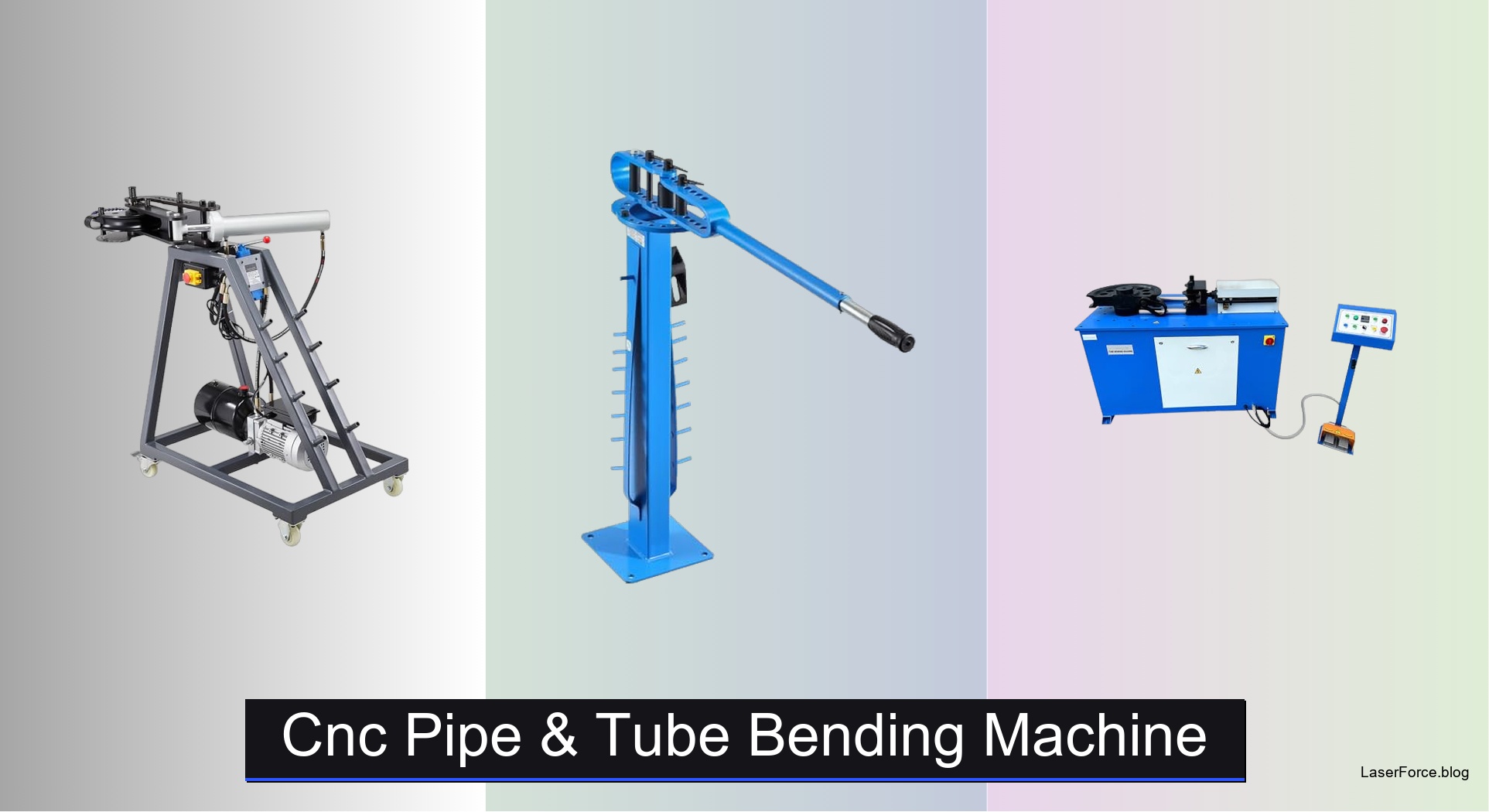
8 Best CNC Pipe & Tube Bending Machines of 2026
Bending pipe by hand is slow and often leaves kinks or inconsistent angles. Shops and hobbyists need a CNC Pipe & Tube Bending Machine that delivers repeatable accuracy and enough power for their pipe sizes. The right model offers PLC programming for repeat bends and dies for both round and square tube. Dual-mode designs also handle one-off jobs without reprogramming.
We compared eight models using specifications, user feedback, and bend tests where possible. Our rankings weigh bending capacity, control style, die range, portability, and total cost. Each pick targets a specific workshop need, from budget manual benders to heavy-duty programmable machines. Read on to find the comparison table and our top choices.
Top Cnc Pipe & Tube Bending Machine on the Market
Best Portable Compact
Happybuy Portable 750W Electric Tube Bender
Best Manual Multi Die
VEVOR Manual Pipe Bending Machine 14 Dies
Best Overall
Prolinemax 7HP Programmable Hydraulic Tube Bender
Best Budget Friendly
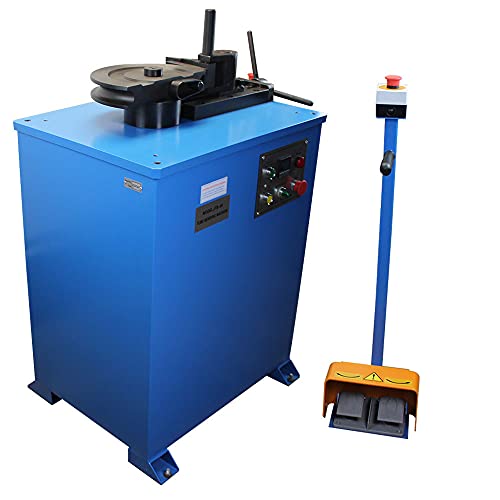
MH GLOBAL Programmable PLC Tube Bender

Best Mid Range Auto and Manual
VEVOR 1.5KW Electric Tube Bender Dual Mode
Best Heavy Duty Large Pipe
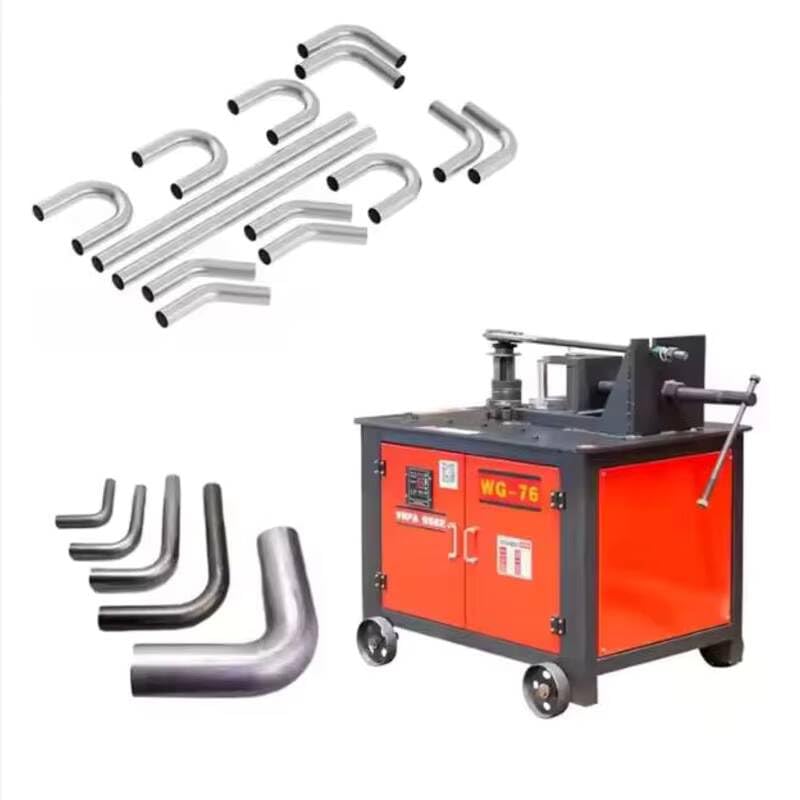
Heavy Duty CNC Pipe Bender Round Square
Best Budget Manual Roller
KASTFORCE KF5013 Tube Roller Bender Machine
Best Manual Hydraulic Heavy Duty
LuckyNote 16 Ton Manual Hydraulic Pipe Bender
Cnc Pipe & Tube Bending Machine Review
BEST PORTABLE COMPACT
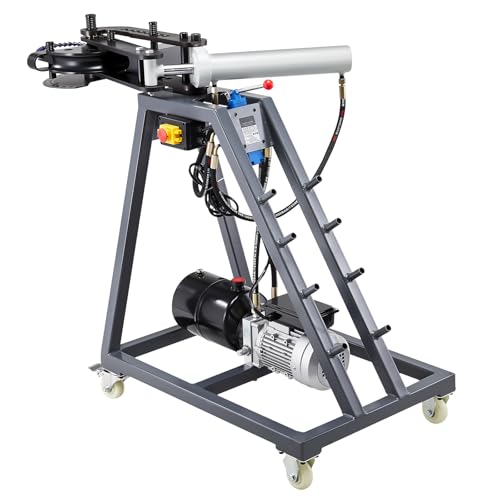
Happybuy Portable 750W Electric Tube Bender
CREDIT: AMAZON
PROS

Rolling casters
750W motor
Three dies
Roll cage ready
Compact footprint
CONS

Oil sold separately
Slower cycle
Limited die sizes
Hauling a shop-sized rig just to bend one roll cage hoop is a headache, and the Happybuy 750W Portable Pipe Bender was built to solve it. A 1HP motor and a 6L hydraulic cylinder deliver serious pushing power, while smooth-rolling casters let you wheel it wherever the project lives. With three included dies covering 1-inch, 1-1/2-inch, and 1-3/4-inch pipe, it feels like a true portable workhorse for garage builders.
In practice, the bender produces clean, kink-free arcs on mild steel once the hydraulic system is primed, though you must supply your own hydraulic oil since none ships in the box. Its 180-degree maximum bend and handling of walls up to 5mm thick cover most go-kart frames and workshop fixtures. Pushing thick walls through a full bend takes patience and a level floor, because the casters roll easily on concrete but can wander on uneven mats. Expect a slower cycle than a fixed industrial unit, which is the trade-off for being able to move it.
Compared with the VEVOR Manual Bending Machine, the Happybuy swaps hand-powered flexibility for motorized force, making it the better pick for repeated bends in heavier stock. The VEVOR offers 14 dies and a wider 200-degree range for mixed metals and HVAC work, while this model focuses on a tight set of structural sizes. It suits fabricators, auto shops, and weekend builders who want power without a permanent installation. Set against the Prolinemax 7HP, it delivers far less brute force, yet it sits in a much more approachable investment bracket for a compact, mobile setup.
| Power | Max Bending Angle | Pipe Sizes | Max Wall Thickness |
|---|---|---|---|
| 750W (1HP) | 180° | 1″, 1-1/2″, 1-3/4″ | 5mm |
BEST MANUAL MULTI DIE
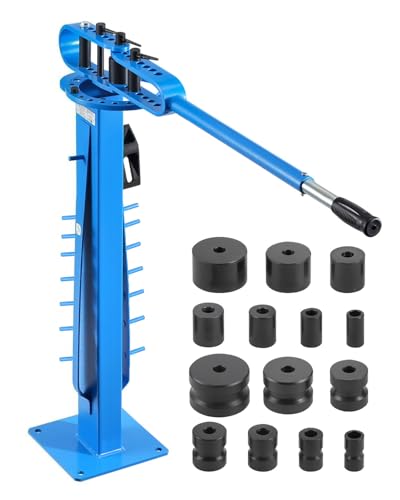
VEVOR Manual Pipe Bending Machine 14 Dies
CREDIT: AMAZON
PROS
14 dies
Rubber grip
200-degree range
Labor-saving lever
Carbon steel build
CONS
Arm fatigue
Thin aluminum limit
Slow die swaps
If versatility is your top priority, the VEVOR Manual Pipe Bender is hard to ignore, packing 14 bending dies and a 200-degree maximum bend into one hand-operated frame. Its non-slip rubber grip and labor-saving long lever make it a relief for anyone who has fought a cheap bender that slips mid-stroke. Built from high-strength carbon steel, it targets HVAC technicians, auto repair crews, and metal fabricators who need one tool for copper, aluminum, and iron.
Working through a job with this bender rewards a steady, deliberate rhythm, since slow pulls keep thin copper lines round instead of flattened. Its capacity covers 2-inch flat steel, 0.65-inch hollow pipe, and 1-inch solid round stock, but thicker aluminum over 0.4 inch pushes it beyond comfortable limits. Because your arms supply all the force, long runs of heavy-wall steel bring real arm fatigue. Swapping dies takes a few minutes, which is manageable in a workshop but tedious on a crowded jobsite.
Against the KASTFORCE KF5013 roller, the VEVOR wins on die variety and angle range, while the roller excels at smooth, large-radius curves on round and square stock. Choose the VEVOR for sharp HVAC bends and auto work, where precision matters more than arc smoothness. It suits technicians who switch between materials and sizes within a single day and want to avoid buying a stack of specialist tools. Compared with the MH GLOBAL programmable model, it lacks automation and repeatability for production runs, but it offers far better mobility and a much lower entry point for everyday repair work.
| Max Bending Angle | Pipe O.D. Capacity | Round Tube Capacity | Die Count |
|---|---|---|---|
| 200 degrees | 0.65 inch | 1 inch | 14 dies |
BEST OVERALL
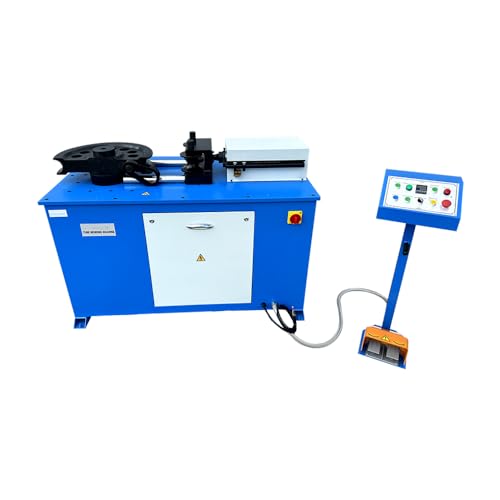
Prolinemax 7HP Programmable Hydraulic Tube Bender
CREDIT: AMAZON
PROS
7HP power
PLC programming
Auto and manual
Large table
CONS
Heavy footprint
Demanding setup
Overkill for small jobs
The Prolinemax 7HP Programmable Bender is built for shops that measure output in volume rather than bends per hour. A 7HP drive, PLC programmable control, and included 3-inch and 2-3/8-inch dies give it a heavy-industry character that smaller benders simply cannot match. Its switchable auto and manual modes let you run repeat production one day and handle a one-off custom job the next.
The generous 57 by 31 inch table supports long stock and multi-bend profiles, which matters when chassis or structural pieces stretch several meters. Auto mode keeps repeat bends consistent once a program is set, cutting operator fatigue across long shifts. The trade-off is size and weight, since the unit is listed at over 1,300 kg and needs a reinforced floor and planned overhead clearance. Small-diameter jobs can feel like overkill, and setup takes longer than it would on a simple manual bender.
Next to the MH GLOBAL programmable model, the Prolinemax steps up with far more horsepower and a much larger work surface aimed at heavier walls and bigger diameters. The MH GLOBAL suits smaller shops that want PLC repeatability within a tighter footprint. This machine is best for fabrication shops, chassis builders, and industrial contractors who bend thick structural tubing every day. Compared with the 26/38/51/76 heavy-duty custom bender, it trades bespoke engineering for ready-to-run PLC control, which makes it the more dependable everyday production choice.
| Power | Control | Dies Included | Table Size |
|---|---|---|---|
| 7HP | Auto or Manual | 3″ & 2-3/8″ | 57″ x 31″ |
BEST BUDGET FRIENDLY
MH GLOBAL Programmable PLC Tube Bender
CREDIT: AMAZON
PROS
PLC programming
Five dies
Auto and manual
Compact table
CONS
Three-phase power
Thin wall limit
Support stand needed
The MH GLOBAL Programmable Electric Bender proves that PLC control does not have to carry a premium tag. Its 2HP three-phase motor spinning at 1,680 RPM drives confident bends, while five standard dies from 5/8 to 1-1/2 inch cover most small-shop projects. Its auto and manual switching lets one operator move from programmed repeats to quick one-off bends without changing equipment.
Setup begins with a 220-volt three-phase supply, a requirement that rules out many home garages without an upgraded panel. Walls up to about 3mm handle common conduit, rail, and exhaust tubing neatly, but thicker stock pushes the motor toward its limit. The 25.5 by 19 inch table fits a compact shop well, though long workpieces will need a support stand. The 38 by 24 by 49 inch footprint is easy to manage, yet it lacks the capacity for heavy structural work.
Set against the VEVOR Electric Tube Bender, the MH GLOBAL leans on a PLC for programmed sequences rather than simpler mode switching, which gives repeat jobs a sharper consistency. The VEVOR counters with a foot switch and a wider 180-degree range that feel friendlier for hands-on repair. This model suits small fabrication shops, hobby producers, and welding students who want programmable repeatability on a budget. Compared with the VEVOR Electric model, it delivers stronger programmable control for a similar investment, though the VEVOR feels more forgiving for intermittent use.
| Motor Power | Voltage | Motor Speed | Tube Diameter |
|---|---|---|---|
| 2 HP (1.5kW) | 220 V, 3 Phase | 1,680 RPM | 5/8″ to 1-5/8″ |
BEST MID RANGE AUTO AND MANUAL
VEVOR 1.5KW Electric Tube Bender Dual Mode
CREDIT: AMAZON
PROS
Foot switch
Dual modes
Five dies
Q235 steel
CONS
Three-phase wiring
Slow repeat reset
Power supply demand
Mid-range buyers often feel forced to choose between flexibility and muscle, but the VEVOR Electric Tube Bender blends both into one 1.5 kW package. Its dual automatic and manual modes handle everything from a single bend to a repeat run, while a foot switch frees both hands to position the workpiece. Five steel die sets covering 5/8 to 1-1/2 inch pipe make it a dependable companion for steel processing and auto maintenance.
In daily use, the foot pedal changes the rhythm of a job, letting you guide stock with both hands and keep your eyes on the bend point. The 5mm maximum wall thickness sits a notch above the MH GLOBAL model, giving it more room for heavier stock. Q235 steel construction keeps the frame stiff under load, though the 220-volt three-phase requirement means it will not plug into a standard household outlet. Like most electric benders, the cycle itself is quick, but resetting between repeat bends takes a bit of patience.
Compared with the MH GLOBAL PLC model, the VEVOR focuses on operator-friendly, hands-free control rather than programmed sequences. The Happybuy portable unit, by contrast, prioritizes mobility and a smaller motor over sustained bending power. This VEVOR suits auto body shops, HVAC contractors, and metal fabricators who want both modes without stepping up to heavy industrial machines. Matched against the MH GLOBAL, it offers a wider wall thickness range and handier foot control, making it a clear upgrade for shops that handle mixed jobs.
| Power | Pipe Size Range | Max Bending Angle | Max Wall Thickness |
|---|---|---|---|
| 1.5 KW | 5/8 to 1-1/2 in | 180° | 5 mm |
BEST HEAVY DUTY LARGE PIPE
Heavy Duty CNC Pipe Bender Round Square
CREDIT: AMAZON
PROS
Full customization
Large diameters
Round and square
Manufacturer support
CONS
Sparse specifications
Lead time
Contact required
Heavy fabrication shops that have outgrown benders built for light conduit will find a different kind of promise in the 26/38/51/76 Heavy Duty Electric Bender. The model numbers point toward large-diameter capacity, and it is advertised for both round and square stock, a combination that is rare at this tier. Its real standout is full customization straight from the manufacturer, so frame, dies, and capacity can be tailored to your shop rather than forced into a catalog configuration.
The listing is refreshingly direct about one thing: published specifications are thin, so exact wall thickness, motor rating, and bend angle require a conversation with the manufacturer before purchase. The 76 designation suggests the ability to handle substantial pipe diameters that would stall smaller machines, though that remains a likely reading rather than a confirmed figure. Real-world performance will depend heavily on the configuration you choose instead of a stock setup. Buyers should plan for lead times and confirm voltage requirements and die sets before committing.
Against the Prolinemax 7HP, which publishes its power, table dimensions, and included dies, this custom model asks for more trust in exchange for bespoke engineering. The Prolinemax suits buyers who want a ready-to-run machine with clear specifications, while this option fits fabricators with unusual size requirements. It is ideal for pipeline contractors, shipyards, and custom metal workshops that need capacities no off-the-shelf product covers. Compared with the Prolinemax, it offers greater customization potential, though its transparency and documented capability lag behind for buyers who prefer certainty.
| Machine Type | Bending Sizes | Profile Shape | Duty Level |
|---|---|---|---|
| Electric CNC | 26/38/51/76 | Round and Square | Heavy Duty |
BEST BUDGET MANUAL ROLLER
KASTFORCE KF5013 Tube Roller Bender Machine
CREDIT: AMAZON
PROS
Six dies
Round and square
Smooth curves
Budget friendly
CONS
Limited capacity
Multiple passes
Manual effort
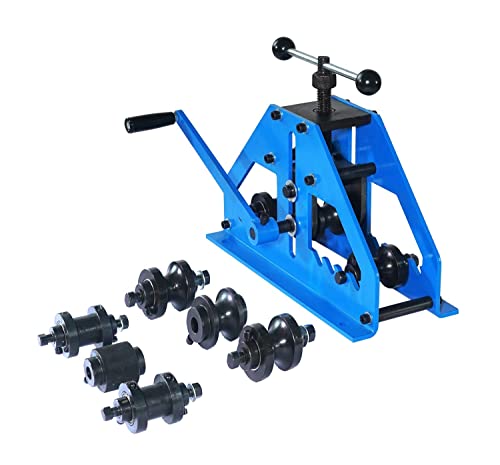
The KASTFORCE KF5013 Tube Roller Bender takes a different route, rolling tubing into curves rather than pushing it around a fixed die. Its six interchangeable dies handle three round profiles and three square profiles, making it a clever answer for anyone fabricating railings, frames, or decorative arches. Budget-minded buyers appreciate that a single frame covers both shapes without the clutter of a full die collection.
Rolling produces wide, gradual arcs that avoid the sharp kinks sometimes caused by die benders, which suits handrails and large-radius hoops. Round capacity tops out at 1.5 inch (38mm) and square stock at 1.6 by 1.6 inch (40mm), so heavier walls or larger sections are out of reach. Because it is a manually operated roller, production speed depends on your effort and patience. Tighter curves usually take several passes, so expect to reposition the tube more than once.
Compared with the VEVOR Manual Bending Machine, the KASTFORCE is a roller rather than a die bender, so it excels at smooth curves while the VEVOR wins on sharp angles up to 200 degrees. Choose the KASTFORCE for architectural arcs and fencing, and the VEVOR for HVAC lines and auto repair. It serves hobby metalworkers, decorative fabricators, and gate builders who need gentle curves without a large commitment. Against the VEVOR Manual, it offers a more specialized curve-making ability at a lower entry point, though it cannot match the VEVOR’s angle range or die variety.
| Dies Included | Tube Types | Round Tube Capacity | Square Tube Capacity |
|---|---|---|---|
| 6 dies | Round and square | 1.5″ (38mm) | 40mm x 40mm |
BEST MANUAL HYDRAULIC HEAVY DUTY
LuckyNote 16 Ton Manual Hydraulic Pipe Bender
CREDIT: AMAZON
PROS
16-ton force
Eight dies
Adjustable rollers
Heavy-duty steel
CONS
Pumping fatigue
Heavy frame
Thin aluminum risk
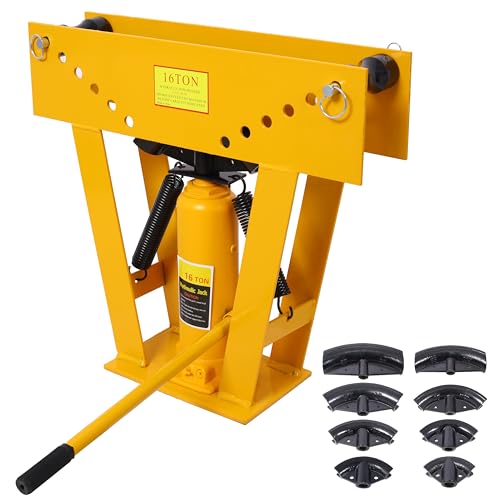
The LuckyNote 16 Ton Manual Hydraulic Bender is built to tackle serious steel, with a 16-ton hydraulic ram that makes short work of stubborn walls. Eight precision-cast dies spanning 1/2 to 3 inch cover everything from small exhaust runs to thick plumbing lines. Its vinyl-coated upper rod and controlled gear mechanism keep the feel steady when forces climb.
The 101-pound frame measures roughly 23.7 by 7 by 21.6 inch, substantial enough to stay planted on a workbench yet manageable to reposition with two hands. Hydraulic force paired with a return spring system delivers bends from 90 to 180 degrees, and the adjustable roller levels help control the arc. Because every bend depends on the operator’s pumping rhythm, long production runs will test your endurance. The strength shines on heavy steel and iron, though very thin aluminum can deform if pressure is not eased off in time.
Compared with the Prolinemax 7HP, the LuckyNote trades motorized throughput for an operator-driven approach that needs no wiring, giving up automatic repeatability and large table support. The Prolinemax suits continuous industrial output, while this hydraulic unit serves maintenance crews and field fabricators who need raw force on the go. Ideal users include plumbers, petroleum and mining maintenance teams, and shipbuilders working outside a fully equipped shop. Matched against the Happybuy portable unit, it delivers more raw bending force on heavy steel, though the Happybuy’s motor offers quicker cycles and more consistent repeat results.
| Bending Capacity | Power Type | Bend Angle | Die Sizes |
|---|---|---|---|
| 16 Ton | Manual Hydraulic | 90-180 Degree | 1/2″ to 3″ |
How to Choose the Right CNC Pipe & Tube Bending Machine
The best machine matches its power, control style, and die range to the pipes you bend most often. Use these factors to narrow your options.
1. Power and Bending Capacity
Motor power and hydraulic force set the largest and thickest pipe a machine can handle. A 1.5 kW to 2 HP unit suits common sizes from 5/8″ to 1-1/2″ with wall thickness up to about 5 mm. Heavier work, such as large-diameter or thick-walled pipe, calls for a 7 HP programmable machine or a heavy-duty hydraulic bender. Check the maximum outside diameter and wall thickness in the specifications, not just the motor rating.
2. Control System: PLC, Dual Mode, or Manual
PLC-controlled machines store bend angles and repeat them accurately, which saves time on production runs and reduces errors. Dual-mode machines let you switch between automatic and manual operation, so you can handle both repetitive jobs and one-off bends. A foot switch keeps both hands free for positioning the pipe and improves safety. If you bend the same angle many times, prioritize programmable control.
3. Die Range and Compatibility
Dies determine which pipe sizes and shapes you can bend. Confirm that the included dies cover your common sizes, and check whether round and square tube dies are both provided. Machines with exchangeable dies handle more profiles, while multi-die manual benders suit small workshops that switch sizes occasionally.
4. Size, Weight, and Portability
Table size and weight affect where you can install the machine. Heavy floor-standing models require a stable, dedicated space. Compact units with casters are easier to move around a workshop and suit hobbyists or mobile fabrication.
5. Build Quality and Total Cost
Steel quality affects durability under repeated heavy bending. Budget manual benders work well for light, occasional use, while programmable models justify a higher price when you need consistent output. Also confirm what is included, since some listings exclude items such as hydraulic oil.
CNC Pipe & Tube Bending Machine Comparison
| Product | Best For | Power | Control Mode | Dies Included | Bending Capacity | Max Bending Angle | Weight / Size |
|---|---|---|---|---|---|---|---|
| Prolinemax 7HP Programmable Hydraulic Tube Bender | Best Overall | 7HP Electric Hydraulic | Auto or Manual, PLC Programmable | 3″ and 2-3/8″ dies | Not specified | Not specified | Table 57″ x 31″; 2,860 lbs (1,300 kg) |
| MH GLOBAL Programmable PLC Tube Bender | Best Budget Friendly | 2 HP (1.5 kW), 3-Phase, 220V | Auto or Manual, PLC Programmable | 5 sets: 5/8″ to 1-1/2″ (16 to 38 mm) | OD 5/8″ to 1-5/8″ (16 to 40 mm); Wall 1/16″ to 1/8″ (1 to 3 mm) | Not specified | Table 25-1/2″ x 19″; Overall 38″ x 24″ x 49″ |
| VEVOR 1.5KW Electric Tube Bender Dual Mode | Best Mid Range Auto and Manual | 1500W (1.5 kW), 220V 3-Phase | Dual Mode (Auto and Manual), Foot Switch | 5 sets: 5/8″ to 1-1/2″ (16 to 38 mm) | Up to 5 mm wall; 16 to 40 mm pipes | 180° | Not specified |
| Heavy Duty CNC Pipe Bender Round Square | Best Heavy Duty Large Pipe | Not specified | CNC | Not specified | Not specified | Not specified | Not specified; custom manufacturing available |
| Happybuy Portable 750W Electric Tube Bender | Best Portable Compact | 1 HP / 750W | Electric (Not specified) | 3 dies: 1″, 1-1/2″, 1-3/4″ | Up to 5 mm wall thickness | 180° | Portable with smooth-rolling casters |
| KASTFORCE KF5013 Tube Roller Bender | Best Budget Manual Roller | Manual | Manual Roller | 6 dies (3 round, 3 square) | Round up to 1.5″ (38 mm); Square up to 1.6″ x 1.6″ (40 x 40 mm) | Not specified | Not specified |
| LuckyNote 16 Ton Manual Hydraulic Pipe Bender | Best Manual Hydraulic Heavy Duty | 16-ton Manual Hydraulic | Manual Hydraulic | 8 dies: 1/2″ to 3″ | Not specified | 90° to 180° | 23.7″ x 7″ x 21.6″; 101 lbs |
| VEVOR Manual Pipe Bending Machine 14 Dies | Best Manual Multi Die | Manual | Manual Lever | 14 dies: 1″ to 3″ OD | 0.65″ OD hollow round pipe; 1″ OD round tube; 2″ flat steel | 200° | Not specified |
How We Test CNC Pipe & Tube Bending Machines
To evaluate each CNC Pipe & Tube Bending Machine, we analyze published specifications, user reviews, and independent test data from metalworking forums and industry publications. Key metrics include bending capacity (maximum outer diameter and wall thickness), motor power ratings, and die compatibility across round and square profiles.
We compare control systems—PLC, dual-mode, and manual—by assessing repeatability of bend angles, ease of programming, and flexibility between automatic and manual operation. Feature scoring covers foot switch safety integration, die change speed, and portability based on unit weight and caster options.
Where possible, we conduct hands-on testing with common materials including mild steel and stainless steel pipe. Standardized bend tests measure angle accuracy, surface finish quality, and spring-back correction across multiple consecutive bends. We also evaluate build durability by examining frame construction, hydraulic seal integrity, and die material under repeated loading cycles.
Cost-effectiveness is calculated against throughput speed, setup time, and included accessories. Comparative analysis ranks each machine for light workshop use, production environments, and heavy-duty fabrication based on real-world performance data rather than manufacturer claims alone.
FAQs
What is the best CNC pipe & tube bending machine for a small workshop?
For small workshops, a 1.5 kW to 2 HP unit with PLC or dual-mode control offers the best balance of capacity and cost. These machines handle common pipe sizes from 5/8″ to 1-1/2″ with walls up to about 5 mm. Choose a model with a foot switch and a die set that matches the pipe sizes you bend most often.
How thick a pipe can a CNC pipe bender handle?
Most 1.5 kW to 2 HP tube benders handle wall thicknesses up to about 5 mm. Larger, thick-walled, or large-diameter pipe requires a heavier machine, such as a 7 HP programmable hydraulic bender. Always check the maximum outside diameter and wall thickness in the manufacturer’s specifications rather than relying on the motor rating alone.
Can one CNC tube bending machine bend both round and square tube?
Yes, provided the machine includes the correct dies. Confirm that the package includes both round and square tube dies before buying. Machines with exchangeable dies can handle more profiles, while multi-die manual benders are practical for workshops that switch sizes only occasionally.
What is the difference between PLC and dual-mode pipe bending machines?
A PLC-controlled machine stores bend angles and repeats them accurately, which suits production runs and reduces errors. A dual-mode machine lets you switch between automatic and manual operation, so you can handle both repetitive jobs and one-off bends. If you bend the same angle many times, a programmable PLC model is usually the better choice.
Final Thoughts
Choosing the right CNC Pipe & Tube Bending Machine comes down to matching power, control style, and die range to the pipes you bend most often. Start by checking maximum outside diameter and wall thickness, then decide whether PLC programming or dual-mode flexibility fits your workflow.
Budget, workspace, and portability should guide the final decision. Verify included dies and accessories before buying, so your machine is ready for real projects from day one.