How Halo Laser Works: Skin Treatment Explained
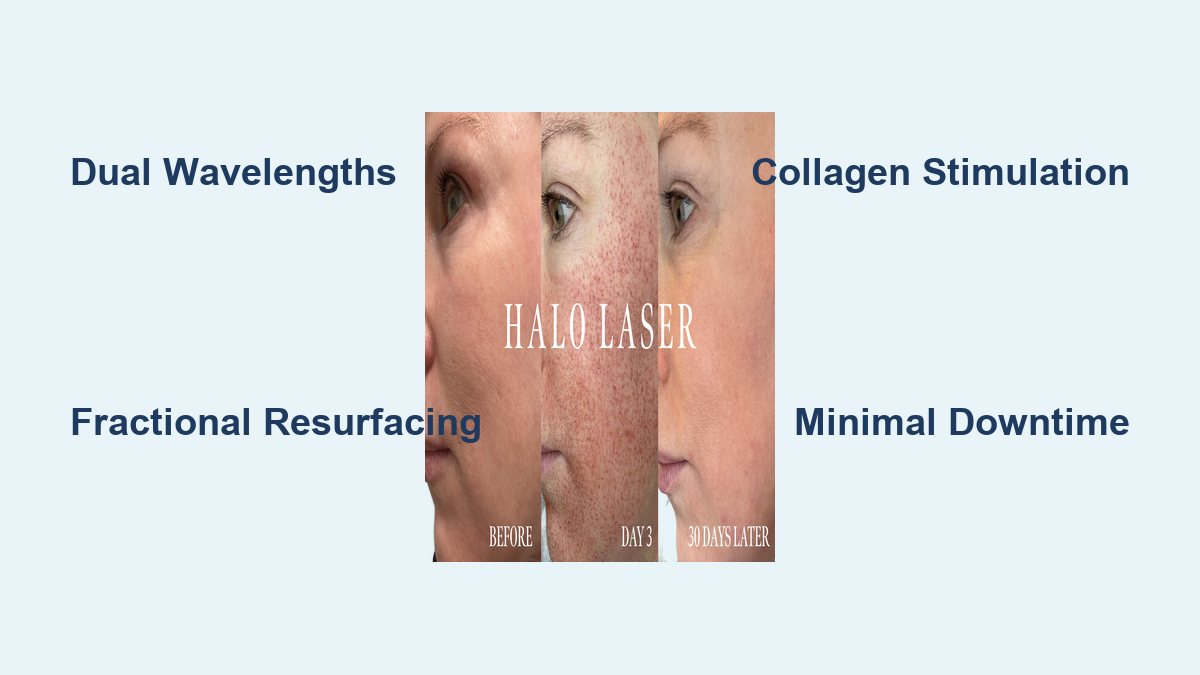
If you’ve noticed dullness, uneven skin tone, or early signs of aging like fine lines and enlarged pores, the Sciton Halo laser offers a powerful solution that rejuvenates both surface and deeper skin layers in one treatment. Unlike traditional lasers that focus on either texture or tone, Halo combines two laser technologies to deliver comprehensive results with minimal downtime. So, how does Halo laser work? It uses a hybrid fractional approach, delivering ablative and non-ablative wavelengths simultaneously to resurface the skin and stimulate collagen deep within the dermis. This dual action clears discoloration, smooths texture, tightens laxity, and restores radiance, making it one of the most effective non-surgical skin treatments available today.
Dual-Wavelength Technology: How Halo Targets Multiple Skin Layers

The Halo laser stands out because it is the first hybrid fractional laser, meaning it uses two distinct wavelengths in a single pass to renew the skin’s surface and remodel the deeper layers. This dual-energy delivery targets multiple concerns at once, something most lasers cannot do.
Ablative 2940 nm: Surface Renewal
The 2940 nm erbium:YAG wavelength is responsible for epidermal resurfacing. It precisely vaporizes microscopic columns of damaged outer skin cells without harming surrounding tissue. This controlled ablation removes sunspots and age spots, dull uneven skin tone, rough texture and enlarged pores, and mild acne scarring. Because it only treats a fraction of the skin at a time, healing is fast. The untreated tissue around each micro-column acts as a reservoir for rapid regeneration, leading to smoother brighter skin in just days.
Non-Ablative 1470 nm: Deep Skin Rebuilding
While the ablative beam works on the surface, the 1470 nm diode laser penetrates up to 700 microns into the dermis, heating the deeper skin layers without breaking the surface. This thermal energy triggers your body’s natural healing response, stimulating neocollagenesis, which is the production of new collagen and elastin. Over the next 2 to 6 months, this ongoing collagen remodeling leads to firmer tighter skin, reduced fine lines and wrinkles, improved skin thickness and resilience, and smoother acne scars. This dual approach means you get immediate surface renewal and long-term structural improvement all in one session.
Fractional Photothermolysis: The Science Behind Halo’s Healing Effect

Halo works on the principle of fractional photothermolysis, a technique that delivers laser energy in thousands of microscopic treatment zones called MTZs. Each MTZ is a tiny column of targeted tissue surrounded by healthy untreated skin.
Why Fractional Delivery Matters
The fractional approach offers several key advantages. First, faster healing occurs because untreated skin acts as a biological scaffold, speeding up recovery. Second, there is less risk since the method avoids full-surface damage, reducing complications like scarring or prolonged redness. Third, precision allows customization of depth, density, and energy for tailored results. The result is effective resurfacing with downtime of just 5 to 7 days, a major advantage over fully ablative lasers that require weeks to heal.
Dynamic Thermal Optimization: Halo’s Built-In Safety System
One of Halo’s most advanced features is Dynamic Thermal Optimization, a real-time feedback system that ensures safe consistent results.
How DTO Protects Your Skin
The DTO system monitors skin temperature during treatment, adjusts laser energy automatically to maintain optimal heat levels, and prevents overheating especially in sensitive or pigmented areas. This is critical for darker skin types (Fitzpatrick IV through VI), where excess heat can lead to post-inflammatory hyperpigmentation. DTO makes Halo one of the few ablative-capable lasers safe for diverse skin tones when used correctly.
Customizable Treatments for Every Skin Type and Concern
Halo is not a one-size-fits-all treatment. Your provider can adjust key settings to match your skin concerns, type, and lifestyle.
Adjustable Treatment Parameters
| Setting | What It Controls | Common Use |
|---|---|---|
| Ablative energy (0-100%) | Depth of surface removal | Higher for sun damage, lower for sensitivity |
| Non-ablative energy (0-100%) | Dermal heating and collagen stimulation | Higher for laxity and wrinkles |
| Pulse density (500-1600 MTZ/cm²) | Number of treatment zones | Higher for aggressive resurfacing |
Treatment Levels and Downtime
Light treatment uses 20-30% energy with 1-2 days downtime, ideal for first-timers and requiring 4-5 sessions. Medium treatment uses 50-60% energy with 5-7 days downtime, best for moderate aging and pigmentation. Aggressive treatment uses 70-100% energy with up to 10 days downtime, reserved for deep damage or acne scars. This flexibility allows safe use across Fitzpatrick skin types I through VI, with conservative settings minimizing PIH risk in darker skin.
What to Expect During Your Halo Laser Session
Pre-Treatment Preparation
To ensure safety and optimal healing, stop retinoids, AHAs, and exfoliants 4-7 days before treatment. Avoid sun exposure for 2 months prior. Do not use Accutane within 6 months. Start antiviral medications if you get cold sores. Pre-condition skin with SPF, antioxidants, and barrier-supporting creams. Proper preparation reduces complications and enhances results.
During the Procedure
Topical numbing cream is applied 30-45 minutes prior to treatment. Zimmer Cryo cooling delivers chilled air to minimize discomfort. Protective eye shields are worn throughout the procedure. The handpiece scans evenly with a speed sensor for consistent coverage. Most patients describe the sensation as warm tingling or sunburn-like heat, rated about 3 out of 10 on the discomfort scale. Treatment duration is 20-30 minutes for face only, or 45-60 minutes for face plus neck and décollete.
The Healing Process: Day-by-Day Recovery Timeline
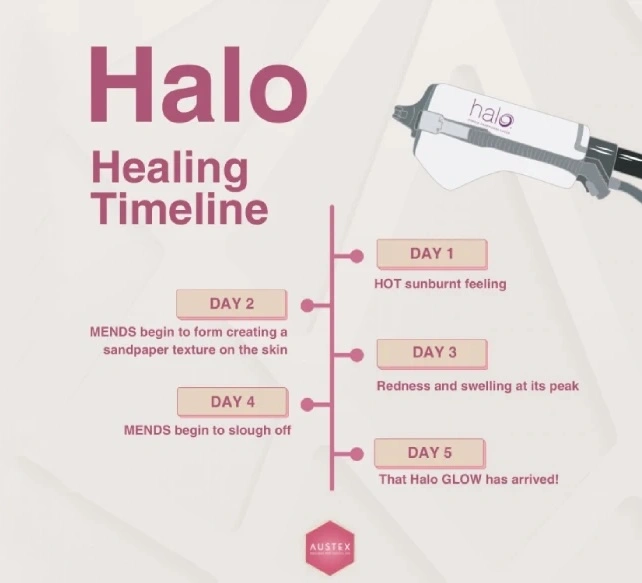
Days 1-2: Initial Redness and Swelling
Skin feels warm and looks red and swollen, similar to a moderate sunburn. Eyelid puffiness is common. Use cool compresses, keep your head elevated, and avoid exercise during this phase.
Days 3-5: Bronzing and Peeling
Skin turns bronze or dark, then begins to flake. Texture feels sandpaper-like. Do not pick or peel; let skin shed naturally. Start gentle cleansing and switch to CeraVe or Cetaphil gentle products.
Days 5-7: Peeling Completes
Most flaking finishes and residual redness fades. You can wear mineral makeup if skin is intact. Pinkish tint may linger as skin continues to refine.
Weeks 2-6: Skin Refines
Gradual improvement in tone and smoothness occurs. You can slowly reintroduce vitamin C, retinoids, and acids after 2-4 weeks, following your provider’s guidance.
Months 1-6: Collagen Builds
Ongoing tightening and wrinkle reduction continue as collagen remodeling peaks. Results typically show initial brightness within a week, but full transformation takes several months.
Aftercare Tips for Optimal Halo Laser Results
Days 1-3: Critical Healing Phase
Cleanse with fragrance-free gentle cleanser like Cetaphil. Apply Aquaphor or Dr. H Healing Cream to protect skin. Avoid makeup, exercise, and sweating during this period.
Day 4 Onward: Transition to Moisturizer
Switch to non-comedogenic lotions like CeraVe or Cetaphil. Continue SPF 30 or higher (mineral preferred) every day, reapplying every 2 hours when outdoors.
Long-Term Maintenance
Wear wide-brimmed hats and UV-protective clothing. Use medical-grade skincare including retinoids, antioxidants, and peptides. Schedule annual touch-up treatments to maintain results. Skipping aftercare can lead to post-inflammatory hyperpigmentation, infection, or suboptimal results.
How Halo Compares to Other Laser Treatments
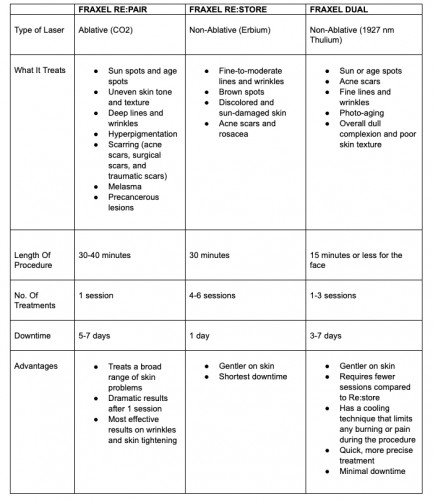
| Feature | Halo | Fraxel Dual | Profractional | CO₂ Laser |
|---|---|---|---|---|
| Laser Type | Hybrid (ablative + non-ablative) | Non-ablative/fractional | Ablative fractional | Fully ablative |
| Wavelengths | 1470 + 2940 nm | 1550 / 1927 nm | 2940 nm | 10,600 nm |
| Tone and Texture | Yes | Mild | Yes | Yes |
| Collagen Stimulation | High | Moderate | Moderate | High |
| Downtime | 5-7 days | 3-5 days | 7-10 days | 10-14+ days |
| Sessions Needed | 1-3 | 3-5 | 1-2 | 1 |
| Skin Types | I-VI | I-IV | I-III | I-III |
Halo offers the best balance of efficacy and recovery, especially for combined tone and texture improvement.
Ideal Candidates for Halo Laser Treatment
Halo works best for individuals with moderate sun damage including dullness, spots, and rough texture. It addresses fine lines, enlarged pores, and mild acne scars effectively. Ideal candidates desire noticeable results with less than one week of downtime. You should have realistic expectations and commit to proper aftercare. Halo is not ideal for those with active acne, open wounds, recent Accutane use (within 6 months), or poor wound healing. Outdoor workers, skiers, and hikers in sunny climates often benefit most from this treatment.
Frequently Asked Questions About Halo Laser
How does Halo laser work differently from other fractional lasers?
Halo is the first hybrid fractional laser, combining both ablative (2940 nm) and non-ablative (1470 nm) wavelengths in a single pass. Most fractional lasers use only one wavelength, meaning they either resurface the surface or stimulate deeper collagen. Halo does both simultaneously, delivering comprehensive results with downtime similar to gentler non-ablative treatments.
Is Halo laser safe for darker skin tones?
Yes, Halo is safe for Fitzpatrick skin types I through VI. The Dynamic Thermal Optimization system monitors and adjusts energy in real-time to prevent overheating, which is especially important for darker skin where excess heat can cause post-inflammatory hyperpigmentation. Providers use conservative settings for skin types IV through VI to minimize risks.
How many Halo treatments do I need?
Most patients achieve optimal results with 1-3 treatments spaced 4-6 weeks apart. Light treatments may require 4-5 sessions for cumulative results. A single treatment still delivers noticeable improvement in tone and texture, making Halo effective even as a one-time procedure.
What is the downtime after Halo laser treatment?
Standard treatment requires 5-7 days of visible downtime including redness, swelling, bronzing, and peeling. Light treatments have only 1-2 days of mild redness. Aggressive treatments may take up to 10 days for full recovery. Most patients can return to work within a week.
How long do Halo laser results last?
Results typically last 12-18 months depending on age, sun exposure, and skincare routine. Annual touch-up treatments are recommended to maintain anti-aging benefits. Daily SPF 30 or higher, medical-grade skincare, and avoiding excessive sun exposure help preserve results longer.
Key Takeaways: Why Halo Laser Works
The Halo laser works by combining ablative and non-ablative technologies in one treatment, delivering 2940 nm wavelengths for surface renewal and 1470 nm wavelengths for deep collagen remodeling. Using fractional photothermolysis, it creates micro-injuries that trigger healing while leaving surrounding tissue intact, ensuring fast recovery. With Dynamic Thermal Optimization, customizable settings, and proven safety across skin types, Halo offers dramatic skin improvement with just 5-7 days of downtime. Whether you are battling sun damage, dullness, or early aging, Halo delivers visible tone, texture, and firmness improvements backed by science and trusted by dermatologists worldwide. To maximize your results, commit to proper pre-treatment preparation, follow aftercare instructions diligently, and maintain results with annual touch-ups and medical-grade skincare.