How a Laser Harp Works: Interactive Music Guide
Imagine standing before a shimmering array of glowing beams, each one a musical note waiting to be played. You wave your hand through a beam, and sound erupts from the speakers around you. This is the laser harp: a futuristic instrument where light becomes music and movement becomes expression. A laser harp works by detecting when a laser beam is interrupted, then triggering a corresponding musical note via MIDI signal to an external synthesizer or computer.
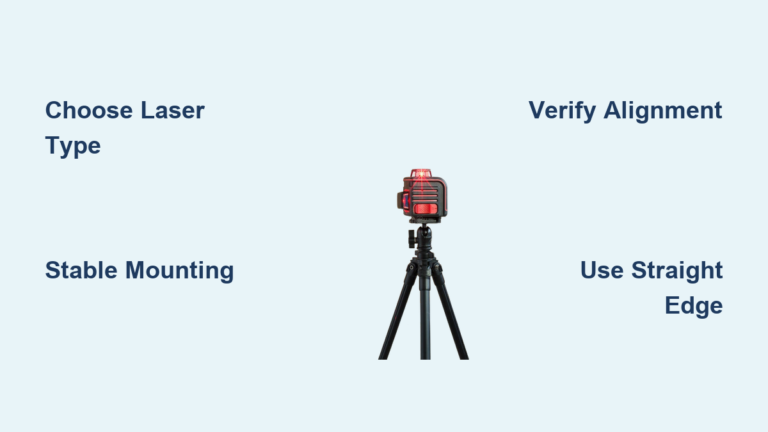
The magic happens through a blend of optics, electronics, and precise timing. Whether it uses a single scanning beam creating the illusion of multiple strings or a framed setup with discrete lasers, every design relies on one principle: beam interruption equals note activation. Used by pioneers like Jean-Michel Jarre and featured in public art installations worldwide, the laser harp bridges performance and technology. In this guide, we will break down exactly how it senses your movements, converts light into sound, and creates its mesmerizing visual effect.
Core Components Explained
Every laser harp depends on a precise combination of hardware and software working in sync. These components form the backbone of its operation, and understanding them is essential for building or troubleshooting a system.
Laser Source and Beam Visibility
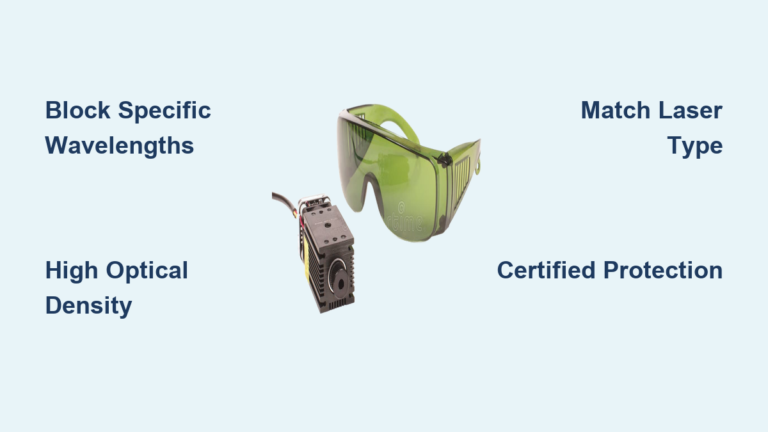
Low-power laser diodes, typically red, green, or blue, are used for safety and visibility. Most models use Class 3R lasers under 5 mW, which complies with eye-safety regulations. While the beams are invisible in clear air, dry-ice fog or haze is often used during performances to make them visible. Some advanced systems combine RGB lasers using dichroic filters to create multicolored beams, enhancing the visual experience.
Mirror and Scanning Mechanism
In unframed harps, a galvanometer-mounted mirror scans a single laser beam rapidly across a plane. The mirror moves along the X-axis, sweeping the beam in a fan-like pattern. This motion is so fast, hundreds of times per second, that persistence of vision makes it appear as if multiple beams exist simultaneously. The laser is also pulsed in sync with the mirror position, enabling precise detection timing.
Photodiode Sensing System
Framed harps use individual photodiodes or photoresistors placed opposite each laser. When a beam is blocked, the sensor detects the drop in light and triggers a note. Unframed designs rely on a single photodiode near the laser source to catch backscattered light reflected from a hand interrupting the beam. This reflection is only detectable when the laser pulse and mirror position align, allowing accurate string identification.
Microcontroller and MIDI Output
An onboard microprocessor, often an Arduino or custom board, reads sensor data and determines which string was played. It maps each beam position to a specific MIDI note number and sends a Note On message to a synthesizer or computer. When the hand leaves the beam, a Note Off signal ends the note. Additional MIDI controls like pitch bend or modulation can be programmed based on hand movement, though most live setups use simple on/off triggering.
Framed vs. Unframed Designs

Two main types of laser harps dominate the field. Each has distinct advantages and use cases that make them suitable for different situations.
Framed Laser Harp Operation
This design mimics a traditional harp, with visible beams stretching between top and bottom frames. It is the simpler of the two approaches and is ideal for beginners and public installations.
Fixed Beams with Direct Detection
Lasers project downward or upward into aligned photodiodes. Each beam has its own sensor, making detection straightforward: no light equals note triggered. This setup is highly reliable and immune to ambient light if sensors are properly shielded. Builders can scale from 1 to over 30 strings, limited only by controller capacity.
Ideal for Public Interaction
Because of its simplicity and durability, the framed harp is popular in interactive exhibits, such as the Butterfly Palace in Branson, Missouri. With FDA-compliant lasers under 4.95 mW, it requires no special variance for public use. Users can play it barehanded, though gloves improve consistency and reliability.
Unframed Infinite Beam Harp Mechanics
Popularized by Jean-Michel Jarre, this design creates the illusion of multiple strings using one moving beam. It offers a more dramatic visual effect but requires more sophisticated electronics.
Single Beam, Multiple Illusions
Only one laser is active at any instant, scanned quickly across space. Due to visual persistence, the human eye sees a solid fan of light. The system relies on timing-based detection: the microcontroller knows exactly where the mirror is at any moment, so when a reflection is detected, it calculates which virtual string was hit.
Reflection-Based Triggering
Instead of direct beam breaking, the unframed harp detects light scattered back from a hand. A single photodiode samples incoming light in sync with the laser pulse. If a reflection arrives at the expected time window, the controller registers a note. Performers often wear white gloves to maximize reflectivity and ensure reliable triggering.
Image Recognition Alternative
A newer approach replaces photodiodes with camera-based detection. This method offers different capabilities but also comes with its own challenges.
Camera and Computer Vision Setup
A high-speed USB camera captures the performance area in real time. Software analyzes the video feed to detect when and where a hand crosses a laser beam. Using edge detection and thresholding algorithms, it identifies beam interruptions and maps them to MIDI notes.
Pros and Limitations
This method offers greater flexibility, supporting multi-player interaction, gesture recognition, and dynamic reconfiguration. However, it demands more processing power, requires careful lighting control, and depends on consistent camera calibration. It is less common in professional performances due to latency and reliability concerns compared to optical sensing.
Multicolor Laser Capabilities

Advanced systems go beyond monochrome beams to deliver dynamic color effects. These systems are typically used in large-scale shows where visual impact is paramount.
RGB Laser Integration
By combining red, green, and blue laser diodes with dichroic mirrors, builders can produce full-color beams. Each diode is independently controlled, allowing for color mixing and modulation. For example, a note can trigger a beam that shifts from red to blue in sync with the music.
Synchronized Visual Effects
Software can link color changes to MIDI events, creating a light-music experience. A 2005 open-source project demonstrated this using an ILDA interface, enabling precise control over beam position and color for laser display applications.
Beam Scanning and Timing Sync
Precision timing is critical in unframed harp operation. Without precise synchronization, the system cannot accurately determine which virtual string was played.
Galvo Mirror Motion Control
The galvanometer mirror oscillates in a repeatable arc, scanning the laser in a horizontal sweep. Its position is synchronized with a timer in the microcontroller, creating a predictable pattern. The laser fires in short pulses at known angles, ensuring that any detected reflection can be traced back to a specific beam location.
Pulsed Laser for Noise Reduction
The laser does not stay on continuously. It flickers rapidly in sync with the scan cycle. This allows the photodiode to ignore ambient light and focus only on reflections occurring during the pulse window. This technique dramatically improves signal-to-noise ratio, especially under bright stage lights.
Hand Detection Methods Compared
How the harp knows a beam has been played differs significantly between designs. Understanding these differences helps when choosing or building a system.
Framed: Loss-of-Light Detection
When a hand blocks a beam, the photodiode sees a sudden drop in light intensity. This change in current or resistance is converted to a digital signal. Since the beam is always on, detection is immediate and consistent, ideal for beginners and public installations.
Unframed: Backscatter Timing Detection
Here, the system waits for a brief reflection pulse during the laser on-cycle. The exact time of detection tells the controller which virtual string was played. Success depends on hand angle, color, and distance. Dark clothing or poor positioning may result in missed triggers. White gloves help by increasing reflectivity.
From Light to Sound: MIDI Integration
All laser harps function as MIDI controllers, not sound generators. The actual sound comes from external equipment.
Note Mapping and Triggering
Each beam or beam position is assigned a MIDI note number, such as C4 or E5. When interrupted, the controller sends a Note On message with optional velocity data. Removing the hand sends Note Off, ending the note. The actual sound comes from an external source: a synthesizer, sampler, or DAW like Ableton Live.
Advanced Expressive Control
Some systems use vertical hand motion to send pitch bend or modulation data. For instance, raising your hand could increase vibrato. While technically possible, this requires extra sensors or cameras and is rarely used in live performance due to complexity and latency.
Historical Development Timeline
The laser harp evolved through innovation and artistic experimentation. Understanding its history provides context for its current form.
Early Inventors and Patents
Geoffrey Rose claims the first invention, building an octagonal harp with a 5×5 laser matrix in Australia between 1975 and 1976. Bernard Szajner filed the first official patent in 1981 for a laser-controlled synthesizer using mirrors and photocells, recognized by French authorities. Dan Millikin and Tim Walsh developed the Laser Spectacles harp, emphasizing public use and multicolor visuals.
Jean-Michel Jarre Global Impact
Jarre brought the laser harp to mainstream attention starting in 1981. His signature sound comes from a factory preset on the Elka Synthex synthesizer. He famously uses the harp in Second Rendez-Vous, Chronologie 3, and Time Machine. During his 2009 In-Doors Arena Tour, a technical glitch caused the harp to freeze mid-performance, highlighting the instrument reliance on stable electronics.
Live Performance Applications
Artists use the laser harp to blend music and spectacle. It has become a signature element in electronic music performances worldwide.
Stage Presence and Visual Drama
The instrument serves as a centerpiece in electronic concerts, combining sound with light. Jean-Michel Jarre, Coldplay is Guy Berryman, and artist NovaYA have all used it to create immersive experiences. The glowing beams draw audience attention, turning a musical act into a visual performance.
Real-Time Control and Expressiveness
Despite its futuristic look, the laser harp offers intuitive playability. Musicians use foot switches to shift octaves or change presets mid-song. Some systems allow custom MIDI mapping, letting performers assign unique sounds to each beam.
Public Art and Interactive Installations
Beyond music, laser harps engage communities through interactivity. These installations have appeared in museums and public spaces worldwide.
Jen Lewin Installations
Artist Jen Lewin created large-scale interactive harps at Lincoln Center in 2000, Burning Man in 2005 and 2012, and other venues. These installations invite public participation, blending art, technology, and play.
Johnny Dwork Exhibits
Dwork showcased laser harps at the Portland Art Museum in 2012, The Tech Museum in 2014, and OMSI in 2015, emphasizing accessibility and education. His work often integrates storytelling with hands-on interaction.
Technical Challenges and Fixes
Building and operating a laser harp comes with hurdles. Understanding common issues helps prevent frustration during construction and performance.
Circuit and Connection Issues
Early DIY models often suffer from short circuits or loose wiring, especially in portable setups. Using PCB boards instead of breadboards improves reliability dramatically. Proper insulation and strain relief on cables prevent failures during transport.
Ambient Light Interference
Bright stage lights can overwhelm photodiodes. Solutions include optical filters that block non-laser wavelengths, pulsed operation to distinguish laser light from continuous ambient sources, and ambient light compensation using a second sensor to subtract background levels.
Latency and Responsiveness
High-speed sampling, at least 500 times per second, ensures real-time response. Delays between hand movement and sound break immersion. Optimizing code and minimizing USB and MIDI latency is essential for professional use.
DIY Building Guide

You can build a functional laser harp with accessible tools and components. This section provides a roadmap for your project.
Step-by-Step Construction
First, research laser safety and use only Class 3R or lower lasers. Next, choose a design: framed is easier for beginners while unframed offers more realism. Then assemble the frame or mount using acrylic, wood, or metal for stability. Install lasers and sensors, aligning carefully and using brackets for adjustment. Add a fog system using dry ice or commercial haze machines to make beams visible. Program the controller using Arduino with libraries like MIDI.h to send notes. Finally, test and calibrate to ensure every beam triggers reliably.
Cost and Resources
Commercial framed harps cost up to $7,000, but DIY versions can be built for under $300. Open-source projects like Duino4Projects and laser enthusiast forums provide schematics, code, and troubleshooting help.
Future Innovations Ahead
The laser harp continues to evolve with new technologies. The future holds exciting possibilities for this unique instrument.
Gesture Expansion with 3D Tracking
Integrating Leap Motion or depth cameras could allow for continuous expression, controlling volume, filter cutoff, or effects with hand height or motion speed. This would transform the harp from a note-triggering device into a full gestural instrument.
Portable and Wireless Designs
Battery-powered, compact harps are emerging for street performers and mobile artists. Bluetooth MIDI and wireless power could eliminate cables, improving stage freedom significantly.
Educational Uses in STEM
Schools use laser harps to teach optics, electronics, coding, and music theory. Students learn by building their own instruments, gaining hands-on experience in interdisciplinary technology.
Safety Best Practices
Even low-power lasers require caution. Following safety guidelines protects performers and audiences.
Eye Safety and Compliance
Stick to Class 3R or lower under 5 mW lasers for public use. Systems under 4.95 mW do not require FDA variance in the United States, simplifying deployment. Always avoid pointing beams at faces.
Protective Measures
Encourage performers to wear white gloves. Gloves improve detection reliability and protect skin from accidental exposure. Use beam shields or enclosures in public installations to prevent direct access to the laser source.
Controlled Environments
Operate in dimly lit, fog-assisted spaces to reduce stray reflections. Monitor ambient light and adjust sensor thresholds accordingly for optimal performance.
Final Thoughts on Laser Harp Technology
The laser harp represents a remarkable fusion of music, light, and movement. Whether framed or unframed, simple or advanced, it transforms gestures into sound through precise optical sensing and MIDI control. The key to its operation lies in detecting beam interruptions and converting them into musical signals that external synthesizers interpret as notes.
From its origins in the 1970s to its prominent role in today is concerts and art installations, the laser harp remains a symbol of creative innovation. Building your own is achievable with basic electronics knowledge and careful attention to safety. As technology advances, expect to see more expressive capabilities, portable designs, and educational applications for this mesmerizing instrument.
Frequently Asked Questions About Laser Harps
How does a laser harp detect which string is being played?
In framed harps, each beam has its own sensor that detects when light is blocked. In unframed harps, the system uses timing: the microcontroller knows exactly where the scanning mirror is pointing when a reflection is detected, allowing it to calculate which virtual string was interrupted.
Do laser harps produce their own sound?
No, laser harps function as MIDI controllers. They send digital signals to external synthesizers, samplers, or computers, which generate the actual sound. This allows for endless sound possibilities, from harp-like tones to synthesizer leads.
Are laser harps safe for public use?
Yes, when built with Class 3R lasers under 5 mW, they are eye-safe. Systems under 4.95 mW do not require FDA variance for public display. Performers often wear white gloves for added safety and improved detection.
What is the difference between framed and unframed laser harps?
Framed harps have visible beams stretching between a top and bottom frame, with each beam having its own sensor. Unframed harps use a single scanning beam that appears as multiple strings due to visual persistence, requiring timing-based detection.
Can I build a laser harp at home?
Yes, DIY laser harps can be built for under $300 using Arduino controllers, low-power lasers, and photodiodes. Framed designs are easier for beginners, while unframed designs offer a more dramatic visual effect but require more complex electronics.
Who invented the laser harp?
Several inventors contributed to its development. Geoffrey Rose claims the first invention in 1975-1976 in Australia. Bernard Szajner filed the first official patent in 1981 in France. Jean-Michel Jarre popularized it globally starting in 1981.