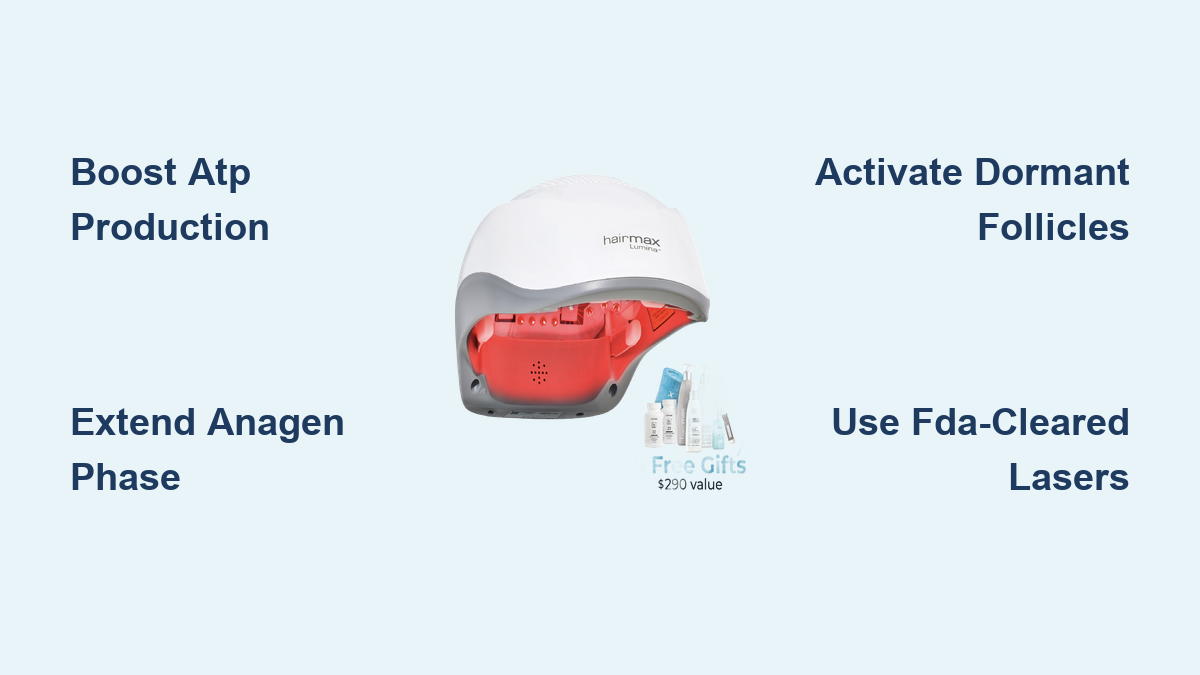
How Laser Hair Growth Works: Science Explained
If you’re losing hair and searching for non-invasive solutions, you’ve likely come across laser hair growth devices. But how does laser hair growth work, really? It’s not magic. It’s science. Low-level laser therapy (LLLT), also known as photobiomodulation, uses specific wavelengths of red or near-infrared light to stimulate weakened hair follicles, boost cellular energy, and extend the active growth phase of hair. This treatment is FDA-cleared for androgenetic alopecia, the most common form of hair loss, and backed by clinical studies showing measurable improvements in hair density, thickness, and reduced shedding.
Unlike medications that alter hormones or blood flow, laser therapy works at the cellular level, energizing dormant but still viable follicles. It doesn’t regrow hair on completely bald scalps, but for those with early to moderate thinning, it can slow hair loss and even trigger new growth. In this guide, we’ll break down exactly how LLLT works, what makes a device effective, who benefits most, and how to get real results.
Photobiomodulation: The Core Mechanism
Laser hair growth doesn’t work by heating or damaging tissue. Instead, it relies on photobiomodulation (PBM), a biological process where light energy is absorbed by cells and converted into usable energy, kickstarting healing and regeneration.
Light Activates Mitochondria
The key target of LLLT is cytochrome c oxidase, an enzyme in the mitochondria, the powerhouses of your cells. When red or near-infrared light penetrates the scalp, it’s absorbed by this enzyme, which then boosts electron transport chain activity and increases production of adenosine triphosphate (ATP). Higher ATP levels enhance cellular metabolism and function throughout the hair follicle.
Hair follicle cells, especially in the dermal papilla and bulge region, become more active with higher ATP levels. This gives them the energy needed to transition from resting phases to growing phases, producing thicker, healthier hair shafts over time.
More Energy Means Stronger Follicles
With increased ATP, follicles can resist miniaturization caused by DHT (dihydrotestosterone), stay in the anagen (growth) phase longer, and produce thicker, healthier hair shafts. Think of it like recharging a weak battery. LLLT gives sluggish follicles the power to function optimally again, helping them maintain their size and productivity rather than shrinking over time.
How LLLT Extends the Hair Growth Cycle
Hair grows in cycles: anagen (growth), catagen (transition), and telogen (resting/shedding). In androgenetic alopecia, the anagen phase shortens over time, leading to finer, shorter hairs and increased shedding. LLLT helps reverse this trend by targeting the biological processes that govern these cycles.
Prolongs the Anagen Phase
One of the most proven effects of laser therapy is extending the anagen phase. Clinical studies show that regular LLLT use delays the shift from growth to shedding and increases the proportion of hairs in active growth. This means more hairs are growing at any given time, leading to visible thickening and reduced daily hair loss that becomes noticeable within a few months of consistent use.
Reactivates Dormant Follicles
LLLT doesn’t just support existing hair. It can reactivate miniaturized but still viable follicles by stimulating quiescent stem cells in the bulge region. This encourages them to proliferate and generate new terminal (thick) hairs, especially in cases of early-stage thinning where follicles remain but have slowed production.
Laser vs. LED: What Really Works
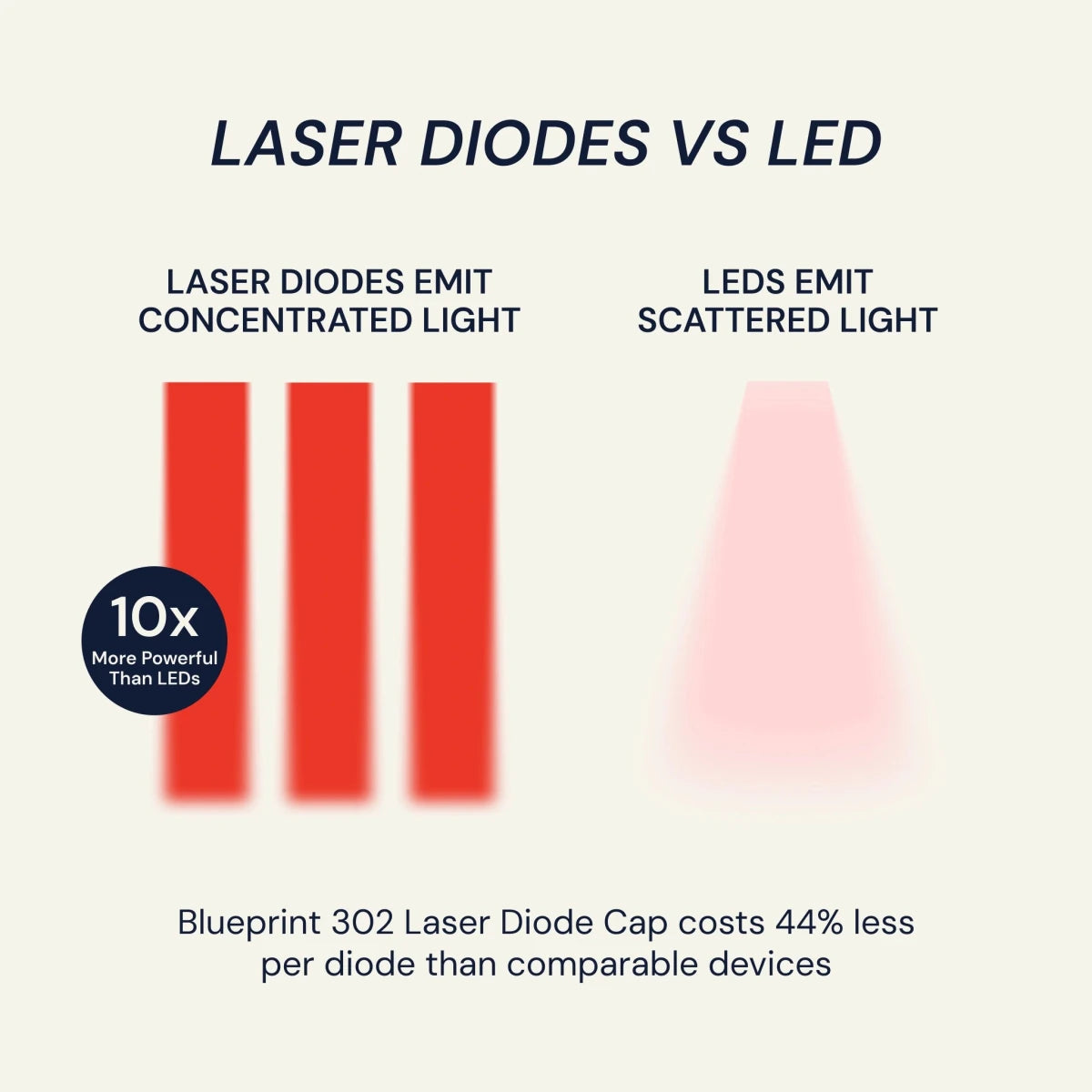
Not all red light devices deliver the same results. The type of light source matters significantly, and true laser diodes are superior to LEDs for hair growth in ways that directly impact effectiveness.
Why Lasers Penetrate Deeper
Laser light is coherent and collimated, meaning it travels in a straight line with minimal scattering. This allows deeper penetration into the dermis where follicles reside. LEDs emit diffuse light that often fails to reach therapeutic depth.
| Feature | Laser | LED |
|---|---|---|
| Light Coherence | Coherent, focused beam | Non-coherent, scattered light |
| Penetration Depth | Up to 5 mm into scalp tissue | Shallow, uneven delivery |
| Energy Delivery | High irradiance, targeted | Diffuse, lower power density |
| FDA Clearance | Yes, for medical-grade devices | Rarely cleared for hair loss |
Many consumer products market red light therapy caps using only LEDs. These may provide surface-level benefits but lack the power, coherence, and penetration needed for meaningful follicular stimulation.
Optimal Wavelength and Power Settings

To be effective, a device must deliver the right wavelength, sufficient power, and adequate coverage across the scalp. Understanding these specifications helps you choose a device that actually works.
Best Wavelength Range
The optimal wavelength range for LLLT is 655 to 660 nm, which represents peak absorption by cytochrome c oxidase. Near-infrared wavelengths around 810 to 850 nm offer deeper penetration and anti-inflammatory effects. Most home devices use 630 to 680 nm red light, which offers the best balance of absorption and safety for at-home use.
Key Technical Specs to Check
When evaluating a laser hair growth device, look for these specifications.
• Laser diodes: Minimum 300 for full scalp coverage
• Power output: Approximately 5 mW per diode, with total output of at least 1850 mW
• Irradiance: At least 5 to 10 mW/cm², which measures energy delivered to the scalp
• Treatment time: 10 to 12 minutes per session
• Frequency: Every other day to daily use for optimal results
Devices like the Cure Helmet, which combines 150 laser diodes with 220 LEDs for a total of 370 diodes, offer both broad coverage and deep penetration for comprehensive treatment.
Clinical Proof: What Studies Show

LLLT isn’t just theory. It’s supported by randomized, double-blind, placebo-controlled trials that demonstrate measurable improvements in hair growth parameters across multiple patient populations.
Measurable Results in Humans
A 2013 study involving 41 men showed a 39% increase in hair growth after 16 weeks of treatment. Female pattern hair loss trials demonstrated 37% more hair growth compared to placebo. A 2014 meta-analysis confirmed safety and efficacy for both genders, and UK trials with the Cure Helmet showed statistically significant gains in density, thickness, and quality.
These studies confirm that LLLT increases hair count by 15 to 40 hairs per cm² within 4 to 6 months of consistent use, with results varying based on individual factors like age and baseline hair density.
Timeline of Visible Results
Understanding when to expect changes helps set realistic expectations and maintain motivation throughout treatment.
| Timeframe | What to Expect |
|---|---|
| 1 to 3 months | Reduced shedding, less hair in brush or shower |
| 3 to 6 months | New fine hairs appear, increased density becomes noticeable |
| 6 to 12 months | Maximum thickness and coverage achieved |
Results are cumulative, meaning consistency is critical. Missing sessions slows progress, and the full effect builds gradually over time with regular treatment.
Treatment Phases: What Happens Over Time
Hair regrowth follows a predictable biological timeline that corresponds to the phases of treatment. Understanding these phases helps you recognize progress even before visible changes appear.
First Two Months: Biological Activation
No visible changes occur yet, but important processes are happening inside the scalp. ATP production increases, blood flow improves, and follicles begin exiting the telogen phase. This foundation phase is essential, and progress is invisible but critical for later results.
Months Three to Five: Early Improvements
Signs of improvement emerge during this phase. You’ll notice less daily shedding, and hair may feel thicker and fuller. Increased shine and strength become apparent as more follicles enter the anagen phase, setting the stage for visible regrowth.
Months Six to Eight: Clear Regrowth
By this point, you’ll see a noticeable increase in density with new terminal hairs becoming visible. Overall hair quality improves significantly, and optimal results typically appear around six to eight months of consistent use.
Who Benefits Most from Laser Therapy
LLLT works best when viable follicles are still present. Success depends on having active but weakened follicles that can respond to stimulation.
Ideal Candidates
Men and women with early to moderate androgenetic alopecia benefit most from LLLT. Those with thinning or miniaturized hair, not complete baldness, see the best results. Patients using minoxidil, finasteride, or PRP can enhance their results by adding laser therapy. Post-hair transplant patients can preserve native hair, and individuals seeking a non-drug, low-risk option find LLLT an excellent choice.
Poor Candidates
Advanced baldness with no remaining follicles means LLLT cannot help. Scarring alopecia, such as lichen planopilaris, involves destroyed follicles that cannot be revived. Hair loss due to thyroid issues, nutrient deficiencies, or autoimmune disease requires treating the underlying cause first. Alopecia areata shows limited evidence of benefit from LLLT, and anyone unable to commit to long-term, consistent use will not see results.
Device Selection: How to Choose Effectively
Not all laser caps are created equal. Using these criteria helps you pick a proven device that actually delivers results.
Must-Have Features
Look for these essential features when selecting a device.
- FDA Clearance, which ensures safety and substantial equivalence to proven models
- True Laser Diodes rather than just LEDs
- Wavelength of 650 to 660 nm for optimal cytochrome c oxidase activation
- At least 300 Diodes for full, even scalp coverage
- 10 to 12 Minute Sessions matching clinical protocols
- Daily or Every-Other-Day Use supporting biological rhythm
- Hands-Free Design improving compliance
Recommended Device: Cure Helmet
The Cure Helmet exemplifies quality design with 370 diodes combining 150 laser with 220 LED sources. It delivers 630 to 680 nm wavelength with 1850 mW total power in 12-minute wireless sessions. The touch-screen interface and auto-start safety features make it easy to use, and it’s backed by a 16-week clinical trial demonstrating statistically significant results.
Boost Results with Combination Therapy
LLLT works even better when paired with other treatments that address different aspects of hair loss through complementary mechanisms.
With Minoxidil
Minoxidil opens potassium channels and dilates blood vessels, while LLLT boosts ATP and extends the anagen phase. The synergistic effect produces greater hair count than either treatment alone. Apply minoxidil after LLLT sessions to avoid blocking light penetration.
With Finasteride or Dutasteride
Finasteride blocks DHT, halting follicular miniaturization. LLLT re-energizes weakened follicles. Together, they address both the hormonal and metabolic aspects of hair loss for more comprehensive treatment.
With PRP or Exosomes
PRP delivers growth factors to the scalp, and LLLT enhances cellular uptake and response. Combined use can accelerate regrowth and improve retention of both existing and newly growing hair.
Pre and Post-Transplant Use
Before surgery, LLLT improves donor area health. After surgery, it reduces shock loss, enhances graft survival, and maintains surrounding hair. Many surgeons recommend LLLT as part of post-transplant care protocols.
Safety, Side Effects, and Realistic Expectations
LLLT is one of the safest hair loss treatments available, with a profile that makes it suitable for long-term use across diverse patient populations.
Excellent Safety Profile
The treatment is non-invasive with no downtime. There are no systemic side effects, and it’s safe during pregnancy (though consultation with your doctor is recommended). The procedure is painless with no recovery needed, and there’s no cancer risk at therapeutic doses.
Rare Side Effects
Some users experience mild scalp warmth or tingling. A temporary increase in shedding may occur, similar to the minoxidil shed. Occasional dryness, itching, or tenderness can develop. These effects typically resolve within weeks of starting treatment.
Important Limitations
LLLT does not block DHT, so it must be combined with finasteride if hormonal control is needed. It cannot revive dead follicles, meaning it won’t work on scarred or fully bald areas. Results require maintenance, as stopping treatment causes benefits to fade. Approximately 20 to 30% of users may be non-responders, and quality at-home devices represent a significant upfront investment of around $3,000.
Cost Comparison: In-Clinic vs. At-Home
Understanding the financial commitment helps you plan your hair restoration journey effectively.
In-Clinic Treatments
In-clinic LLLT costs $200 to $500 per session with weekly visits required. The cumulative cost exceeds $10,000 per year, though professional-grade equipment is used under supervision.
At-Home Devices
At-home devices require a one-time investment of approximately $3,000, such as the Z Cap or Cure Helmet. There are no recurring fees, offering greater convenience and privacy. For committed users, this becomes cost-effective within 6 to 12 months compared to ongoing clinic visits.
Key Takeaways for Laser Hair Growth
Laser hair growth works through photobiomodulation, a process where specific wavelengths of light energy are absorbed by follicular cells to boost ATP production, extend the active growth phase, improve blood flow, and activate stem cells. This mechanism has been validated through multiple randomized controlled trials demonstrating 15 to 40 new hairs per cm² within months of consistent use.
The best results come from using quality FDA-cleared devices with true laser diodes, proper wavelength (around 655 to 660 nm), and sufficient diode count (at least 300). Consistency matters enormously. Skipping sessions interrupts progress, and maintenance treatments are needed to preserve gains over time.
For most people, combining LLLT with other treatments like minoxidil, finasteride, or PRP produces superior results compared to any single approach. The treatment is safe, painless, and suitable for long-term use, making it a valuable tool in the fight against early to moderate hair loss.
Frequently Asked Questions About Laser Hair Growth
How long does it take to see results from laser hair growth treatment?
Most users notice reduced shedding within the first three months. Visible regrowth typically appears between three and six months, with maximum results achieved around six to twelve months of consistent daily use.
Is laser hair growth safe for women who are pregnant?
LLLT is generally considered safe during pregnancy, but you should consult your healthcare provider before starting any new treatment while pregnant or breastfeeding.
Can laser hair growth treat female pattern hair loss?
Yes, LLLT is FDA-cleared for both male and female pattern hair loss. Clinical studies show up to 37% increase in hair growth for women with female androgenetic alopecia.
Do I need to use laser hair growth devices forever?
Maintenance is required to preserve results. After the initial six to eight month treatment period, most users continue with sessions every three to six months to maintain hair density and prevent reversal.
What happens if I stop using laser hair growth devices?
If you stop treatment, the benefits gradually reverse. Follicles return to their baseline activity level, and hair density typically decreases back to pretreatment levels over several months.
Can laser hair growth work on completely bald heads?
No, LLLT cannot regrow hair in areas where follicles are completely dead or scarred. It only works on miniaturized but still viable follicles. Advanced baldness with no remaining follicles will not respond to treatment.