How Laser Eye Treatment Works: Quick Guide
If you have ever wished to see clearly without reaching for glasses or inserting contact lenses, laser eye treatment might be the solution you have been looking for. Laser eye treatment, most commonly known as LASIK, works by permanently reshaping the cornea—the eye’s clear front surface—so light focuses precisely on the retina, delivering sharp vision. Over 19 million LASIK procedures have been performed in the United States since FDA approval, backed by more than 7,000 clinical studies. It is one of the most studied and safest elective surgeries available today.
This guide breaks down exactly how laser eye surgery works, from the science behind vision errors to the step-by-step procedure and recovery. You will learn how modern lasers correct nearsightedness, farsightedness, and astigmatism, who qualifies as a good candidate, what to expect during recovery, and why millions trust this procedure for lasting visual freedom.
Why Blurred Vision Happens: Understanding Refractive Errors
Before understanding the treatment, it helps to know what goes wrong in common vision problems. The cornea and lens work together to bend incoming light onto the retina. When the cornea’s shape is imperfect, light does not focus correctly, leading to blurred vision.
Nearsightedness: When Distant Objects Appear Blurry
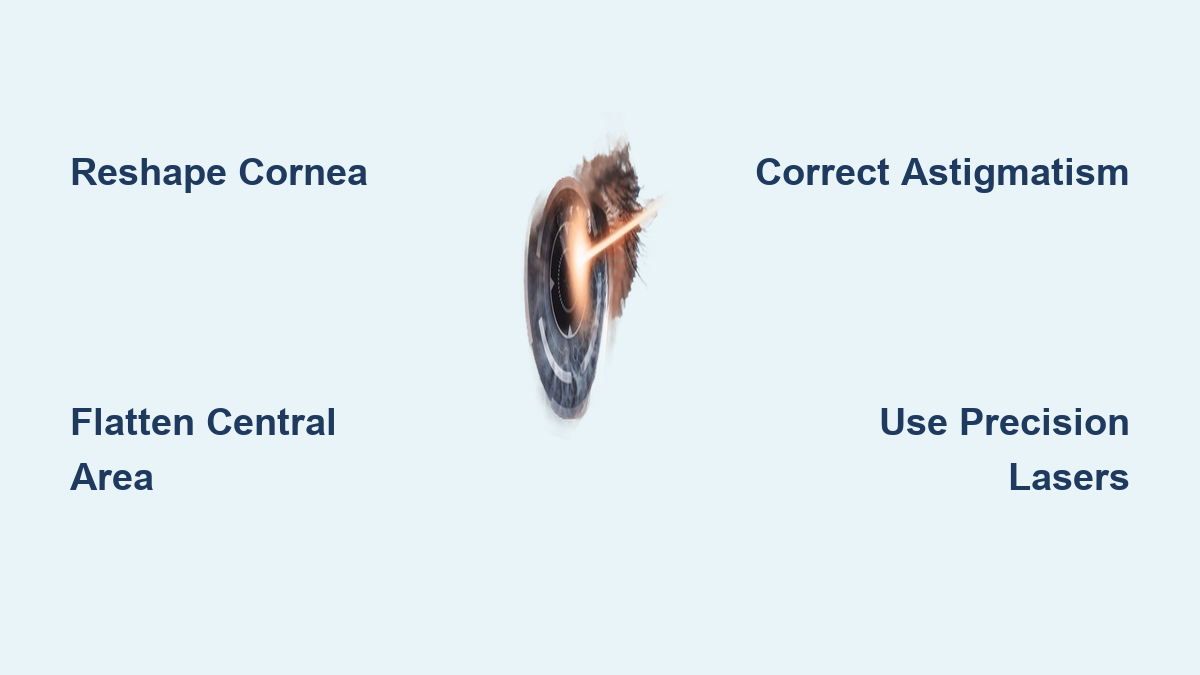
In nearsightedness, also called myopia, the cornea is too steep or the eye is too long. Light converges in front of the retina instead of directly on it, making distant objects appear blurry. Laser treatment corrects this by flattening the central cornea to move the focal point backward.
Farsightedness: Difficulty Seeing Close Objects
With farsightedness, also called hyperopia, the cornea is too flat or the eye is too short. Light focuses behind the retina, blurring close-up vision. The laser steepens the central cornea by removing tissue from the outer zone, moving the focal point forward.
Astigmatism: Distorted Vision at All Distances
An irregularly shaped cornea—more oval than round—causes light to scatter, creating multiple focal points. This results in distorted or blurry vision regardless of distance. The excimer laser applies an asymmetric ablation pattern to smooth the cornea into a symmetrical shape, correcting this issue.
The Technology Behind Laser Eye Correction

Laser eye surgery relies on two advanced lasers working together. Each plays a distinct role in reshaping the cornea with incredible precision.
Excimer Laser: Reshaping the Cornea
The excimer laser is an ultraviolet laser that removes microscopic layers of corneal tissue through photoablation—a cold process that vaporizes tissue without heating surrounding areas. Each pulse removes just 0.25 microns of stromal tissue, allowing sub-micron accuracy. The laser is guided by pre-operative eye maps, making corrections tailored to your unique vision prescription.
Femtosecond Laser: Creating the Corneal Flap
In LASIK, accessing the stromal layer requires a thin flap. The femtosecond laser uses ultrafast infrared pulses to create thousands of tiny bubbles within the cornea, forming a precise hinged flap about 100 microns thick. This modern approach replaces older blade-based tools, reducing variability and enhancing safety significantly.
Diagnostic Mapping for Personalized Treatment
Before surgery, detailed eye maps are created to customize your treatment. Advanced systems like iDesign Refractive Studio capture 27 different eye maps in under three seconds, detecting imperfections invisible to traditional exams.
Wavefront-Guided vs. Wavefront-Optimized Treatments
Wavefront-guided treatments use personalized 3D maps to correct both standard refractive errors and higher-order aberrations like glare and halos. Wavefront-optimized treatments apply population-based adjustments to preserve the cornea’s natural aspheric shape, reducing night vision issues. Both methods improve outcomes, but wavefront-guided is ideal for patients with significant visual distortions.
The LASIK Procedure Step by Step
LASIK is performed in minutes, and most patients experience little to no discomfort. Here is how the procedure unfolds.
Preoperative Evaluation
Before surgery, you will undergo a comprehensive eye exam measuring corneal thickness, topography, refractive error, pupil size, and retinal health. You must stop wearing contact lenses for 2 to 4 weeks to allow the cornea to stabilize. A monovision trial may be recommended if you are over 40 and need near vision correction.
Creating the Corneal Flap
Numbing drops eliminate pain—no needles are used. A small eyelid speculum keeps your eye open while you focus on a target light. The femtosecond laser creates a precise flap in the cornea. You may feel pressure from the suction ring, but no pain. The flap is gently lifted, exposing the stromal layer beneath.
Laser Reshaping
The excimer laser begins ablation based on your prescription. For myopia, it flattens the center by removing central tissue. For hyperopia, it steepens the center by removing peripheral tissue. For astigmatism, it applies an oval-shaped correction. The laser uses real-time eye tracking up to 4,000 times per second to adjust for micro-movements. If your eye moves too much, the laser pauses automatically.
Flap Repositioning and Healing
After reshaping, the flap is repositioned and adheres naturally—no stitches needed. It acts as a protective bandage. You may notice a burning hair smell due to protein breakdown during ablation. Total time per eye is 5 to 9 minutes, and both eyes are typically treated the same day.
Alternatives to LASIK: PRK and LASEK
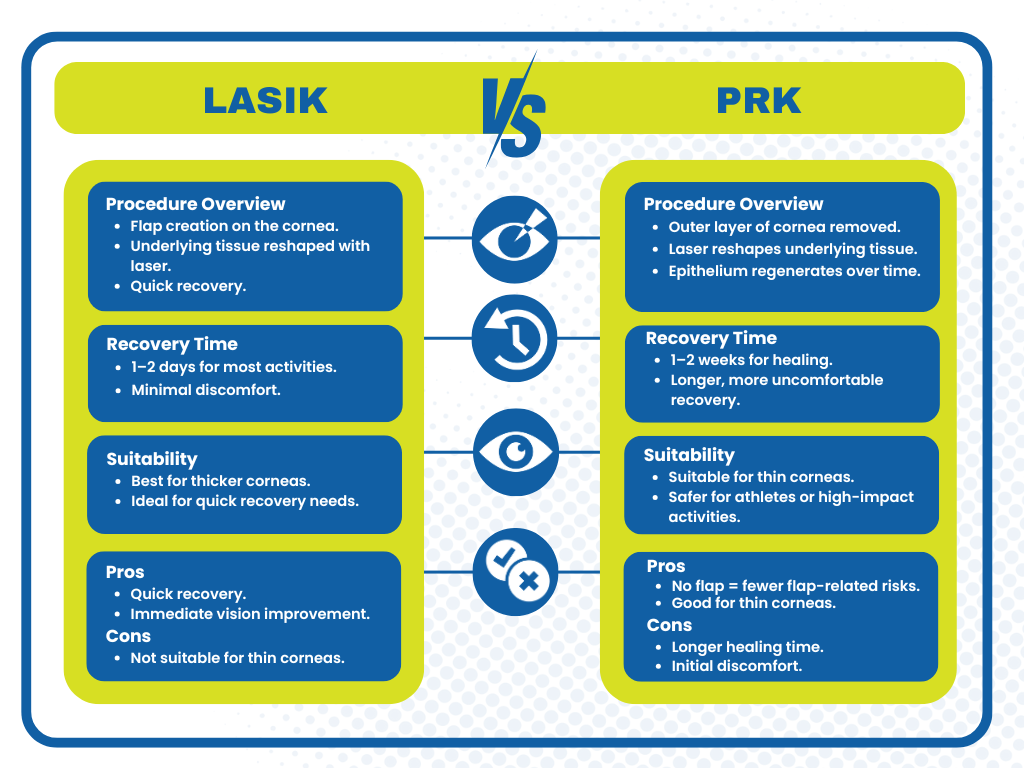
Not everyone qualifies for LASIK. Thin corneas, severe dry eyes, or high-risk lifestyles may require alternative procedures.
PRK: No Flap, More Tissue Preservation
Photorefractive Keratectomy removes the outer epithelial layer instead of creating a flap. The excimer laser reshapes the exposed stroma directly. A bandage contact lens is placed while the epithelium regenerates over 3 to 7 days. PRK is best for patients with thin corneas or those in contact sports.
LASEK: Combining Benefits
LASEK loosens the epithelium with dilute alcohol, moves it aside, and replaces it after laser treatment. It combines aspects of LASIK and PRK, reducing discomfort compared to PRK while preserving more tissue than LASIK.
Who Qualifies for Laser Eye Treatment
Approximately 20 percent of patients are disqualified during evaluation. Ideal candidates are age 18 or older with stable vision for at least one year, corneal thickness greater than 500 microns, healthy corneas, and normal tear production. You should not have uncontrolled systemic diseases like diabetes or lupus.
When Surgery Is Not Recommended
Surgery is not recommended for patients with keratoconus or corneal ectasia, severe dry eye, autoimmune disorders affecting healing, pregnancy or breastfeeding, uncontrolled glaucoma or cataracts, or long-term corticosteroid use.
Recovery Timeline After LASIK
Healing varies by procedure, but most patients resume daily life quickly.
LASIK Recovery
Most patients achieve 20/20 vision within hours. The first day involves rest and prescribed eye drops. Discomfort is minimal—grittiness and light sensitivity are common. Most return to work within 1 to 2 days. Exercise can resume after one week, and eye shields are worn at night. Vision fully stabilizes over 2 to 3 months.
PRK and LASEK Recovery
These procedures involve slower healing. Days 1 to 4 may involve moderate discomfort managed with oral medication. The epithelium heals by day 5 to 7 when the bandage lens is removed. Vision gradually improves over weeks, with most achieving stable vision by 4 to 6 weeks.
Potential Risks and Side Effects
Most side effects are temporary and manageable.
Dry Eyes
Dry eyes affect nearly all patients initially. Symptoms include grittiness, burning, and fluctuating vision. This usually resolves within 6 months with artificial tears, cyclosporine eye drops, or punctal plugs to reduce tear drainage.
Night Vision Disturbances
Glare, halos, and starbursts around lights are common initially. Most improve within weeks to months. Wavefront-guided treatments reduce these issues.
Rare but Serious Risks
Flap complications are minimized with femtosecond lasers. Diffuse Lamellar Keratitis is treatable with steroids. Infection risk is less than 0.1 percent with proper drop use. Under or overcorrection may require enhancement procedures.
Common Myths About Laser Eye Surgery
Misinformation persists despite decades of evidence.
It Does Not Correct Astigmatism
This is false. Modern excimer lasers are highly effective at treating astigmatism with customized ablation patterns.
The Entire Procedure Is Laser-Only
This is false. Lasers handle only about 10 percent of the surgery. Over 150 manual steps require surgeon precision, from flap handling to laser alignment.
It Is Painful
This is false. Numbing drops prevent pain. LASIK patients feel only pressure. PRK may cause discomfort during healing, but it is manageable.
Results Do Not Last
This is mostly false. The corneal change is permanent. However, presbyopia and cataracts may still develop with age.
Post-Op Care for Best Results
Following guidelines protects your vision and speeds healing.
First 24 Hours
Rest your eyes and sleep if possible. Use prescribed eye drops including antibiotics, anti-inflammatories, and lubricants. Wear eye shields at night for one week. Avoid rubbing your eyes.
First Week
Avoid eye makeup, dusty environments, swimming, and saunas.
First Month
Avoid contact sports and attend all follow-up visits at 24 hours, one week, one month, and three to six months.
Is Laser Eye Surgery Right for You
Consider laser eye treatment if you want freedom from glasses and contacts, have stable vision and healthy eyes, are over 18 and not pregnant, or lead an active lifestyle. However, it is not for everyone. A comprehensive evaluation by a qualified surgeon is essential to determine your candidacy.
Frequently Asked Questions About Laser Eye Treatment
How Long Does the LASIK Procedure Take
The actual laser treatment takes 10 to 50 seconds per eye. Total procedure time including preparation is 5 to 9 minutes per eye, with both eyes typically treated in one session.
Does LASIK Hurt
No. Numbing drops eliminate pain during the procedure. You may feel pressure from the suction ring, but no pain. Some patients report a burning hair smell due to protein breakdown during ablation.
What Is the Success Rate of LASIK
Over 80 percent of LASIK patients achieve 20/20 vision or better. More than 95 percent no longer need glasses for daily tasks. Success is highest in patients with low to moderate myopia.
How Long Does It Take to Recover From LASIK
Most patients achieve 20/20 vision within hours and resume normal activities within 1 to 2 days. Vision fully stabilizes over 2 to 3 months.
Can Laser Eye Surgery Correct Astigmatism
Yes. Modern excimer lasers routinely correct astigmatism with high precision using customized ablation patterns.
Is LASIK Safe
Yes. LASIK is one of the safest elective procedures available. The risk of vision-threatening complications from contact lens wear is approximately 5 times higher than from LASIK surgery.
Key Takeaways for Understanding Laser Eye Treatment
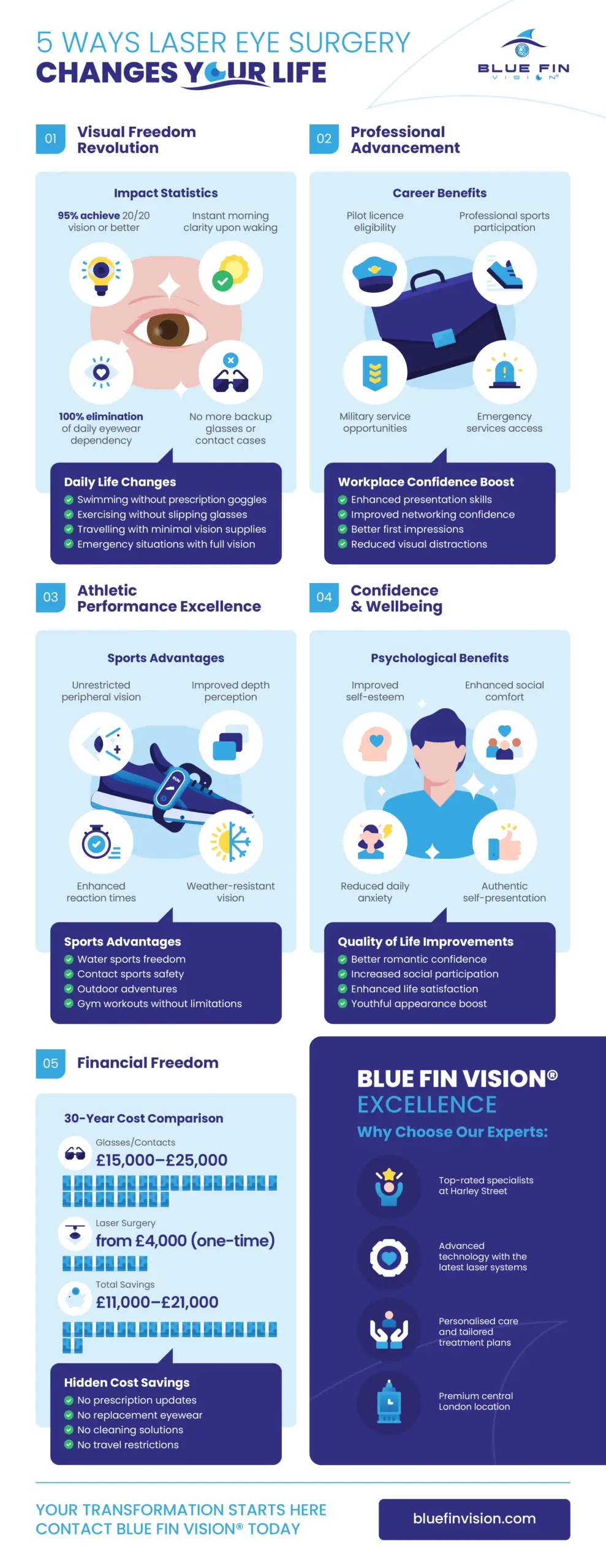
Laser eye treatment works by permanently reshaping the cornea using a precision-guided excimer laser, correcting how light focuses on the retina. Whether through LASIK, PRK, or LASEK, the goal is the same: clear, natural vision without lifelong dependence on corrective lenses. With over 95 percent patient satisfaction, rapid recovery, and proven safety, it remains one of the most life-enhancing medical procedures available. If you are considering the surgery, start with a detailed consultation to see if your eyes are ready for transformation.