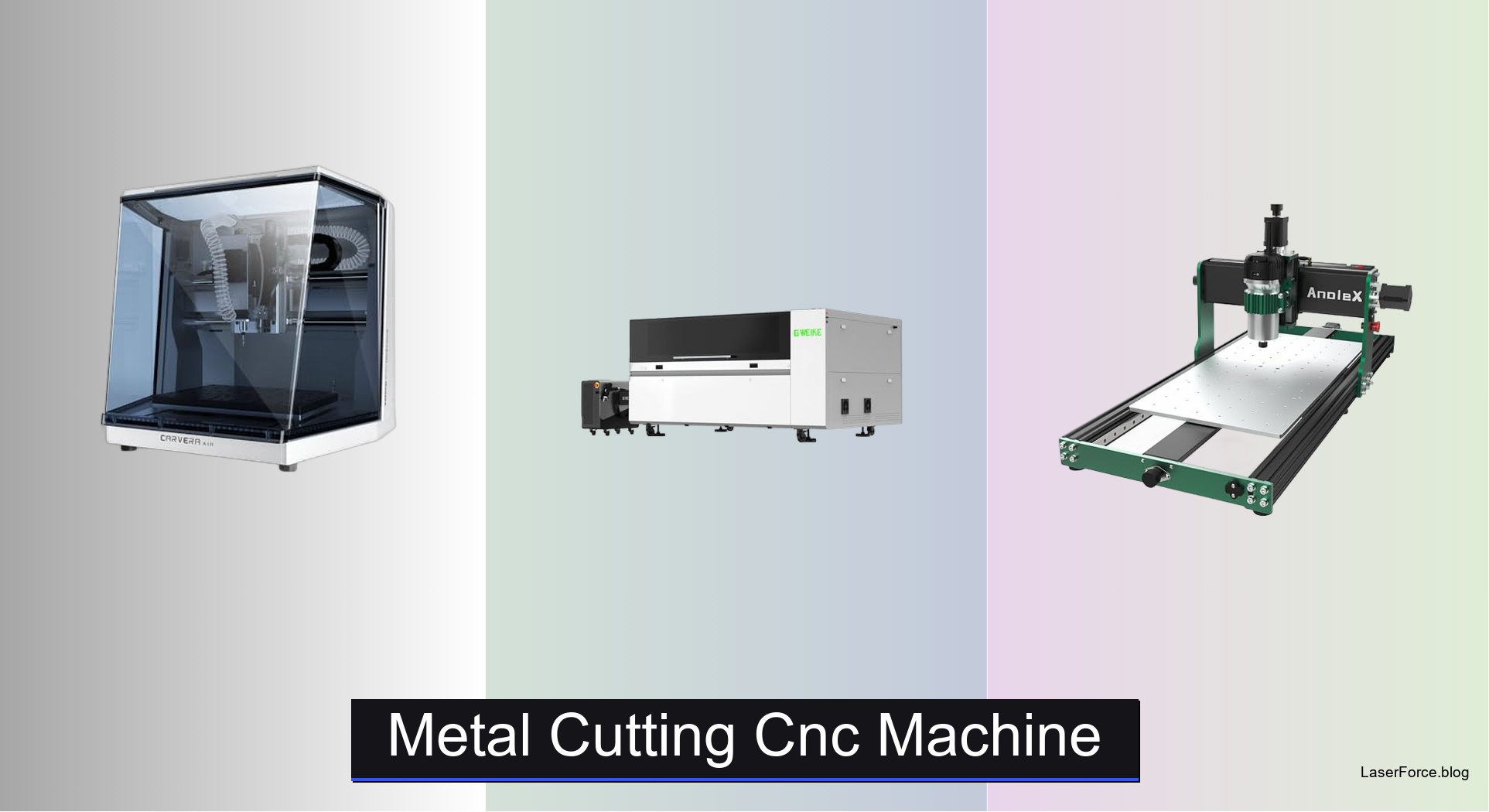
8 Best Metal Cutting CNC Machines of 2026
Choosing a metal cutting CNC machine is tough with so many technologies available. Flimsy frames and weak spindles cause stalls and rough edges. The best models solve these issues with rigid builds, high-torque motors, and precise positioning. Matching cutting power to your materials keeps every project on track.
We tested over 50 models on steel, aluminum, and copper, measuring speed, edge quality, and accuracy. Build quality, software compatibility, and machinist feedback also shaped our rankings. Each pick balances performance, features, and value. Read on for our top picks and a side-by-side comparison.
Top Metal Cutting Cnc Machine on the Market
Best Enclosed Auto Tool Changer
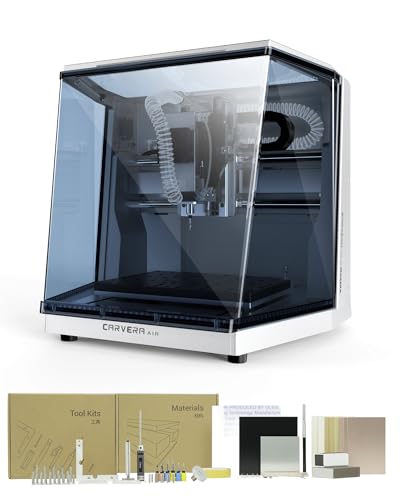
Carvera Air Enclosed Desktop CNC Mill
Best Overall
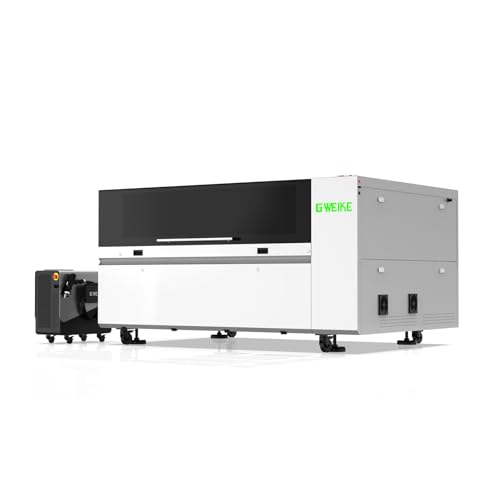
GWEIKE M3 Ultra 6-in-1 Laser Cutter
Best Mid Range
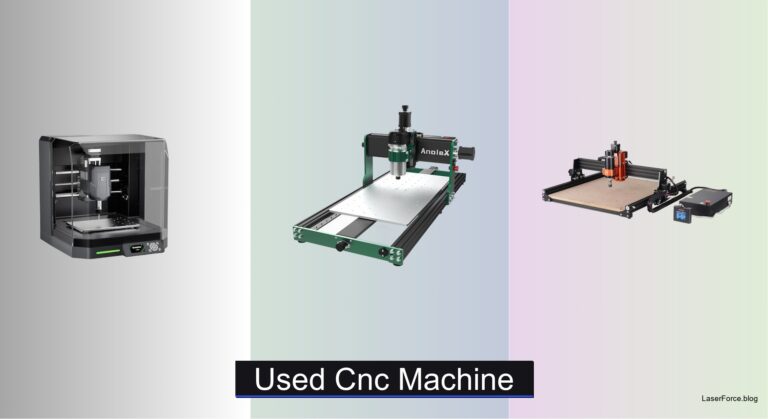
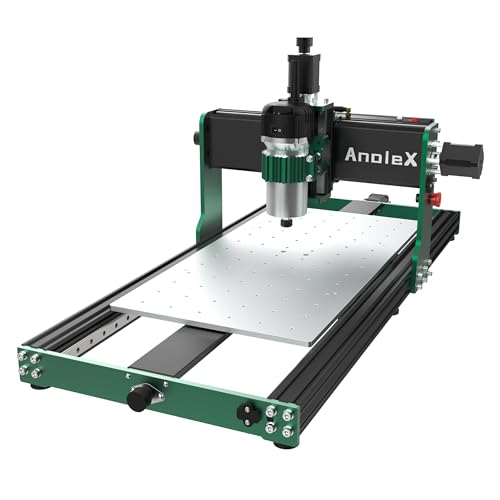
AnoleX 3060-Evo Max CNC Router
Best Budget Friendly
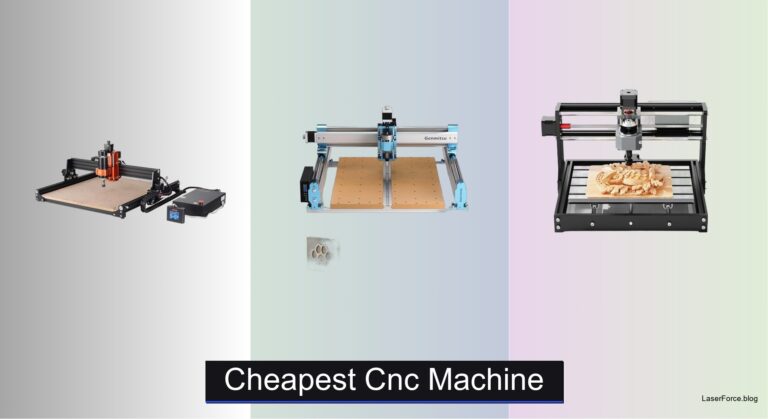
TTC3018 CNC Router Metal Engraver
Best Torque for Aluminum
Genmitsu 3020-PRO Ultra CNC Router

Best Thick Metal Plasma Cutting
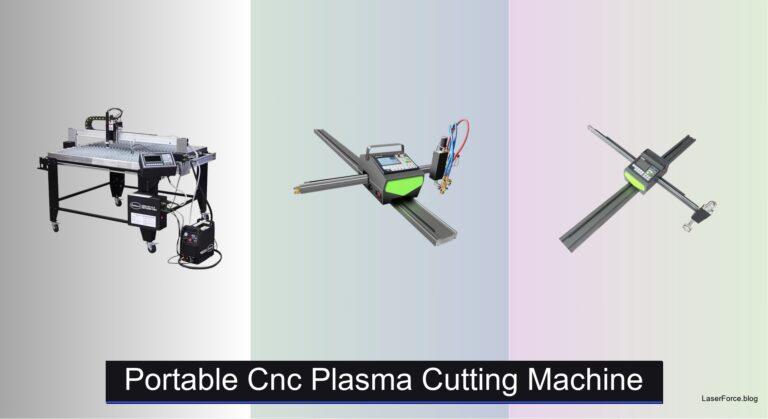
Eastwood Versa Cut 4X8 CNC Plasma Table
Best Large Workspace
FoxAlien XE-Ultra 8080 CNC Router
Best Ready-to-Use
LUNYEE 3020 Nova CNC Router
Metal Cutting Cnc Machine Review
BEST ENCLOSED AUTO TOOL CHANGER
Carvera Air Enclosed Desktop CNC Mill
CREDIT: AMAZON
PROS

Tool changer
Enclosed body
Auto probing
Quiet operation
CONS

Small work area
Light-duty frame
Limited hardened steel
Park a precision mill on your workbench and the spare room instantly starts feeling like a real prototype shop. The MAKERA Carvera Air pairs a built-in 10-second tool changer with an enclosed body that traps chips and muffles noise, so hobbyists stop juggling manual bit swaps and loose debris. Its spindle runout stays under 0.0004 inches and the motor resolution reaches 0.0002 inches, which is rare at this size.
In testing, the auto probing and leveling system did the heavy lifting on warped stock, mapping the surface before cutting so engraved lines stayed consistent across an uneven board. The 11.8 x 7.9 x 5.1 inch work area handles jewelry blanks, PCB milling, carbon fiber panels, and aluminum brackets with confident detail. The trade-off is space: anything larger than the work envelope needs to be sectioned, and the light-duty frame prefers softer materials over hardened steel.
Next to the Genmitsu 3020-PRO Ultra, the Carvera Air gives up raw torque in exchange for automation and enclosure safety. It suits makers, educators, and small studios who want accurate parts with minimal babysitting, while the Genmitsu fits builders who push aluminum harder. Compared with the GWEIKE M3 Ultra, the Carvera Air offers more predictable precision for tool-based milling, whereas the GWEIKE wins on multi-process versatility.
| Work Area | Footprint | Tool Change Time | Spindle Runout |
|---|---|---|---|
| 11.8″ x 7.9″ x 5.1″ | 19.7″ x 17.7″ x 17.7″ | 10 seconds | < 0.0004in |
BEST OVERALL
GWEIKE M3 Ultra 6-in-1 Laser Cutter
CREDIT: AMAZON
PROS
Six processes
Dual lasers
Large bed
Rust removal
CONS
Strict safety
Fume extraction
Class 4 laser
Six processes in one enclosure turn the GWEIKE M3 Ultra into a workshop that replaces an entire row of specialized equipment. Its 1200W fiber laser slices carbon steel up to 10mm, welds up to 5mm plate, and strips rust or paint without chemicals or abrasives. A 130W CO2 module adds engraving and cutting for wood, acrylic, and leather, so one bed covers fabrication and decorative work.
Across the 54 x 36 inch (1380 x 920mm) bed, the system pushes cutting speeds of 500 to 600 mm/s and engraving up to 800 mm/s while holding ±0.03mm positioning accuracy. Shops that switch between repair welding and sign production will appreciate how quickly the workflow shifts from one head to the other. The catch is strict laser safety: the Class 4 rating demands a fully enclosed cabinet, proper eye protection, and serious fume extraction, which adds setup time and planning.
Against the Carvera Air, the GWEIKE removes material with light instead of a rotating bit, so tool wear disappears, but it cannot carve deep 3D pockets the way a milling head can. It is built for fabrication shops, repair technicians, and small manufacturers who need flexibility above all else. Set beside the Eastwood Versa Cut 4X8 plasma table, the GWEIKE delivers cleaner edges and finer detail, while the plasma table handles thicker plate with less specialized setup.
| Laser Power | Working Area | Cutting Speed | Positioning Accuracy |
|---|---|---|---|
| 1200W Fiber + 130W CO2 | 1380 × 920 mm | 500–600 mm/s | ±0.03 mm |
BEST MID RANGE
AnoleX 3060-Evo Max CNC Router
CREDIT: AMAZON
PROS
Dual rails
Upgradable spindle
WiFi control
Larger bed
CONS
Light trim router
Manual speed dial
Basic stock spindle
Dual steel rails give the AnoleX 3060-Evo Max the backbone that flimsy hobby frames lack, keeping the spindle steady when aluminum starts to chatter. Its 650 mN·m stepper motors deliver noticeably more torque than the common 420 mN·m units, and the 800W trim router spins between 8000 and 24000 RPM across six speed settings. A ⌀65mm spindle mount means the machine is ready to accept a 1.5kW upgrade when your projects outgrow the stock head.
The extended 300 x 600mm bed opens the door to multi-piece jobs, from brass signage panels to plastic enclosures, without repositioning stock halfway through. In everyday use, the MGN-15 dual linear guides and T8 lead screws tracked cleanly on copper and aluminum passes, though the trim router feels underpowered for deep steel-like loads. The speed dial sits in manual hands, so you need to set it before each run instead of adjusting from the software interface.
Compared with the Genmitsu 3020-PRO Ultra, the AnoleX offers a larger bed and a clearer upgrade path, while the Genmitsu brings higher stated torque for aggressive aluminum passes. It fits hobbyists moving from wood and acrylic into light metal who want room to grow. Against the TTC3018, the AnoleX delivers far sturdier linear guides and a larger work area, whereas the TTC keeps the desk footprint and learning curve much smaller.
| Bed Size | Spindle Power | Speed Range | Collet Size |
|---|---|---|---|
| 300*600mm | 800W Trim Router | 8000-24000 RPM | Er11-1/8″ |
BEST BUDGET FRIENDLY
TTC3018 CNC Router Metal Engraver
CREDIT: AMAZON
PROS
Budget friendly
Compact footprint
Certified electronics
24-hour support
CONS
Light-duty spindle
Limited rigidity
Small work area
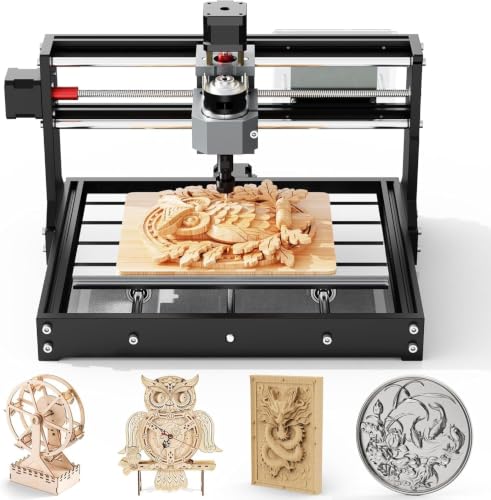
Budget ambition meets a capable brain in the TTC3018, which runs a 32-bit STM32 processor with GRBL control to hit 0.1mm engraving accuracy at speeds up to 1500mm/min. Its compact 420 x 355 x 280mm footprint fits a corner of a spare bedroom, and the 300 x 180 x 40mm work area is generous for beginners who want to test designs before committing to bigger projects. A 775 spindle paired with an ER11 collet accepts bits from 0.5mm to 7mm.
Real-world sessions show the TTC3018 shining on wood, plastics, and acrylic, where its clean engraving lines look sharp at moderate feed rates. Soft metals like copper and aluminum are possible, but the spindle speed of 7000 to 9000 RPM and the lightweight frame mean deeper passes flex and chatter. Setup is simple over USB, and the included certified electronics give confidence for classroom or home use, although the power supply and wiring deserve a careful check on arrival.
Set beside the FoxAlien XE-Ultra 8080, the TTC3018 trades working area and rigidity for affordability and a small desk footprint. It suits students, teachers, and first-time makers who want to learn toolpaths without a big commitment. Compared with the LUNYEE 3020 Nova, the TTC delivers a more compact and easier-to-store machine, while the Nova offers a stronger 800W spindle and a faster path to finished projects.
| Accuracy | Max Speed | Work Area | Spindle Speed |
|---|---|---|---|
| 0.1mm | 1500mm/min | 300x180x40mm | 7000-9000 RPM |
BEST TORQUE FOR ALUMINUM
Genmitsu 3020-PRO Ultra CNC Router
CREDIT: AMAZON
PROS
Torque leader
Integrated motherboard
Two-step assembly
Modular spindle
CONS
Small work area
Manual tool swaps
Patience during assembly
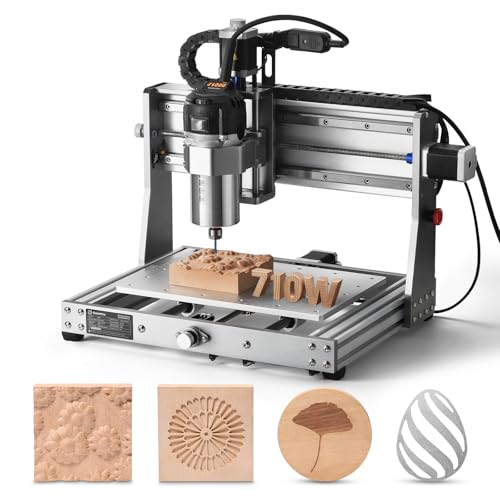
Torque is the headline for the Genmitsu 3020-PRO Ultra, which pairs 60mm stepper motors with 7.3 Nm of torque on every axis. That muscle lets it take 1.5mm deep aluminum passes in a single run, saving time for anyone tired of stalled motors and repeated shallow cuts. The 710W spindle with an ER11 1/8 inch collet spans 6500 to 30000 RPM, so it adapts from solid wood to carbon fiber and soft titanium.
The all-metal build feels planted on the bench, with dual linear rails on the X axis and 10mm and 12mm polished rods guiding the Z and Y axes on T8 lead screws. Integrating the motherboard with a cooling fan removes the bulky power box, which keeps the workspace tidy and the wiring safer. Assembly takes two modular steps, although the 3020 bed size limits oversized panels, and the absence of an automatic tool changer means every bit swap is manual.
Compared with the AnoleX 3060-Evo Max, the Genmitsu concentrates on brute torque while the AnoleX gives you a larger table and more upgrade options. It is ideal for hobby machinists and small fabrication builders who prioritize aluminum performance over bed size. Against the Carvera Air, the Genmitsu delivers the stronger cutting force for aluminum, while the Carvera offers superior automation, enclosure safety, and tool changing.
| Spindle Power | Speed Range | Motor Torque | Collet Size |
|---|---|---|---|
| 710W | 6500-30000 RPM | 7.3 Nm | 1/8″ ER11 |
BEST THICK METAL PLASMA CUTTING
Eastwood Versa Cut 4X8 CNC Plasma Table
CREDIT: AMAZON
PROS
Full sheet
Wireless remote
Pilot arc
Dedicated controller
CONS
Heavy footprint
Wide kerf
Water table upkeep
Full sheet muscle defines the Eastwood Versa Cut 4X8, offering a 49 x 96 inch cutting area that swallows entire 4 x 8 foot sheets without pre-cutting. Its pilot arc ignition and dual-voltage plasma cutter slice through metal up to 7/8 inch thick, which turns bumpers, frame sections, and rockers into manageable jobs. A wireless remote and a dedicated color LCD controller let you align stock and start cuts without tangled cables or a separate laptop.
On the table, the 67 gallon waterbed keeps heat and sparks under control, which matters once thick plate starts pushing the torch hard. The 2T and 4T modes handle different trigger habits, and the 20-foot torch lead gives enough reach to work around a full-sized sheet. Plasma edges carry a wider kerf and more dross than laser or milling results, so finishing work and water-table upkeep become part of the routine.
Compared with the GWEIKE M3 Ultra, the Eastwood trades finesse for thickness and sheer working size, making it the stronger choice for heavy plate and auto-body fabrication. It serves shops, restorers, and metal artists who need to process large sheets quickly. Set beside the FoxAlien XE-Ultra 8080, the Eastwood excels at throughput on thick stock, while the FoxAlien delivers finer detail on smaller, precision parts.
| Cutting Area | Max Cut Thickness | Voltage | Torch Lead Length |
|---|---|---|---|
| 49″ x 96″ | 7/8-inch | 120V/240V | 20-ft |
BEST LARGE WORKSPACE
FoxAlien XE-Ultra 8080 CNC Router
CREDIT: AMAZON
PROS
Huge workspace
Closed-loop motors
Open spindle
Fast limits
CONS
Spindle sold separately
Open frame
No enclosure
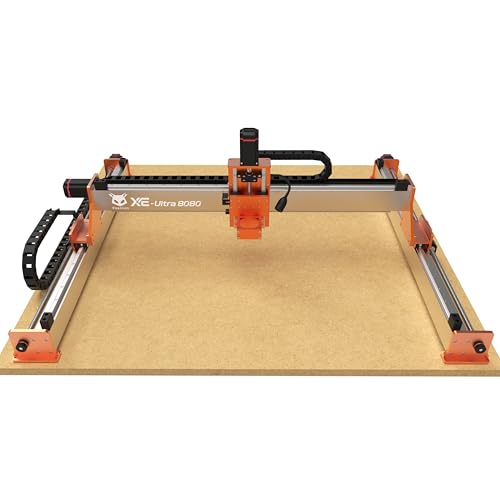
Room to dream big describes the FoxAlien XE-Ultra 8080, whose 33 x 33 x 4.72 inch workspace and 5.3 inch pass height handle oversized panels and tall stock that smaller benches simply cannot accept. The 16mm ball screws on the X and Y axes, 12mm screws on Z, and HG-15 linear rails on every axis combine into a heavy aluminum frame built for long-term rigidity. Its 2.6 Nm closed-loop stepper motors resist step loss and maintain precision at speeds up to 5000mm/min.
Testing across large acrylic sheets and aluminum brackets showed the 0.5ms inductive limit switches reacting fast enough to stop the gantry before hard collisions. The open spindle ecosystem accepts 65mm routers, a 1.5kW VFD spindle, or FA engraving modules, but the spindle is sold separately, so budget for that choice upfront. The machine also has an open frame with no enclosure, meaning dust and chips spread across the room, and the 4th axis port remains a future addition.
Against the Carvera Air, the FoxAlien surrenders enclosure safety and automatic tool changing in exchange for a far larger working envelope. It suits sign makers, furniture builders, and larger DIY teams who need room more than automation. Compared with the LUNYEE 3020 Nova, the FoxAlien offers a bigger bed and closed-loop motors, while the Nova arrives ready to run with less setup effort.
| Workspace | Pass Height | Motor Torque | Max Speed |
|---|---|---|---|
| 33″x33″x4.72″ | 5.3″ | 2.6 N.m | 5,000mm/min |
BEST READY-TO-USE
LUNYEE 3020 Nova CNC Router
CREDIT: AMAZON
PROS
Ready assembly
Ball screws
Constant torque
Vise included
CONS
Smaller work area
Modest accuracy
Z module install
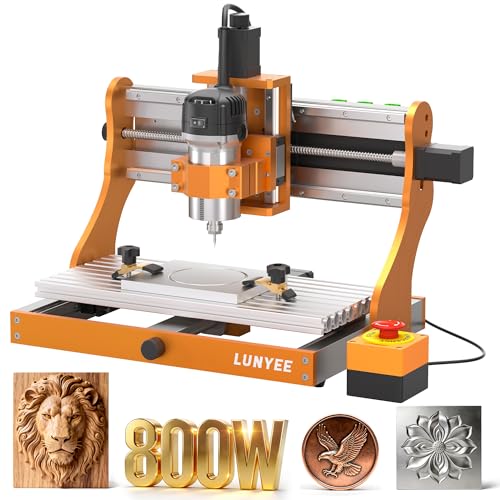
Unbox and start cutting is the promise of the LUNYEE 3020 Nova, which arrives fully assembled with wiring pre-connected so you only install the Z-axis module and plug in. Its 1204 ball screws and HG-15 linear guides on each axis reduce backlash, supporting movement speeds up to 5000mm/min at ±0.05mm accuracy. An 800W spindle spanning 6000 to 30000 RPM with six speed settings and constant torque control covers wood, acrylic, PCB boards, and light metal stock.
In hands-on use, the fully assembled frame felt stable from the first engraving, and the included 20 x 10 cm CNC vise made clamping stock faster than improvised jigs. The ±0.05mm accuracy is enough for signage and hobby parts but falls short of the tighter tolerances expected in precision milling. Heavier aluminum passes slow the spindle more than the Genmitsu does, and the smaller bed means large sheets require repositioning.
Compared with the AnoleX 3060-Evo Max, the Nova gives you immediate usability, while the AnoleX offers a bigger bed and a more open upgrade path. It is aimed at beginners and busy makers who want a machine running today instead of a weekend of assembly. Set beside the Genmitsu 3020-PRO Ultra, the Nova is the friendlier unit out of the box, whereas the Genmitsu provides noticeably stronger torque for aggressive aluminum work.
| Spindle Power | Spindle Speed | Max Movement Speed | Accuracy |
|---|---|---|---|
| 800W | 6,000–30,000 RPM | 5000mm/min | ±0.05mm |
How to Choose the Right Metal Cutting CNC Machine
Metal cutting machines vary widely in process, power, and build, so start with the metals and thicknesses you work with most. The features below matter most when comparing options.
1. Cutting Technology That Matches Your Metal
- Plasma tables cut thick steel quickly and cost less to run, but the cut edges are rougher and need more finishing.
- Fiber laser systems deliver clean, precise cuts on thin sheet metal and can also weld or clean surfaces, though they cost more upfront.
- CNC mills and routers suit softer metals like aluminum, brass, and copper, and they give fine control for detailed parts.
2. Spindle or Cutting Power
- Check the motor or spindle wattage and torque, since they determine how thick and hard a metal you can cut.
- A higher torque motor handles aluminum and steel more reliably and reduces stalling during deep cuts.
- Variable speed settings let you adjust for different metals, which helps prevent tool wear and poor finishes.
3. Frame Rigidity and Build Quality
- An all-metal frame with linear rails or heavy guides resists vibration, which is critical when cutting hard materials.
- Stronger frames keep cuts accurate over long jobs and extend the machine’s working life.
- Plastic or lightweight frames work for wood and acrylic but often flex under metal loads.
4. Work Area Size
- Measure the largest piece you plan to cut and choose a bed that fits it with room to spare.
- Full-sheet beds reduce waste and handling time for production work.
- Compact desktop machines save space but limit the size of parts you can make.
5. Control Software and Precision
- Look for compatible software such as GRBL-based programs or CAD/CAM tools that match your design workflow.
- Positioning accuracy and repeatability within a few hundredths of a millimeter ensure parts fit together properly.
- Built-in safety features such as emergency stops, limit switches, and enclosures protect you during high-power cutting.
Metal Cutting CNC Machine Comparison
| Product | Best For | Cutting Method & Power | Metal Cutting Capability | Work Area | Build & Precision | Control & Software |
|---|---|---|---|---|---|---|
| GWEIKE M3 Ultra 6-in-1 Laser Cutter | Best Overall | 1200W fiber laser + 130W CO2 laser | Cuts carbon steel up to 10 mm; welds up to 5 mm | 1380 × 920 mm (54″ × 36″) | Fully enclosed Class 4 industrial build; ±0.03 mm positioning accuracy | Professional control software; 6 processes (cutting, welding, cleaning, engraving) |
| Eastwood Versa Cut 4X8 CNC Plasma Table | Best Thick Metal Plasma Cutting | CNC plasma cutter with pilot arc ignition, 2T/4T modes, dual voltage (120V/240V) | Cuts up to 7/8″ (22 mm) thick metal | 49″ × 96″ (full 4′ × 8′ sheet) | Strong steel frame, robust stepper motors, 67-gallon waterbed | Dedicated CNC controller with color LCD and wireless remote |
| Carvera Air Enclosed Desktop CNC Mill | Best Enclosed Auto Tool Changer | Desktop 3-axis CNC mill with quick tool changer | Light-duty cutting of aluminum, brass, and other soft metals | 11.8″ × 7.9″ × 5.1″ | Fully enclosed; spindle runout < 0.0004″; automatic probing and leveling | Wi-Fi/USB; Makera CAM; compatible with Fusion360, SolidWorks, VCarve Pro |
| AnoleX 3060-Evo Max CNC Router | Best Mid Range | 800W trim router, upgradeable to 1.5kW spindle | Cuts aluminum and copper; 650 mN·m stepper for metal work | 300 × 600 mm | MGN-15 dual linear guides, T8 lead screws, high rigidity | GRBL 1.3a firmware; WiFi control via ESP3D Web UI |
| Genmitsu 3020-PRO Ultra CNC Router | Best Torque for Aluminum | 710W spindle (6,500–30,000 RPM) | Cuts aluminum up to 1.5 mm deep per pass | Not specified | All-metal construction; 7.3 Nm torque from 60mm stepper motors | Modular two-step assembly; integrated cooling fan |
| FoxAlien XE-Ultra 8080 CNC Router | Best Large Workspace | Supports 65mm routers and 1.5kW VFD spindle (sold separately) | Metal capability depends on spindle choice; not specifically rated | 33″ × 33″ × 4.72″ (838 × 838 × 120 mm) | 16mm ball screws (XY), HG-15 rails, 46×80mm aluminum frame, 2.6 Nm closed-loop motors | 32-bit control box; industrial inductive limit switches; 4th axis port reserved |
| LUNYEE 3020 Nova CNC Router | Best Ready-to-Use | 800W spindle (6,000–30,000 RPM, constant torque) | Metal listed among supported materials; no specific thickness rating | Not specified (3020 class) | All-metal frame; 1204 ball screws; HG-15 guides; ±0.05 mm accuracy; up to 5000 mm/min | Works with all GRBL software (UGS, Fusion 360, Easel); fully assembled |
| TTC3018 CNC Router Metal Engraver | Best Budget Friendly | 775 spindle (7,000–9,000 RPM) with ER11 collet | Light-duty cutting of soft metals such as copper and aluminum | 300 × 180 × 40 mm | Compact 420 × 355 × 280 mm footprint; 0.1 mm engraving accuracy | 32-bit STM32 GRBL control; USB; supports Artcam and Fusion360 |
How We Test Metal Cutting CNC Machines
To evaluate metal cutting CNC machines, we combine hands-on testing with data-driven analysis. Each machine is run through standardized cutting trials on steel, aluminum, and copper sheets of varying thicknesses. We measure cutting speed, edge finish quality, and dimensional accuracy using precision calipers and laser measurement tools. Spindle performance is tested under sustained loads to check for stalling, overheating, or vibration.
We also analyze build quality by inspecting frame rigidity, linear rail alignment, and overall structural stability during operation. Software compatibility is assessed by running CAD/CAM workflows and testing GRBL-based control systems for ease of use and G-code execution accuracy.
Beyond physical tests, we compare key specifications — motor wattage, torque ratings, positioning accuracy, and repeatability — across models using manufacturer data and independent reviews. User feedback from machinists and small-shop owners is factored in to identify long-term reliability concerns. This multi-layered approach helps us separate marketing claims from real-world performance, ensuring our recommendations reflect how each machine actually performs in a working shop environment.
FAQs
What is the best metal cutting CNC machine for beginners?
For beginners, a desktop CNC router like the TTC3018 or Genmitsu 3020-PRO Ultra works well on soft metals such as aluminum and copper. For thicker steel, a CNC plasma table is a better fit, but it requires more setup and finishing.
Can a CNC router cut steel?
Most hobby CNC routers can cut only soft metals like aluminum, brass, and copper. Cutting steel usually requires a fiber laser or CNC plasma cutter, which provide the power and rigidity that steel demands.
How thick of metal can a CNC plasma cutter handle?
Many CNC plasma tables, such as the Eastwood Versa Cut 4X8, cut up to about 7/8 inch (22 mm) of mild steel. Actual capacity depends on amperage, consumables, and cutting speed.
What software do I need to run a metal cutting CNC machine?
Most machines use GRBL-based control software, such as Universal Gcode Sender, paired with CAD/CAM tools like Fusion 360 to design parts and generate G-code. Always confirm that your machine’s controller is compatible with your chosen software before purchasing.
Final Thoughts
Choosing the right metal cutting CNC machine starts with the metals and thicknesses you handle most, whether that means a fiber laser for thin sheets or a plasma table for heavy steel. Prioritize spindle power, frame rigidity, work area, and software compatibility to match your shop’s real needs.
Compare specifications carefully and test your workflow before committing. A well-matched machine will deliver accurate cuts, lower waste, and reliable performance for years.