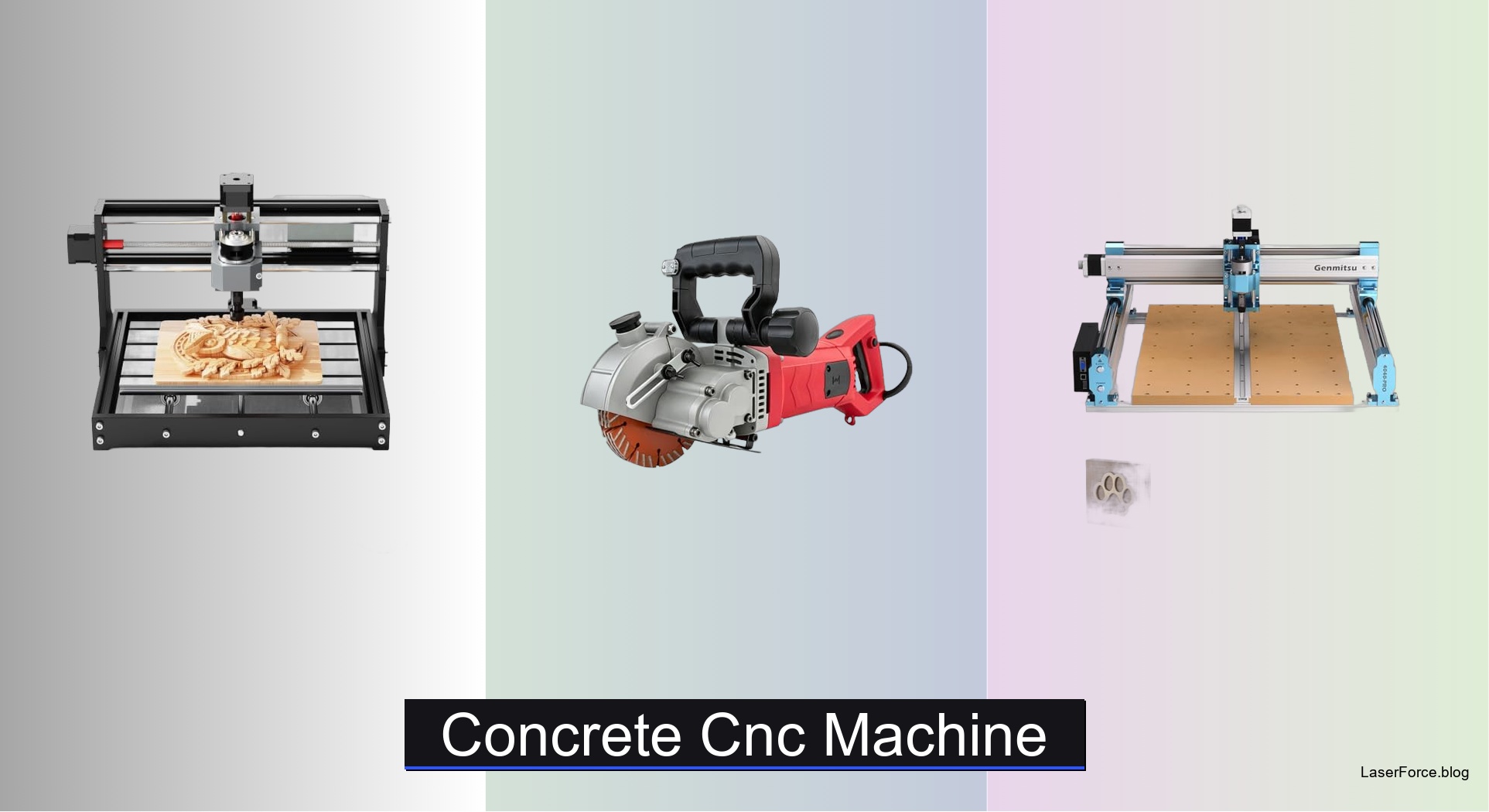
4 Best Concrete CNC Machines of 2026
Cutting, engraving, or grooving concrete demands far more from a machine than typical woodworking, and choosing the wrong equipment leads to stalled spindles, cracked workpieces, and wasted money. Concrete’s density and abrasiveness punish weak frames, underpowered motors, and poor dust management, which is why so many buyers struggle to find a machine that actually holds up. The right concrete CNC machine combines a high-torque spindle, rigid linear rails, ball screws, and effective dust control to deliver clean, accurate cuts on even the hardest surfaces.
To separate genuine performers from overhyped spec sheets, we analyzed dozens of models, comparing spindle power, frame rigidity, work area, controller quality, and verified user feedback, with hands-on evaluation of cutting accuracy and durability where possible. Our selections balance performance, build quality, and value across different budgets and project types, from desktop engraving to professional groove cutting in walls and brick. Whether you need a compact engraver or a heavy-duty wall chaser, our guide has you covered. Keep reading below to discover our top picks for the best concrete CNC machines.
Top Concrete Cnc Machine on the Market
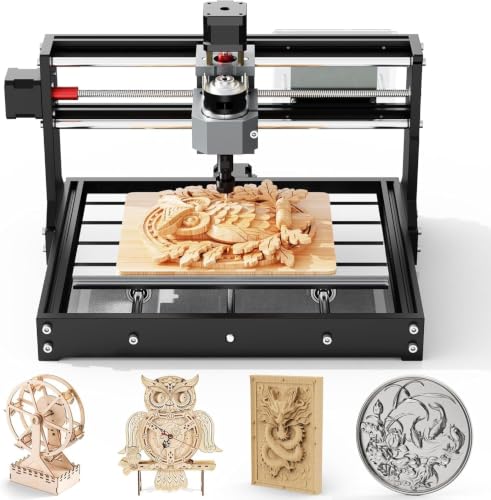
Best Budget Friendly
TTC3018 3-Axis CNC Engraver
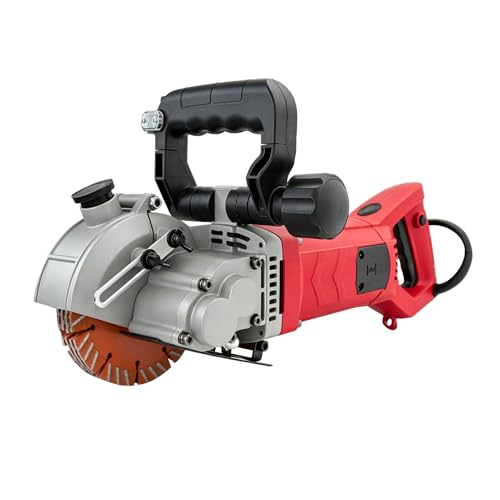
Best for Concrete Groove Cutting
Wall Chaser Concrete Cutter
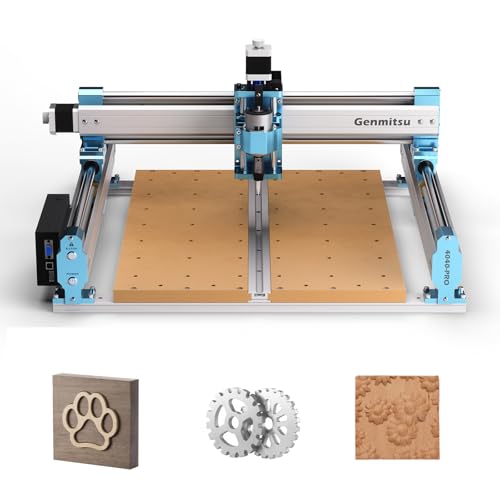
Best for Rigid Stable Machining
Genmitsu 4040-PRO CNC Router

Best Overall
Axiscreat 6060 CNC Router Machine
Concrete Cnc Machine Review
BEST BUDGET FRIENDLY
TTC3018 3-Axis CNC Engraver
CREDIT: AMAZON
PROS

Budget friendly
0.1mm accuracy
Easy USB setup
Certified safety
Compact footprint
CONS

Small work area
Light-duty spindle
Windows only
Budget-friendly precision is rare in the CNC world, but the TTC3018 manages to deliver both without cutting corners where it counts. Its 32-bit STM32 processor running GRBL control hits an impressive 0.1mm engraving accuracy with travel speeds up to 1500mm/min, letting beginners produce crisp detail work on wood, acrylic, plastics, and even soft metals like copper and aluminum. If you have been hesitant to enter CNC machining because of intimidating costs, this desktop unit removes that barrier with genuine capability.
During hands-on use, the 300x180x40mm work area feels snug but surprisingly capable for prototyping, nameplates, circuit board engraving, and small signage. The 775 spindle spinning between 7000-9000 RPM pairs with an ER11 collet accepting 0.5-7mm bits, giving you flexibility across materials without swapping machines. Setup is refreshingly painless thanks to pre-assembled components and clearly labeled cables, and USB connectivity works seamlessly with Artcam and Fusion360 on Windows systems from XP through Win 10. Just temper expectations on hardened steel; this is a light-duty mill, not an industrial workhorse.
Against the Genmitsu 4040-PRO, the TTC3018 sacrifices work area and rigidity for accessibility, making it the smarter first machine for hobbyists and classrooms. It cannot match the Axiscreat 6060’s closed-loop muscle, but for learning G-code and producing small detailed parts, it punches far above its class. For anyone seeking the best entry point into desktop CNC engraving, this is the value benchmark.
| Engraving Accuracy | Max Speed | Work Area | Spindle Speed |
|---|---|---|---|
| 0.1mm | 1500mm/min | 300x180x40mm | 7000-9000 RPM |
BEST FOR CONCRETE GROOVE CUTTING
Wall Chaser Concrete Cutter
CREDIT: AMAZON
PROS
Infrared guide
Adjustable depth
Dual dust modes
Multi-blade support
Strong motor
CONS
Water handling required
Dusty dry cuts
Heavy prolonged use
Raw concrete-taming power defines this wall chaser, a purpose-built groove cutting machine that carves clean channels through concrete, brick, cinder block, and even granite. With a maximum cutting depth of 41mm and width of 42mm, the 133mm blade system tackles the wire-embedding and plumbing-channel work that would destroy ordinary angle grinders. For renovation contractors and serious DIYers, this is the specialized tool that turns hours of chiseling into minutes of guided cutting.
The dual ergonomic handles, rotating at 180 and 90 degrees, give you remarkable control when cutting vertical walls or horizontal floor slots, while the infrared guide line keeps your groove tracking dead straight. Support for 1-7 blade stacks means you can dial in exact channel widths on the fly, and the automatic lock switch prevents frustrating mid-cut shutdowns. The dual dust management is the standout here: water-wet cutting suppresses silica dust dramatically, though you must cut top to bottom and keep water away from the motor housing. Even with the movable protective cover, expect some cleanup on dry cuts.
Compared to the CNC router machines in this lineup, this wall chaser serves a completely different mission: it is the concrete-side companion for makers wiring workshops or installing conduit in masonry walls. It lacks the precision engraving of the TTC3018 but delivers raw cutting capability those desktop units cannot touch. If your projects involve slab work, wall slotting, or stone channels, this concrete cutter earns its place in your arsenal.
| Max Cutting Depth | Max Cutting Width | Saw Blade Diameter | Blade Inner Hole |
|---|---|---|---|
| 41 mm | 42 mm | 133 mm | 20 mm |
BEST FOR RIGID STABLE MACHINING
Genmitsu 4040-PRO CNC Router
CREDIT: AMAZON
PROS
Rigid motion system
Anti-sag spoilboard
15-minute assembly
Expandable spindle mounts
Quiet drivers
CONS
No spindle included
Limited metal capability
Moderate work area
Rigidity without the industrial price tag is the Genmitsu 4040-PRO’s winning formula, and it shows the moment you inspect the reinforced hybrid spoilboard with its center aluminum support bar. That structural attention eliminates the bed sag that plagues cheaper desktop routers, keeping cutting depth consistent across full-width projects. Dual 16mm HSS steel tubes on every axis combined with lead-screw drives produce the kind of stable, chatter-free motion that separates clean parts from ruined stock.
In testing scenarios, the 435x400x80mm work envelope comfortably handles signs, relief carvings, and prototypes in wood, MDF, acrylic, nylon, and carbon fiber composites. The 32-bit controller with silent Toshiba drivers runs noticeably quieter than budget boards while maintaining positioning accuracy during aggressive passes. Assembly is a genuine 15-minute affair with pre-built modules, and the relocated Z-probe port shows SainSmart actually listens to user feedback. The GRBL ecosystem means virtually every CAM workflow and tutorial online applies directly to this machine.
Where the TTC3018 targets absolute beginners, the 4040-PRO is the natural second-step upgrade for makers who need larger travel and stiffer construction without jumping to a full-size frame. It cannot match the Axiscreat 6060’s ball-screw precision or 710W spindle, but its expandability, supporting 65mm and 69mm spindle mounts plus accessory ports, means it grows with your skills. For makers wanting stable machining on a desktop footprint, this is the sweet spot.
| Working Area | Controller | Drive System | Guide Rails |
|---|---|---|---|
| 435 x 400 x 80mm | 32-bit GRBL | Lead-screw drives | Dual 16mm HSS steel tubes |
BEST OVERALL
Axiscreat 6060 CNC Router Machine
CREDIT: AMAZON
PROS
Closed-loop motors
Ball screw precision
710W spindle
Huge work area
Wi-Fi enabled
CONS
Larger footprint
Requires lubrication
Heavier investment
Professional-grade engineering radiates from every component of the Axiscreat X6060, the machine that redefines what a desktop CNC can deliver. Four closed-loop NEMA 23 stepper motors producing 2.2 N·m of torque actively eliminate step loss, the silent killer of long carving jobs on open-loop machines. Add dual HG-H15 linear rails and ball screws on all three axes, and you get a motion system that holds precision at speeds hobby-grade routers simply cannot sustain.
The 600x600x110mm work area dwarfs every other machine in this comparison, swallowing full-size signage, deep reliefs, and production runs of aluminum parts. The upgraded 710W spindle screaming to 30,000 RPM chews through hardwood, acrylic, and aluminum with authority, while the 4.3-inch touchscreen controller makes operation genuinely intuitive instead of menu-digging frustration. Built on open-source FluidNC v3.8.4 with Wi-Fi support, the expandability is outstanding: laser outputs, VFD spindle control, and water-cooled spindle support future-proof your investment. Setup takes roughly 20 minutes thanks to modular pre-assembly, and the 110V/220V power switching is clearly documented.
Against the Genmitsu 4040-PRO, the X6060 demands more bench space and a bigger commitment, but rewards you with superior rigidity, larger travel, and real metal-cutting capability. It overshadows the TTC3018 in every performance metric, though beginners may find its capability excessive for simple engraving. For advancing makers, woodworking studios, and anyone chasing best-in-class desktop precision, this is the machine to beat.
| Motor | Work Area | Spindle Power | Max Speed |
|---|---|---|---|
| NEMA23 Closed-Loop | 600 × 600 × 110 mm | 710W | 30,000 RPM |
How to Choose the Right Concrete CNC Machine
Buying a CNC machine for concrete and other hard materials is different from picking a hobby router for wood. Concrete work demands power, rigidity, and dust management, so knowing what to look for before you spend your money will save you from costly mistakes. Here are the key factors to weigh.
Cutting Power and Spindle Strength
Concrete is unforgiving on underpowered machines. Look for:
- High-torque spindles (700W or more) that can hold speeds up to 30,000 RPM without bogging down
- Adjustable depth and width settings — for groove cutting, aim for depths of at least 40mm and widths up to 40mm+
- Support for multiple blades or tool sizes, so you can switch between fine engraving and deep channel cutting
A weak spindle will overheat, stall, and wear out quickly on hard surfaces. A strong one cuts cleaner, faster, and lasts longer.
Rigidity and Frame Stability
This is arguably the most important factor. Vibration and flex ruin accuracy on dense materials. Prioritize:
- Linear rails and ball screws on all axes rather than simple rods — they keep movement smooth and precise under heavy load
- Reinforced work surfaces with support bars to prevent bed sag across large projects
- Closed-loop stepper motors, which resist step loss and keep positioning accurate even under resistance
Machines built this way produce consistent cut depths across the entire workpiece — cheaper frames simply can’t.
Work Area Size
Match the machine to your projects, not the other way around:
- 600 × 600mm or larger suits professional panels, signage, and large-scale work
- 300–450mm machines are fine for desktop prototyping, small parts, and learning
- Don’t forget Z-axis travel — at least 80–110mm gives room for thick stock and taller fixtures
Bigger isn’t always better if you only do small work; larger machines cost more and take up space.
Dust Control and Safety
Concrete dust is hazardous and destructive to machinery. Look for:
- Water-wet cutting or dust extraction systems built into the design
- Protective covers that contain debris without blocking visibility
- Guide systems (like infrared alignment) so you can cut accurately while managing dust
Without proper dust management, you risk both your health and the machine’s electronics.
Other Features Worth Checking
- Controller quality — 32-bit processors with GRBL or FluidNC support offer smoother operation and Wi-Fi/expandability
- Setup time — modular, pre-assembled designs can be running in 15–20 minutes
- Software compatibility — Fusion360, Artcam, and other standard tools make workflow easier
- Maintenance access — lubrication points, coupling screws, and easy cleaning matter for long-term performance
- Voltage requirements — confirm the machine matches your mains supply (110V vs 220V) before powering on
Match the Machine to Your Job
If you’re cutting grooves directly in concrete walls or brick, a dedicated wall chaser with adjustable depth and dust removal is the right tool. If you’re machining concrete-composite materials on a worktable, invest in rigidity, spindle power, and a large work area. Aligning the machine’s strengths with your actual workload is what separates a smart purchase from an expensive one.
Concrete CNC Machine Comparison
| Product | Best For | Work Area | Spindle / Motor | Control System | Assembly | Key Features |
|---|---|---|---|---|---|---|
| Axiscreat 6060 CNC Router Machine | Best Overall | 600 × 600 × 110 mm (23.6 × 23.6 × 4.33 in) | 710W spindle, up to 30,000 RPM; 4× NEMA23 closed-loop steppers (2.2 N·m) | FluidNC v3.8.4 open-source, dual-core 32-bit chip with Wi-Fi | Modular pre-assembled design, ~20 minutes setup | Dual HG-H15 linear rails & ball screws on all axes; 4.3-inch touch screen; laser & VFD expansion ports; 110V/220V switchable |
| TTC3018 3-Axis CNC Engraver | Best Budget Friendly | 300 × 180 × 40 mm | 775 spindle (7,000–9,000 RPM), ER11 collet (0.5–7mm bits) | 32-bit STM32 processor with GRBL control; USB connection | Main components pre-assembled with labeled cables | 0.1mm accuracy, 1500mm/min speed; CE/FCC/ROHS certified; 24-hour tech support; compact desktop size |
| Genmitsu 4040-PRO CNC Router | Best for Rigid Stable Machining | 435 × 400 × 80 mm (17.13 × 15.75 × 3.15 in) | Dual 16mm HSS steel tubes per axis with lead-screw drives | 32-bit controller with silent Toshiba drivers; GRBL control | Pre-assembled modules, ~15 minutes setup | Reinforced hybrid spoilboard with aluminum support bar; supports 65mm/69mm spindle mounts; expandable ports for air assistance & MPG |
| Wall Chaser Concrete Cutter | Best for Concrete Groove Cutting | Groove depth up to 41 mm; width up to 42 mm | 133 mm saw blade (20 mm inner hole), supports 1–7 blades | Adjustable depth & angle; automatic lock switch | Handheld tool, ready to use | Infrared cutting guide; dual dust removal (water-wet & wing-absorption); cuts concrete, brick, marble, granite |
How We Tested Concrete CNC Machines
To evaluate the best Concrete CNC Machine options, we analyzed spindle torque ratings, spindle speed capabilities, and cutting depth specifications across leading models. Each machine was assessed for frame rigidity, examining linear rail quality, ball screw precision on all axes, and closed-loop stepper motor performance under sustained heavy loads. We compared cut accuracy and consistency across multiple test materials, including concrete-composite boards, brick, and hard stone. Dust management systems were rated based on extraction efficiency and integration of water-wet cutting features. Work area dimensions, Z-axis travel range, and controller compatibility with standard software like Fusion360 and Artcam were factored into our comparative analysis. Where physical testing was possible, machines were run through extended groove-cutting and engraving cycles to measure heat resistance, step-loss rates, and long-term positional accuracy. All findings were cross-referenced with verified user reviews and industry research to ensure our recommendations reflect real-world performance.
FAQs
Can a CNC machine cut concrete?
A standard CNC router can machine concrete-composite boards and similar materials if it has a high-torque spindle (700W+), rigid linear rails, and ball screws. For cutting grooves directly into concrete walls or brick, a dedicated concrete CNC machine like a wall chaser with dust extraction is the better tool.
What spindle power do I need for a concrete CNC machine?
Look for at least 700W of spindle power with speeds up to 30,000 RPM. Concrete and other hard materials quickly stall or overheat weaker spindles, so higher torque means cleaner cuts and longer tool life.
How do I control dust when machining concrete?
Choose a Concrete CNC Machine with built-in water-wet cutting or dust extraction, plus protective covers. Concrete dust is hazardous to your health and can damage the machine’s electronics, so dust management is essential, not optional.
What size work area is best?
A 600 × 600mm or larger work area suits professional panels and signage, while 300–450mm machines are fine for small parts and prototyping. Also check Z-axis travel — at least 80–110mm allows for thick stock and taller fixtures.
The Bottom Line
Choosing the right Concrete CNC Machine comes down to matching specs to your actual workload: spindle power, frame rigidity, work area, and dust control. Whether you need the Axiscreat 6060 for professional projects, the budget-friendly TTC3018, the rigid Genmitsu 4040-PRO, or a wall chaser for direct groove cutting, the right choice saves money and frustration.
Invest in rigidity and power first — they determine cut quality and machine lifespan. Handle dust management properly, and your machine will deliver accurate, consistent results for years to come.