How a Laser Beam Works: Simple Explanation
You have likely used a laser pointer, scanned a barcode at the store, or streamed data through fiber optic cables. Yet the science behind how a laser beam works remains a mystery to most people. Unlike ordinary light from a lightbulb or the sun, a laser emits a narrow, intense beam that can travel kilometers without spreading, cut through metal, or transmit information across continents. This precision stems from quantum physics and engineered control over light itself.
At its core, a laser beam is created when atoms release photons in perfect unison, triggered by a process called stimulated emission. This is not random glowing. It is a synchronized cascade of identical light particles, amplified inside a mirrored cavity until they burst forth as a coherent, directional beam. The entire process hinges on three essential components: a gain medium, an energy pump, and an optical resonator.
In this guide, you will learn exactly how lasers turn raw energy into focused light, why laser beams behave so differently from regular light, and how their unique properties enable everything from eye surgery to interplanetary communication.
Core Components of Every Laser System
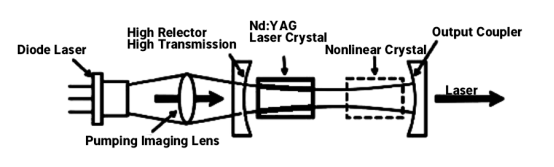
Every laser, whether tiny in a DVD player or massive in a research facility, relies on the same three foundational parts. Understanding these components reveals how chaotic energy becomes ordered light.
Gain Medium: Where Light Is Born
The gain medium is the heart of the laser, the material where atoms, ions, or molecules are excited to emit photons. This material determines the laser’s wavelength, power, and application. Common types include:
- Solid-state crystals like ruby and Nd:YAG, used in cutting and medicine
- Gas mixtures like CO₂ and helium-neon, ideal for surgery and precision measurement
- Semiconductor diodes, tiny chips found in fiber-optic networks and consumer devices
- Fiber lasers with erbium doping, flexible and heat-resistant for industrial use
- Dye and excimer lasers, tunable or ultraviolet sources for research
When energy is applied, electrons in the medium jump to higher energy levels. As they fall back, they release photons through stimulated emission, the key to laser light.
Pump Source: Powering the Beam
The pump source supplies energy to excite atoms in the gain medium. Without this input, no lasing occurs. Common pumping methods include:
- Optical pumping using flashlamps or other lasers
- Electrical discharge through gas in lasers like CO₂
- Direct current injection in semiconductor lasers
- Chemical reactions in military-grade chemical lasers
Pumping must be strong enough to achieve population inversion, a non-natural state where more atoms are excited than in their ground state.
Optical Cavity: The Photon Amplifier
The optical cavity consists of two mirrors facing each other with the gain medium between them. One mirror is fully reflective, while the other is partially transparent and serves as the output coupler.
Photons moving parallel to the cavity axis bounce back and forth, triggering more stimulated emissions with each pass. This creates a chain reaction of identical photons. Off-axis light escapes and is lost, ensuring only a collimated, coherent beam builds up.
When amplification exceeds losses from mirror imperfections and absorption, the system reaches lasing threshold, and a fraction of the beam escapes through the output coupler as your laser beam.
Quantum Physics Behind Laser Light

Lasers do not just focus light. They create it under quantum rules. The process starts at the atomic level and scales up through controlled feedback.
Energy Levels and Electron Transitions
Electrons orbit atoms in fixed energy levels. The lowest is the ground state, while higher ones are excited states. When energy is absorbed via light or electricity, electrons jump up.
They do not stay there. When they drop back, they release a photon with energy equal to the gap between levels. This relationship follows the equation E = hν, where h is Planck’s constant and ν is the light frequency.
Two distinct mechanisms create photons:
- Spontaneous emission involves random decay where photons vary in direction, phase, and timing, like a crowd clapping randomly
- Stimulated emission occurs when a passing photon triggers an excited atom to emit an identical photon with the same wavelength, phase, direction, and polarization
This is the laser miracle. One photon becomes two clones, then four, then eight, building a wave of perfect synchrony.
Population Inversion: Breaking Natural Order
Under normal conditions, most atoms are in the ground state. Absorption dominates, so light gets swallowed rather than amplified.
For lasing to occur, you need more excited atoms than ground-state atoms, a condition called population inversion. This defies thermal equilibrium and requires special energy structures.
Three-level systems like the ruby laser pump atoms to a high state, decay to a metastable state, then emit down to ground level. Over 50% of atoms must be excited, making this difficult. These typically operate in pulsed mode.
Four-level systems like Nd:YAG and helium-neon have the lower laser level empty quickly into the ground state. This makes inversion easier with less pumping and enables continuous-wave operation.
Metastable states are crucial. They let atoms queue up in the excited state, ready to emit when triggered.
Step-by-Step: How a Laser Beam Forms
From energy input to beam output, the process follows a precise sequence. Here is how it unfolds step by step.
Step 1: Pumping the Medium
Energy in the form of light, electricity, or chemical reaction is applied to the gain medium. Atoms absorb it, and electrons jump to higher energy levels.
In a diode laser, current injects electrons into a semiconductor junction. In a CO₂ laser, high-voltage discharge excites gas molecules. In a ruby laser, a flashlamp floods the crystal with intense light.
Step 2: Achieving Population Inversion
Excited electrons settle into a metastable state, a quantum waiting room where they linger microseconds to milliseconds. This allows a large population to build up above a lower energy level.
When more atoms occupy this upper state than the lower one, population inversion is achieved.
Step 3: Triggering Stimulated Emission
A few atoms decay spontaneously, emitting photons in random directions. Most escape, but those aligned with the cavity axis hit the mirrors and bounce back.
One such photon strikes an excited atom and triggers stimulated emission. Now two identical photons travel together.
Step 4: Optical Feedback and Amplification
These photons reflect through the gain medium again, each triggering more emissions. The number grows exponentially: 2 → 4 → 8 → 16.
This avalanche effect happens only for light moving exactly parallel to the cavity. Other directions die out quickly.
Step 5: Beam Output Through the Coupler
After multiple round trips, light intensity builds until gain equals losses from mirror transmission, scattering, and absorption. At this threshold, sustained oscillation begins.
A fraction, typically 1 to 5%, exits through the partially reflective mirror as a laser beam that is coherent and intense.
Unique Properties of Laser Light

A laser beam is not just bright. It is fundamentally different from sunlight or LED light. These four properties make it indispensable.
Coherence: Light in Perfect Sync
All photons in a laser beam are in phase, both spatially and temporally. Their wave peaks align across space and time.
Spatial coherence enables tight focusing and interference patterns. Temporal coherence allows long-distance signal integrity.
Coherence length measures how far the phase relationship stays predictable. The narrower the wavelength spread, the longer the coherence length and the better the beam for holography and interferometry.
Monochromaticity: One Color, One Wavelength
Lasers emit light within an extremely narrow bandwidth, often a single longitudinal mode. While sunlight spans hundreds of nanometers, a helium-neon laser emits only 632.8 nm with variation of just 0.01 nm.
This purity enables precision spectroscopy, wavelength-specific medical treatments, and dense data packing in fiber optics.
Directionality: Minimal Beam Spread
A laser beam diverges very little. A typical helium-neon laser spreads less than one milliradian. If aimed at the Moon, it would cover only about 500 kilometers in diameter.
Compare that to a flashlight, which spreads widely within meters. This low divergence enables long-range targeting, free-space communication, and lunar laser ranging.
High Intensity and Brightness
Laser energy is concentrated in a small area, direction, and wavelength. This results in unmatched brightness, often millions of times brighter than the sun at its surface.
Even a five milliwatt laser pointer focuses more power per square centimeter than sunlight. This intensity allows cutting and welding metals, initiating nuclear fusion, and generating nonlinear optical effects.
Real-World Behavior of Laser Beams
Lasers do not just work in labs. They interact with the real world in predictable ways.
Beam Propagation in Air and Space
A laser beam travels at 299,792 kilometers per second in vacuum, slightly slower in air or glass. The distance is limited by diffraction and atmospheric effects, not energy.
Lunar ranging demonstrates this perfectly. Lasers fired at Apollo retroreflectors return after 2.5 seconds, measuring Earth-Moon distance to centimeter accuracy.
Atmospheric Effects on Beams
On Earth, laser propagation is affected by absorption by water vapor, carbon dioxide, and oxygen. Scattering occurs from molecules (Rayleigh) and aerosols (Mie). Turbulence from thermal gradients bends and distorts beams.
These factors limit long-range use in fog, rain, or smog.
Why Laser Beams Are Invisible in Clean Air
A laser beam is only visible when scattered by particles like dust, fog, or smoke. In vacuum or clean air, it is invisible until it hits a surface.
This principle is exploited in laser light shows where fog enhances beam visibility. It also explains why safety protocols treat invisible beams as serious hazards.
Types of Lasers and Their Uses
Different gain media produce different wavelengths and powers, suited to specific jobs.
| Laser Type | Wavelength | Key Use |
|---|---|---|
| He-Ne | 632.8 nm (red) | Alignment, education |
| CO₂ | 10.6 μm (infrared) | Cutting, engraving, surgery |
| Nd:YAG | 1064 nm (infrared) | Welding, tattoo removal |
| Excimer | 193–308 nm (UV) | LASIK, chip manufacturing |
| Diode | 630–1600 nm | Fiber optics, pointers |
| Ti:sapphire | 650–1100 nm | Femtosecond science |
| Fiber | 1030–1550 nm | Industrial marking, telecom |
Each type leverages unique physics to serve fields from medicine to manufacturing.
Laser Safety: Hidden Risks and Protections
Not all laser hazards are obvious. A small pointer can blind, and invisible wavelengths are especially dangerous.
Laser Classification System
Lasers are classified by hazard level. Class 1 includes enclosed devices like CD players that are completely safe. Class 2 covers red pointers under one milliwatt where your blink reflex protects you. Class 3R involves low-risk alignment tools. Class 3B includes research lasers where direct viewing is hazardous. Class 4 covers industrial and surgical lasers that can burn skin or cause fire.
Invisible Threat: Infrared in Green Lasers
Many green laser pointers use frequency-doubled Nd:YAG or Nd:YVO₄. If poorly filtered, they emit 808 nm and 1064 nm infrared light that is invisible but powerful enough to damage eyes before you blink.
Always use IR-filtered lasers and protective eyewear for Class 3B and higher.
Safety Best Practices
Never point lasers at people or vehicles. Use beam blocks and interlocks in laboratories. Keep beams above or below eye level. Install motion sensors to cut beams if someone enters the area unexpectedly.
Frequently Asked Questions About Laser Beams
How does a laser produce light differently from a regular lightbulb?
A regular lightbulb produces light through spontaneous emission, where atoms emit photons randomly in all directions with different phases and wavelengths. A laser uses stimulated emission to produce photons that are identical in wavelength, phase, direction, and polarization. This creates a coherent beam rather than scattered, incoherent light.
What is population inversion and why is it necessary?
Population inversion is a condition where more atoms occupy an excited state than a ground state. This is necessary because under normal conditions, absorption dominates and light gets absorbed rather than amplified. Only when population inversion is achieved can stimulated emission produce more photons than are lost, enabling net light amplification.
Can lasers work without mirrors?
Technically yes. Devices called superluminescent diodes produce amplified spontaneous emission without a cavity. However, the output lacks the full coherence and directionality of a true laser. The mirror cavity is what creates the feedback needed for true laser oscillation and the properties that make lasers special.
Why is laser light usually one specific color?
Laser light is monochromatic because the energy level differences in the gain medium determine the photon wavelength. The optical cavity only amplifies photons at this specific wavelength. Other wavelengths do not experience net gain and are lost. This is why different lasers produce different colors based on their gain medium.
How far can a laser beam travel?
In vacuum, a laser beam can travel effectively infinite distances with minimal spread. In practice, atmospheric absorption and scattering limit terrestrial range. The beam from a typical laser aimed at the Moon would spread to about 500 kilometers by the time it arrives, yet lunar ranging still works because the retroreflectors are large enough to catch the beam.
Are all laser beams visible?
No. Laser beams are invisible in clean air or vacuum because there are no particles to scatter the light. You only see the beam when it interacts with surfaces or particles like dust and fog. This invisibility makes certain laser wavelengths especially dangerous because there is no visual warning that a beam is present.
Key Takeaways for Understanding Laser Beams
A laser beam works by forcing light into perfect order through a quantum cascade of identical photons amplified by design. From stimulated emission to optical feedback, every step converts chaos into coherence. The three essential components are the gain medium where light is generated, the pump source that provides energy, and the optical cavity that provides feedback for amplification.
The properties that make lasers revolutionary are coherence, monochromaticity, directionality, and high intensity. These enable applications ranging from eye surgery to fiber optic communications. Understanding these fundamentals reveals why lasers are one of the most transformative inventions of modern science.
Now, whether you are using a barcode scanner or watching a laser light show, you know that beam is not just light. It is quantum physics in action.