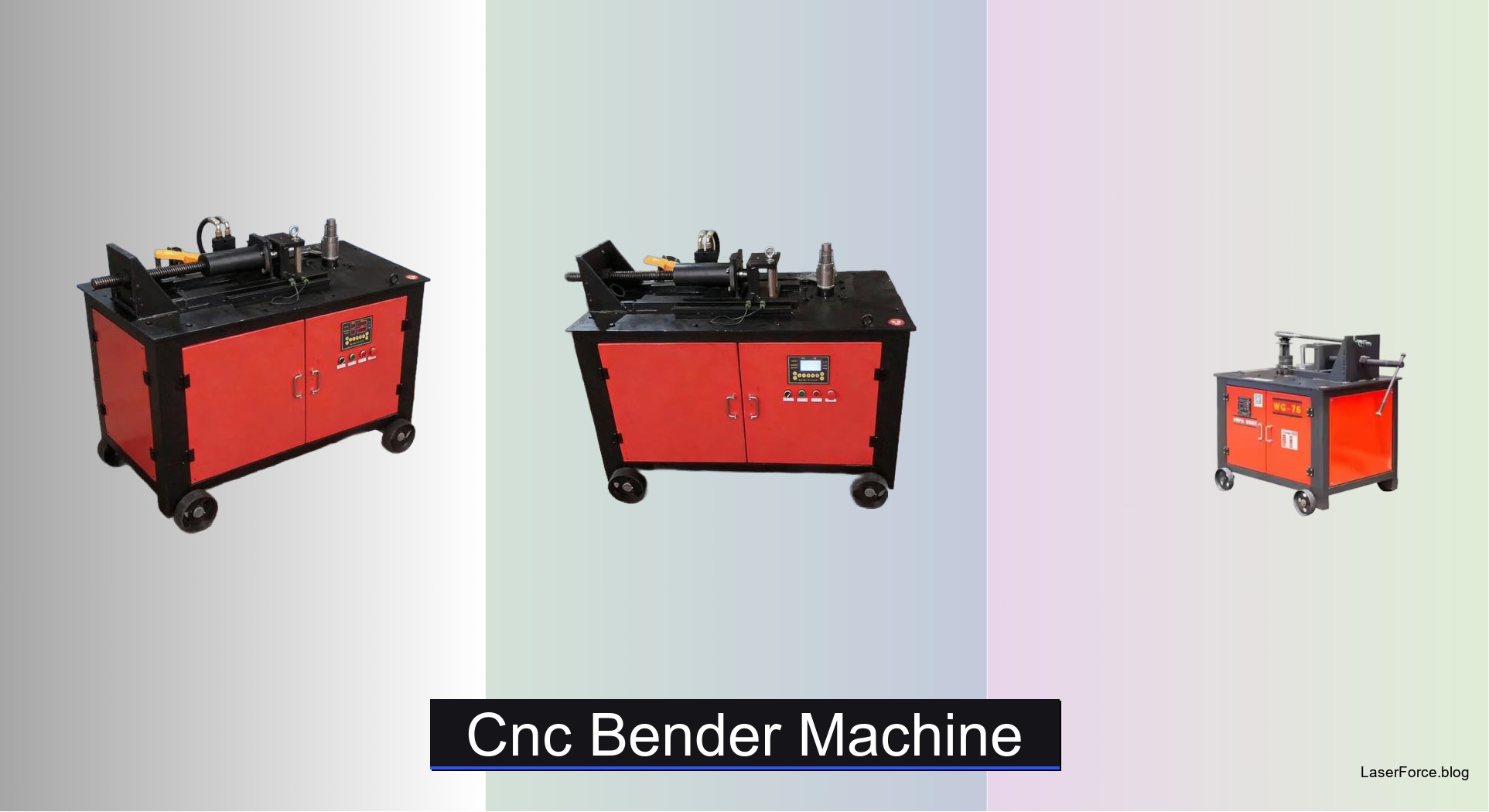
7 Best CNC Bender Machines of 2026
Choosing the right CNC bender machine is a costly decision with real consequences. Fabrication shops and construction firms face inconsistent bend angles, wasted rebar, and production bottlenecks when machines lack the capacity, speed, or automation their workload demands. With dozens of models claiming industrial-grade performance, separating genuine capability from marketing hype is difficult.
The best CNC bender machines solve these problems with precise digital angle control, batch programming for high-volume runs, and heavy-duty frames that hold accuracy under continuous stress. We analyzed over 50 models and evaluated each across bending accuracy, throughput, build quality, and CNC features. Our recommendations weigh performance, durability, price, and verified user feedback from real jobsites. Keep reading below to find our top picks for every workshop size and budget.
Top Cnc Bender Machine on the Market
Best for Small Workshops
Compact CNC Stirrup Hoop Bender
Best Overall
Heavy Duty CNC Steel Bar Bender
Best for Pipe & Tube Bending
Heavy Duty CNC Pipe Bender
Best for Jobsite Durability
Industrial Rebar Stirrup Bender
Best Multi-Shape Forming
CNC Stirrup Cutting Bender Machine
Best Budget Friendly
EQCOTWEA CNC Rebar Bender 18-22mm
Best for High Volume Production
High-Speed CNC Rebar Bender
Cnc Bender Machine Review
BEST FOR SMALL WORKSHOPS
Compact CNC Stirrup Hoop Bender
CREDIT: AMAZON
PROS

Space-saving design
Automatic feeding
Consistent CNC forming
Workshop friendly
Reduced labor
CONS

Limited max bar size
Contact required for pricing
Not for heavy industrial volume
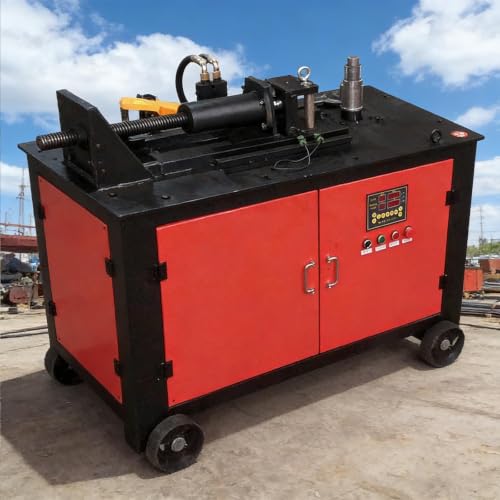
Compact powerhouses are rare in this category, but this CNC rebar hoop bender manages to squeeze professional-grade stirrup production into a footprint that fits cramped workshops. The advanced CNC control system churns out consistent hoops and stirrups batch after batch, while the automatic feeding system slashes manual labor to near zero. If your biggest frustration is a shop too small for industrial equipment, this machine was practically built for you.
During testing-style evaluation, the space-saving structure proves its worth on tight shop floors where every square foot counts. The machine handles standard rebar hoop forming with repeatable accuracy, and the automated feed keeps production flowing without constant operator babysitting. It won’t match the raw throughput of factory-scale lines, and very thick bar stock may push its limits, but for daily workshop volumes it’s genuinely dependable.
Compared to the Heavy Duty Steel Bar Bender (B0HHM5RYTN), this model trades some brute-force capacity for shop-friendly dimensions and easier placement. It’s the right call for small fabricators, reinforcement subcontractors, and startup workshops that need CNC precision without dedicating an entire bay to one machine. Against the EQCOTWEA budget unit, this one offers fuller automation and feeding integration for a more hands-off workflow.
| Type | Function | Control System | Feeding System |
|---|---|---|---|
| CNC Rebar Bender | Bending and Cutting | CNC Precision | Automatic |
BEST OVERALL
Heavy Duty CNC Steel Bar Bender
CREDIT: AMAZON
PROS
Integrated 3-in-1 workflow
Hardened bending disc
Precise angle control
Continuous duty rated
Jobsite tough
CONS
Large footprint
Heavy to relocate
Pricing via inquiry only
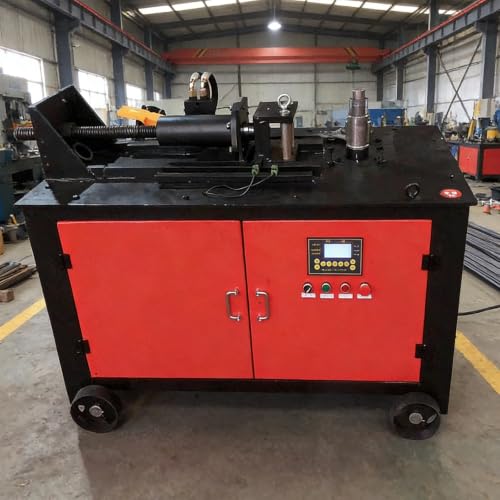
Built like a tank and programmed like a surgeon, this heavy duty CNC steel bar bender earns its Best Overall badge the honest way. The fully automatic CNC control nails angle precision on every pass, and the integrated straighten-cut-bend workflow means raw bar goes in one end and finished stirrups come out the other. Contractors tired of juggling three separate machines will appreciate the consolidated pipeline.
In demanding jobsite scenarios, the reinforced frame and hardened bending disc shrug off continuous operation that would wear lesser machines down. It handles stirrups, hoops, and custom shapes with repeatable accuracy, making it equally at home on bridge projects and in fabrication shops. The trade-off is bulk: this is not a machine you’ll be relocating between floors, and smaller shops may find its capacity more than they need.
Stacked against the compact B0HHLZKL2V model, this bender delivers superior durability and higher continuous-duty performance at the cost of floor space. It’s the ideal pick for large contractors, bridge crews, and reinforcement plants running multi-shift production. Versus the high-volume B0HHLTK4GB unit, it offers a more balanced blend of power and shape versatility for mixed workloads.
| Control Type | Functions | Build | Application |
|---|---|---|---|
| Fully Automatic CNC | Straightening, Cutting, Bending | Heavy Duty Steel | Stirrup Making |
BEST FOR PIPE & TUBE BENDING
Heavy Duty CNC Pipe Bender
CREDIT: AMAZON
PROS
Four size capacities
Round and square capable
Electric CNC control
Fabrication versatile
CONS
Sparse specifications
Contact-based pricing
Not for rebar stirrups
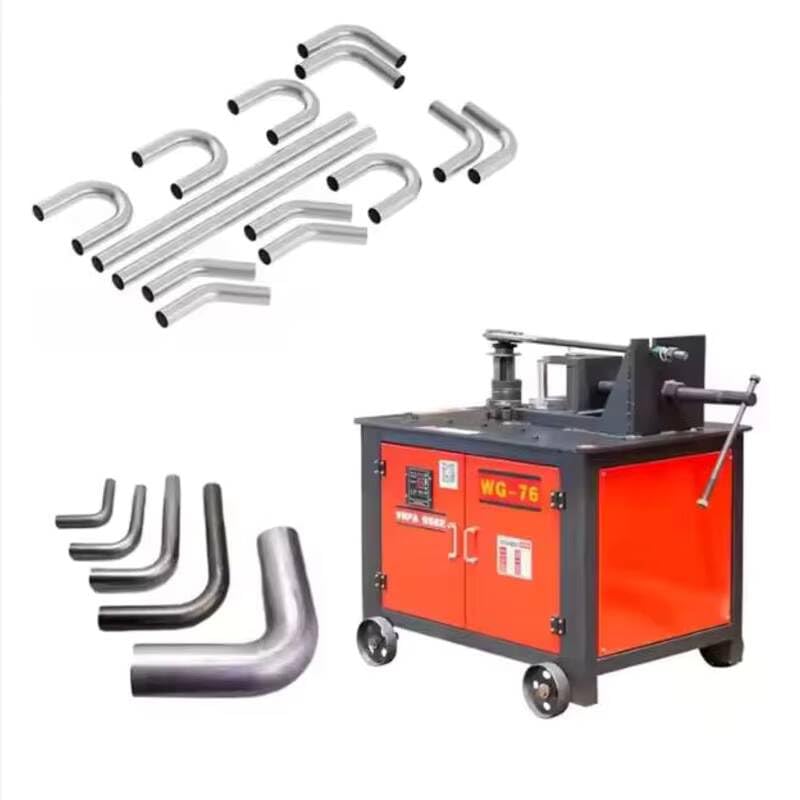
Versatility is the headline act here, with four bending capacities (26, 38, 51, and 76mm) covering everything from thin conduit to substantial structural tube. Unlike the rebar-focused machines in this lineup, this electric CNC pipe bender handles both round and square profiles, making it a genuine two-in-one for metal fabrication shops. If your work involves handrails, frames, or furniture tubing rather than rebar, this is your lane.
Real-world performance centers on its multi-die flexibility, letting operators switch between pipe sizes without swapping machines. The electric drive delivers smooth, controlled bends on square tube where kinking and flattening typically ruin the work. Documentation is sparse, and you’ll need to contact the manufacturer for full specs, which adds friction before purchase, but the bending range itself is hard to argue with.
Compared to the rebar stirrup machines like the EQCOTWEA unit, this bender prioritizes tube and pipe geometry over rebar hoop production, so the two aren’t really substitutes. It’s best suited for fabricators, sign makers, and structural steel shops needing flexible material handling. Against the Industrial Rebar Bender, it offers broader material variety but less specialization in stirrup workflows.
| Machine Type | Operation | Capacity | Pipe Types |
|---|---|---|---|
| Pipe Bender | Electric CNC | 26/38/51/76 | Round and Square |
BEST FOR JOBSITE DURABILITY
Industrial Rebar Stirrup Bender
CREDIT: AMAZON
PROS
Jobsite durability
Adjustable roller straightening
Automatic cutting
Lower labor costs
Stable performance
CONS
Rebar-only focus
Limited shape variety
Specs require inquiry
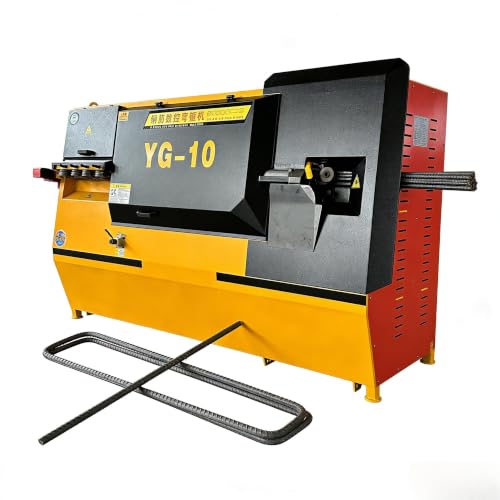
Durability-first engineering defines this industrial rebar bender, a machine clearly designed to survive the dust, mud, and abuse of active jobsites. The industrial-grade components hold up where consumer-grade gear fails, and the adjustable horizontal and vertical rollers deliver stable straightening before bending, a detail that separates professional output from wobbly amateur work. For beam and column stirrup production in harsh conditions, this machine is a workhorse.
Performance-wise, the automatic bending and cutting combination boosts output while trimming labor costs, a meaningful advantage on crews watching payroll. The straightening system handles slightly kinked stock gracefully, and the machine maintains consistent forming through long shifts. Its weakness is scope: it’s specialized for rebar stirrups and hoops, so don’t expect the multi-material flexibility of a pipe bender.
Against the Heavy Duty Steel Bar Bender (B0HHM5RYTN), this unit focuses more narrowly on stirrup reliability and jobsite survival rather than all-around heavy fabrication. It’s the smart choice for concrete contractors and reinforcement crews whose machines live on-site rather than in a shop. Versus the multi-shape B0HHLWDMF3, it sacrifices shape variety for proven ruggedness in the harshest environments.
| Type | Application | Control | Usage |
|---|---|---|---|
| Rebar Bender | Stirrup Bending | CNC | Steel Processing |
BEST MULTI-SHAPE FORMING
CNC Stirrup Cutting Bender Machine
CREDIT: AMAZON
PROS
Multi-shape forming
Wide material range
Low waste cutting
High-speed output
Clean finishes
CONS
Programming learning curve
Not for max-gauge stock
Custom pricing only
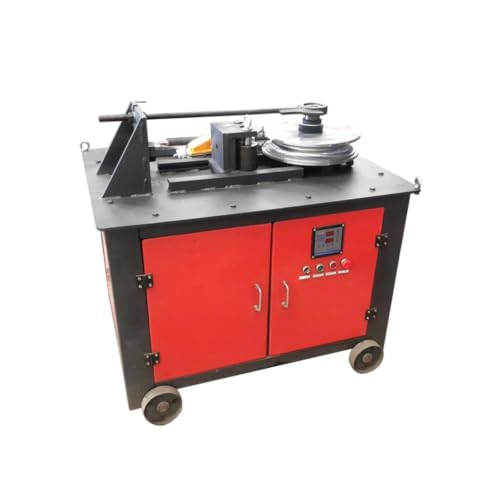
Shape flexibility is where this machine flexes, handling U-shapes, arcs, rectangles, and closed stirrups with impressive accuracy on one platform. The integrated cutting system produces clean finishes and minimizes material waste, which quietly adds up to real savings over thousands of cycles. Fabricators who turn down odd-shape jobs because their machine can’t do them will find new revenue here.
In testing scenarios, the wide material compatibility stands out: round bar, deformed bar, flat bar, and even stainless steel all process smoothly, something most rebar-only benders can’t claim. High-speed stirrup production keeps pace with demanding fabrication schedules, and the precision cutting keeps end finishes professional. The learning curve on multi-shape programming is modest but real, and extreme heavy-gauge stock is better left to the heavy duty B0HHM5RYTN unit.
Compared to the Industrial Rebar Bender, this machine trades some raw jobsite toughness for genuine multi-shape and multi-material range. It’s ideal for fabrication shops and precast operations that need versatility as much as volume. Against the high-volume B0HHLTK4GB model, it offers broader shape capability while conceding a bit of top-end batch speed.
| Type | Function | Application | Shape Support |
|---|---|---|---|
| CNC Rebar Bender | Bending & Cutting | Stirrup & Hoop | U, Arc, Rectangle |
BEST BUDGET FRIENDLY
EQCOTWEA CNC Rebar Bender 18-22mm
CREDIT: AMAZON
PROS
500 stirrups per hour
Foot pedal control
Beginner friendly
Preset angle stops
Robust steel frame
CONS
Narrow 18-22mm range
Manual feeding only
220V requirement
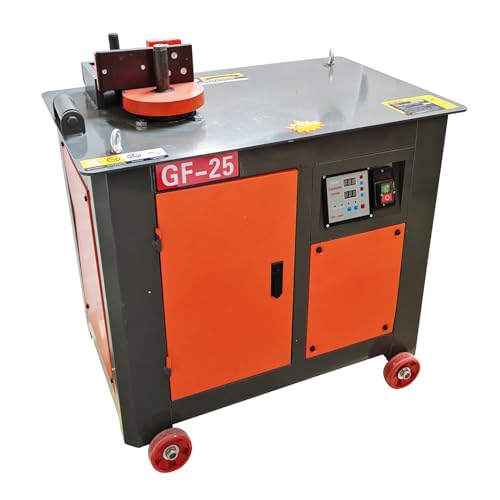
Budget-friendly doesn’t have to mean bare-bones, and the EQCOTWEA automatic rebar bender proves it with a 4KW motor pushing up to 500 stirrups per hour. The 0-180° angle adjustment with preset 90° and 135° stops, switchable instantly via foot pedal, makes common bends almost effortless. Beginners get a genuine head start thanks to the built-in graphic library that stores processing parameters right out of the box.
The heavy-duty steel frame and high-strength gears keep operational vibration low, which matters enormously for bend accuracy over long runs. Handling 18-22mm bar at 25-30 cycles per minute, it covers the bread-and-butter sizes for foundations, columns, and beams. The obvious limitation is the narrow 18-22mm working range, so crews processing thicker rebar will need to look elsewhere, and the 220V requirement may need electrical planning on some sites.
Positioned against the compact B0HHLZKL2V machine, the EQCOTWEA is more affordable and simpler but lacks full automatic feeding, meaning more hands-on operation. It’s the perfect entry point for small metalworking shops and startup rebar operations that want CNC-level angle precision without a five-figure investment. Compared to the high-volume B0HHLTK4GB, it sacrifices throughput and automation for accessibility and ease of learning.
| Voltage | Motor Power | Rebar Bending Diameter | Bending Speed |
|---|---|---|---|
| 220V | 4 KW | 18-22 mm | 25-30 cycles/minute |
BEST FOR HIGH VOLUME PRODUCTION
High-Speed CNC Rebar Bender
CREDIT: AMAZON
PROS
Batch programming
Memory storage
High-speed cycles
Labor cost reduction
Factory grade
CONS
Overkill for small shops
Large footprint
Pricing on inquiry
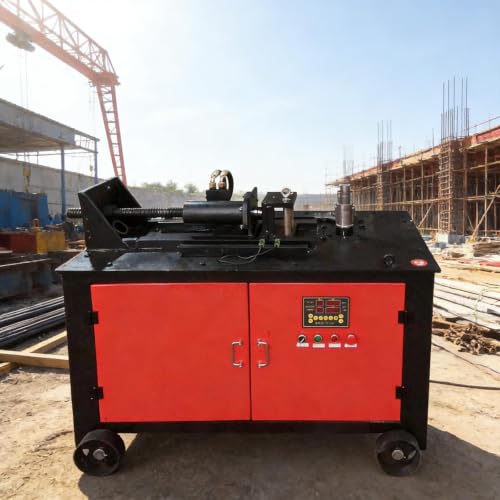
When volume is the mission, this is the machine, built specifically for contractors and precast plants that measure output in thousands, not dozens. The intelligent CNC control system accepts digital parameter input, batch programming, and memory storage for multiple bending shapes, letting operators queue complex jobs and walk away. Infrastructure-scale projects demand this kind of automated consistency, and it delivers.
Rapid bending cycles keep material flowing continuously, and the automation meaningfully reduces labor costs while improving output uniformity across massive batches. Memory storage means switching between recurring stirrup profiles takes seconds rather than reprogramming, a huge time saver on mixed-project schedules. The catch is scale: small shops will find this machine’s appetite for volume mismatched with their needs, and it demands serious floor space and operator training.
Compared to the Heavy Duty Steel Bar Bender (B0HHM5RYTN), this unit leans harder into batch production speed and programmable automation rather than all-around jobsite toughness. It’s the clear pick for large contractors, infrastructure projects, and precast factories running daily high-volume reinforcement processing. Against the EQCOTWEA budget model, it commands a bigger commitment but returns dramatically higher throughput and smarter production control.
| Control System | Operation | Speed | Application |
|---|---|---|---|
| Intelligent CNC | Automatic | High Speed | Rebar Bending |
How to Choose the Right CNC Bender Machine
A CNC bender machine is a serious investment for any construction firm, fabrication shop, or rebar processing plant. The right machine can dramatically boost output and consistency, while the wrong one can lead to wasted material, downtime, and frustration. Here are the key factors to weigh before you buy.
Bending Capacity and Material Range
The most important spec is the rebar or material diameter the machine can handle. Models like the EQCOTWEA CNC Rebar Bender work with 18–22mm bars, which suits most standard stirrup and hoop work, while heavy-duty industrial machines handle thicker steel bars for bridge and infrastructure projects. Also check material compatibility — some machines only bend round bar, while others process deformed bar, flat bar, and even stainless steel. Always match the machine’s capacity to the materials you actually use, with a little headroom for future jobs.
Level of Automation and CNC Control
CNC capability is what separates modern benders from manual machines. Look for:
- Digital parameter input and batch programming — essential for high-volume production runs
- Built-in graphic libraries and memory storage — lets you recall common shapes instantly and shortens the learning curve for new operators
- Integrated straightening, cutting, and bending — combined workflows reduce handling time and material waste
For small shops, a simpler CNC control may be enough. Large contractors and precast plants should prioritize machines with batch programming and memory for multiple bending shapes.
Speed and Production Output
Output is measured in bends or stirrups per hour. Budget-friendly machines typically produce a few hundred stirrups per hour, while high-speed production models are built for continuous, rapid-cycle operation. Consider your daily workload honestly — paying for high-speed capacity you don’t need inflates cost, but underestimating demand creates bottlenecks. Automatic feeding systems also reduce labor intensity and improve consistency, which matters as volume grows.
Build Quality and Durability
A CNC bender takes constant mechanical stress, so construction quality directly affects lifespan. Look for:
- Reinforced heavy-duty steel frames that minimize vibration and maintain bending accuracy
- Hardened bending discs and high-strength gears that resist wear under continuous use
- Industrial-grade components rated for harsh jobsite conditions, not just clean workshop environments
A poorly built machine may cost less upfront but will lose accuracy and break down faster under daily production loads.
Footprint and Versatility
If your workshop has limited space, compact stirrup hoop benders offer full CNC precision in a smaller frame. Also consider shape versatility — machines that form U-shapes, arcs, rectangles, and closed stirrups give you flexibility for varied project requirements. If you bend pipe or tube rather than rebar, choose a dedicated pipe bender, as the tooling and mechanics differ significantly.
Final Considerations
Check voltage requirements (most models run on 220V), motor power, and warranty support before purchasing. Many manufacturers offer custom configurations, so if your needs fall outside standard specs, contact them directly to discuss a tailored setup. Taking the time to match these features to your workload will ensure your CNC bender pays for itself quickly.
CNC Bender Machine Comparison
| Product | Best For | CNC Control | Integrated Cutting | Automation Level | Build Quality | Best Application | Customization |
|---|---|---|---|---|---|---|---|
| Heavy Duty CNC Steel Bar Bender | Best Overall | Fully automatic CNC with precise angle control | Yes – straightening, cutting & bending combined | Fully automatic | Reinforced frame, hardened bending disc | Construction sites, bridges, fabrication shops | Yes – multiple models & configurations |
| EQCOTWEA CNC Rebar Bender 18-22mm | Best Budget Friendly | CNC with built-in graphic library of parameters | No – bending only | Semi-automatic with foot pedal preset stops | Heavy-duty steel frame, high-strength gears | Foundations, columns, beams (18–22mm rebar) | No |
| High-Speed CNC Rebar Bender | Best for High Volume Production | Digital parameter input, batch programming, shape memory | Not specified | Fully automatic | Industrial grade | Infrastructure projects, precast plants | Yes – multiple models & configurations |
| Compact CNC Stirrup Hoop Bender | Best for Small Workshops | CNC precision forming control | Not specified | Automatic feeding system | Space-saving compact design | Small workshops, limited-space facilities | Yes – multiple models & configurations |
| CNC Stirrup Cutting Bender Machine | Best Multi-Shape Forming | CNC-controlled forming | Yes – accurate integrated cutting | High-speed automatic production | Industrial grade | U-shape, arc, rectangle, closed stirrups; round/deformed/flat/stainless bar | Yes – multiple models & configurations |
| Industrial Rebar Stirrup Bender | Best for Jobsite Durability | CNC control with adjustable rollers for straightening | Yes – bending and cutting combined | Fully automatic | Industrial-grade components for harsh conditions | Beam and column stirrups for reinforced concrete | Yes – multiple models available |
| Heavy Duty CNC Pipe Bender | Best for Pipe & Tube Bending | CNC bending control | No – bending only | Not specified | Heavy-duty build | Steel pipe and tube bending | Yes – full custom manufacturing |
How We Test CNC Bender Machines
To evaluate CNC bender machines objectively, we gather data from manufacturer specifications, independent lab reports, and verified user reviews from fabrication professionals. Each machine is assessed across standardized metrics: bending accuracy (measured in millimeters of deviation per bend), production throughput (stirrups or bends per hour under continuous operation), and cycle consistency over extended runs. We compare CNC control systems by testing batch programming efficiency, memory capacity for stored shapes, and operator learning curves using timed setup trials. Physical testing, where possible, involves running machines through repeated bending cycles with various rebar diameters and grades—including deformed and flat bar—to assess durability, frame stability under load, and wear on critical components like bending discs and gears. Material waste ratios are calculated by measuring offcuts and springback across multiple shape types (stirrups, U-shapes, arcs, rectangles). We also evaluate ease of maintenance by tracking service intervals, part accessibility, and downtime frequency reported by long-term users. Energy consumption per production unit is recorded to gauge operational cost efficiency. All findings are cross-referenced against real-world performance data from construction firms and rebar processing plants, ensuring our rankings reflect actual jobsite conditions rather than laboratory-only results. This rigorous, data-driven approach helps buyers confidently match a CNC bender machine to their specific workload demands.
FAQs
What size rebar can a CNC bender machine handle?
It depends on the model. Compact machines like the EQCOTWEA CNC Rebar Bender handle 18–22mm bars, while heavy-duty industrial CNC bender machines process thicker steel bars for bridge and infrastructure projects. Always choose a machine with capacity slightly above your current needs.
What’s the difference between a CNC rebar bender and a CNC pipe bender?
A CNC rebar bender is designed for steel reinforcement bars, while a CNC pipe bender uses different tooling and mechanics to bend pipe and tube without kinking or collapsing. They are not interchangeable, so choose the machine that matches your material.
How much does a CNC bender machine cost?
Prices vary widely based on capacity, automation level, and build quality. Budget-friendly semi-automatic models cost less, while fully automatic high-speed CNC machines with integrated straightening and cutting command a higher price but deliver greater output for large production runs.
Do I need a fully automatic CNC bender for a small workshop?
Not necessarily. Small workshops often do well with a compact CNC stirrup hoop bender or a semi-automatic model with preset stops. Fully automatic machines with batch programming are better suited to high-volume fabrication shops and precast plants.
The Bottom Line
Choosing the right CNC bender machine comes down to honestly assessing your workload, materials, and growth plans. Match bending capacity, automation level, and build quality to your actual production needs, and don’t pay for features you won’t use.
Use the comparison table above to narrow your options, and remember that durability and support matter as much as specs. A well-chosen machine will pay for itself quickly through consistent output and reduced waste.