
How Laser Caps Work for Hair Growth
If you are searching for a non-invasive solution to hair loss, you have likely encountered laser caps. These wearable devices promise thicker, healthier hair without surgery or medications. But how does a laser cap work, exactly? The answer lies in a science-backed process called photobiomodulation, where red light energizes dormant hair follicles at the cellular level.
In this guide, you will learn exactly how laser caps stimulate hair regrowth, which technical features determine effectiveness, and how to choose a device that delivers real results. We will cover the science behind the technology, what to look for in a quality device, and how to use it for maximum benefit.
The Science Behind Laser Cap Technology
Laser caps do not simply shine light on your scalp. They trigger a chain reaction inside your cells through a process known as photobiomodulation. This is the foundation of how these devices promote hair growth.
How Light Activates Cellular Energy
The core mechanism begins in the mitochondria, the powerhouses of your cells. A key enzyme called cytochrome c oxidase absorbs red light in the 655 to 660 nanometer range. When activated, this enzyme boosts oxidative phosphorylation, leading to increased production of adenosine triphosphate, the energy currency of your cells.
More adenosine triphosphate means several benefits for your hair follicles. Hair follicle cells have more fuel to function properly. Protein synthesis and DNA repair improve. Dormant follicles become reactivated. Miniaturized hairs regain strength and thickness.
Extending the Hair Growth Cycle
Hair grows in three distinct phases: anagen (growth), catagen (transition), and telogen (resting). In androgenetic alopecia, the most common form of hair loss, the anagen phase shortens and more hairs enter the resting phase prematurely.
Low-level laser therapy helps shift follicles back into anagen and keeps them there longer. Users typically experience longer growth phases, fewer hairs shedding, and increased hair count after 16 to 24 weeks of consistent use.
How Laser Light Reaches Your Hair Follicles
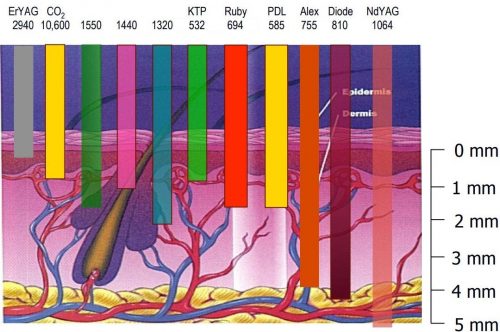
For photobiomodulation to work effectively, light must penetrate deep enough to reach the dermal papilla, the structure at the base of the hair follicle responsible for growth.
The Optimal Wavelength
Research confirms that 655 to 660 nanometers is the sweet spot for hair growth because this range matches the peak absorption of cytochrome c oxidase. It penetrates 3 to 5 millimeters into the scalp, which is enough to reach the follicles. Shorter wavelengths do not penetrate deeply enough, while longer near-infrared wavelengths may go deeper but have less proven efficacy for hair.
Devices emitting outside the 630 to 680 nanometer range are unlikely to deliver meaningful results.
Laser Diodes Versus LEDs
The type of light source matters significantly. Laser diodes deliver a focused, coherent beam that penetrates up to 5 millimeters deep. They provide concentrated energy directly to follicles and have strong clinical evidence supporting their efficacy. LEDs, on the other hand, produce diffuse, scattered light that only reaches 2 to 3 millimeters deep. They have limited clinical evidence for hair growth.
Laser diodes are superior for clinical efficacy and are the standard in medical-grade devices. You should avoid LED-only devices, as most lack the power needed for real regrowth.
Key Technical Factors That Determine Effectiveness
A laser cap design directly impacts whether it works. Many cheap devices fail because they ignore critical engineering principles.
Why Energy Dose Matters
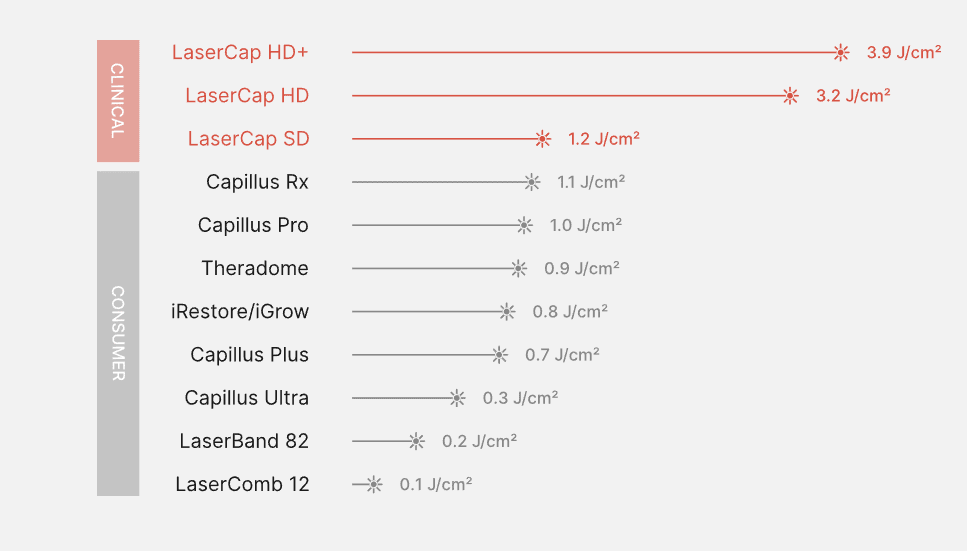
Energy delivered per session is measured in joules per square centimeter. This measurement is called fluence, and it determines the biological impact on your follicles.
Therapeutic range falls between 2 to 6 joules per square centimeter. Ineffective devices deliver less than 0.1 joules per square centimeter, which is common in low-cost caps. FDA-cleared devices typically deliver 6 joules per square centimeter or higher.
Example fluence levels include the LaserCap HD Plus at 3.93 joules per square centimeter and Capillus Rx at approximately 6 joules per square centimeter. Too little energy does nothing, and too much can actually inhibit cells. The biphasic dose response means only the right amount triggers growth.
Pulsed Versus Continuous Light Emission
Pulsed wave systems turn on and off rapidly, such as 10,000 times per second. This prevents overheating, maintains peak power, and is used in high-end devices like Capillus Rx. Continuous wave systems emit constant light, which risks diode power drop due to heat and is common in poorly designed soft caps.
Pulsed systems are more efficient and reliable for maintaining consistent treatment power.
Heat Management Prevents Power Loss
Soft, fabric-based laser caps trap heat. Within seconds, laser diodes can overheat and lose up to 90 percent of their output, rendering treatment useless.
Medical-grade helmets solve this problem with rigid housing, ventilation channels, and active cooling systems. Without proper heat management, even a device with a high diode count will fail during use.
Diode Count and Scalp Coverage

More laser diodes mean better coverage and faster treatment sessions.
Minimum Diode Requirements
For laser caps, you need at least 272 laser diodes. For laser bands, at least 82 laser diodes are required. Full helmets should have 150 or more diodes for complete scalp reach.
Low-diode devices leave gaps, missing large areas of thinning hair.
Device Examples by Diode Count
Several devices demonstrate the difference that diode count makes. Capillus Rx has 312 laser diodes and requires just 6 minutes daily. HairMax LaserBand 82 has 82 laser diodes and requires 90 seconds per section three times per week. Cure Helmet combines 150 laser diodes with 220 LEDs and requires 12-minute sessions.
Higher diode count translates to shorter sessions and more uniform coverage across your scalp.
FDA Clearance and Clinical Evidence
Laser caps are not just wellness gadgets. They are FDA 510(k)-cleared medical devices for treating pattern hair loss.
What FDA Clearance Actually Means
FDA clearance confirms safety and substantial equivalence to proven devices. It is based on clinical data showing real improvements in hair count, density, and thickness.
FDA clearance does not guarantee results for everyone, but it validates that the underlying science meets medical standards.
What Research Shows
Multiple double-blind, randomized trials confirm low-level laser therapy effectiveness. A study of 44 women with female pattern hair loss showed a 51 percent increase in hair count after 17 weeks. A study of 44 men with male pattern baldness showed a 35 percent increase in density after 60 sessions. A meta-analysis of 15 studies showed that low-level laser therapy combined with minoxidil or finasteride outperforms either treatment alone.
Success rates of 95 to 98 percent are reported with high-quality devices, but only when used correctly and consistently.
Who Benefits Most From Laser Cap Therapy
Low-level laser therapy is not a cure-all. It works best for specific types of hair loss.
Effective For
Laser caps work best for androgenetic alopecia, particularly in early to moderate stages. They may help with telogen effluvium by speeding recovery if follicles remain intact. Some evidence supports use for alopecia areata, though it is not a first-line treatment.
Ineffective For
Laser caps do not work for scarring alopecias where follicles are permanently destroyed. They cannot help when complete baldness exists with no living follicles remaining. They do not address hair loss from thyroid issues or nutritional deficiencies, which requires medical diagnosis and targeted treatment.
You should always see a dermatologist first. Using a laser cap for the wrong condition wastes time and money.
Step-by-Step: Using Your Laser Cap Correctly
Using your device correctly ensures maximum benefit.
Daily Use Protocol
Follow these steps for optimal results. First, charge the battery fully before first use. Second, wear the cap on a clean, dry scalp, as light penetrates better without oil or product buildup. Third, position the cap securely with no gaps between diodes and your scalp. Fourth, start the session by connecting to the power pack or activating the built-in battery. Fifth, complete the full treatment time and do not cut sessions short. Sixth, wipe the interior with an alcohol wipe after use to prevent bacteria buildup. Finally, store in a cool, dry place.
Do not use the device on open wounds, infections, or irritated skin.
Treatment Frequency by Device
Different devices have different requirements. Capillus Rx requires daily use for 6 minutes. HairMax LaserBand requires use three times per week for 90 seconds per section. Cure Helmet requires daily use for 12 minutes.
Consistency is essential. Skipping sessions delays your results.
Combining Laser Caps With Other Treatments
Low-level laser therapy works best as part of a multi-pronged approach.
With Minoxidil
Minoxidil dilates blood vessels, increasing nutrient delivery to follicles. Low-level laser therapy boosts cellular energy and prolongs the growth phase. Combination therapy is 30 to 50 percent more effective than either treatment alone.
Use the laser cap first, then apply minoxidil to a clean, dry scalp.
With Finasteride or Dutasteride
These drugs block DHT, the hormone that shrinks follicles. Low-level laser therapy supports follicular health independently. Together, they attack hair loss from two angles: hormonal and metabolic.
There is no interaction risk, so they are safe to use together.
With PRP or Microneedling
Platelet-rich plasma injections deliver growth factors to the scalp. Low-level laser therapy enhances cellular response to these factors. This combination is often used after hair transplants to improve graft survival.
Microneedling may also improve light penetration through creating microchannels in the scalp.
How Long Before Results Appear
Patience is essential. You will not see changes overnight.
Timeline of Hair Regrowth
During weeks 8 to 12, expect reduced shedding and improved hair texture. Between months 3 and 4, you should see a visible increase in density and thickness. Between months 6 and 12, optimal results appear with continued use.
Some users report initial shedding around week 4 to 6, which is actually a sign of follicles resetting into new growth cycles.
What to Expect
Early signs include less hair in the shower drain. Mid-term results show a fuller appearance at the crown or part line. Long-term results show noticeable regrowth in thinning areas.
Taking monthly photos helps you track progress objectively.
What Happens If You Stop Using the Laser Cap
The benefits do not last forever if you quit treatment. Hair gradually returns to the pre-treatment shedding rate. Follicles may revert to miniaturization. Gains fade within 3 to 6 months.
Low-level laser therapy is a maintenance therapy, not a cure. Think of it like dental hygiene. Stop, and problems return.
Choosing the Right Laser Cap
With so many options, how do you pick one that actually works?
Must-Have Features
Look for FDA 510(k) clearance, which proves safety and clinical validity. Ensure the wavelength is approximately 660 nanometers to match cytochrome c oxidase absorption. Choose laser diodes rather than LEDs to ensure deep penetration and efficacy. Verify the energy dose is 2 to 6 joules per square centimeter for therapeutic range. Select at least 272 diodes for caps to ensure full scalp coverage without gaps. Look for a pulsed or cooled system to prevent overheating and power loss. Choose a rigid, ventilated design to maintain performance during use. Select a 3 to 5 year warranty to indicate manufacturer confidence.
Avoid soft baseball caps with sub-0.1 joules per square centimeter output and no FDA clearance.
Top-Rated Devices
Capillus Rx has 312 diodes and offers prescription-strength, pulsed treatment with just 6 minutes daily. HairMax LaserBand 82 is affordable and FDA-cleared with 82 diodes, effective for moderate hair loss. Cure Helmet offers a premium design with touch screen, wireless capability, and 150 laser diodes.
Safety and Side Effects
Laser caps are extremely safe when used as directed.
Common Side Effects
Mild side effects are rare but can include a warm or tingling scalp, temporary redness, or slight itching.
Rare Side Effects
Headaches may occur in sensitive individuals, and scalp irritation can result from poor hygiene.
No Serious Risks
There is no DNA damage, no thermal injury in medical-grade devices, and no hormonal effects.
Warning: Cheap, overheating caps may cause telogen effluvium, which is temporary shedding due to heat stress.
Cost Versus Value
Prices range from $300 to $3,000 or more, but cost does not always reflect quality.
Budget Devices
Devices in the $300 to $600 range are often LED-only with low energy output and high failure risk. These are not recommended.
Mid-Range Options
Devices between $600 and $1,500, such as HairMax and some Cure models, offer proven results with consistent use and good value for early hair loss.
High-End Devices
Premium devices over $2,000, such as Capillus Rx and premium helmets, offer medical-grade performance and lifetime warranties.
While not covered by insurance, a high-quality device pays off in long-term hair retention.
Frequently Asked Questions About Laser Caps
Does a laser cap really work for hair loss?
Yes, laser caps work for androgenetic alopecia when using a high-quality, FDA-cleared device with laser diodes, proper wavelength around 660 nanometers, and adequate energy output. Clinical studies show 35 to 51 percent increases in hair count with consistent use over 3 to 6 months.
How long does it take for a laser cap to show results?
Most users see initial results around weeks 8 to 12, with visible improvements in density and thickness by months 3 to 4. Optimal results appear between months 6 and 12 with continued use.
Can I use a laser cap with minoxidil or finasteride?
Yes, combining laser cap therapy with minoxidil or finasteride is safe and actually more effective. Studies show combination therapy outperforms either treatment alone by 30 to 50 percent.
Do laser caps work for complete baldness?
No, laser caps cannot regrow hair in areas with no living follicles. They work only on miniaturized or dormant follicles. If you have complete baldness with no follicles remaining, a laser cap will not help.
How often should I use my laser cap?
Most FDA-cleared devices require daily use for 6 to 30 minutes, or three times per week for certain devices. Consistency is critical. Skipping sessions delays results.
What happens if I stop using the laser cap?
If you stop using the laser cap, benefits gradually reverse within 3 to 6 months. Hair returns to pre-treatment shedding rates, and miniaturized follicles may revert to their previous state. Maintenance therapy is required indefinitely.
Key Takeaways for Understanding How Laser Caps Work
A laser cap works by delivering 655 to 660 nanometer red light via laser diodes to your scalp, where it activates mitochondria in hair follicles. This process, called photobiomodulation, leads to more adenosine triphosphate energy for follicle cells, better blood flow through nitric oxide release, reduced inflammation and oxidative stress, reactivation of dormant follicles, and longer growth phases with thicker hair.
It is a non-invasive, drug-free, FDA-cleared treatment backed by clinical studies.
To succeed, you must use a high-quality, laser diode-based device. Choose one with at least 272 diodes, FDA clearance, and adequate energy output between 2 and 6 joules per square centimeter. Commit to daily or every-other-day use for 3 to 6 months. Consider combining with minoxidil, finasteride, or PRP for best results.
Remember that results take time, with visible changes at 3 to 4 months and optimal results at 6 to 12 months. Maintenance is required, as stopping treatment reverses gains. The technology is not effective for scarring alopecia or complete baldness.
If you have early to moderate hair thinning and want a safe, science-backed solution, a medical-grade laser cap is one of the most effective tools available today. Choose wisely, stay consistent, and you could be on your way to a fuller head of hair without needles, surgery, or daily pills.